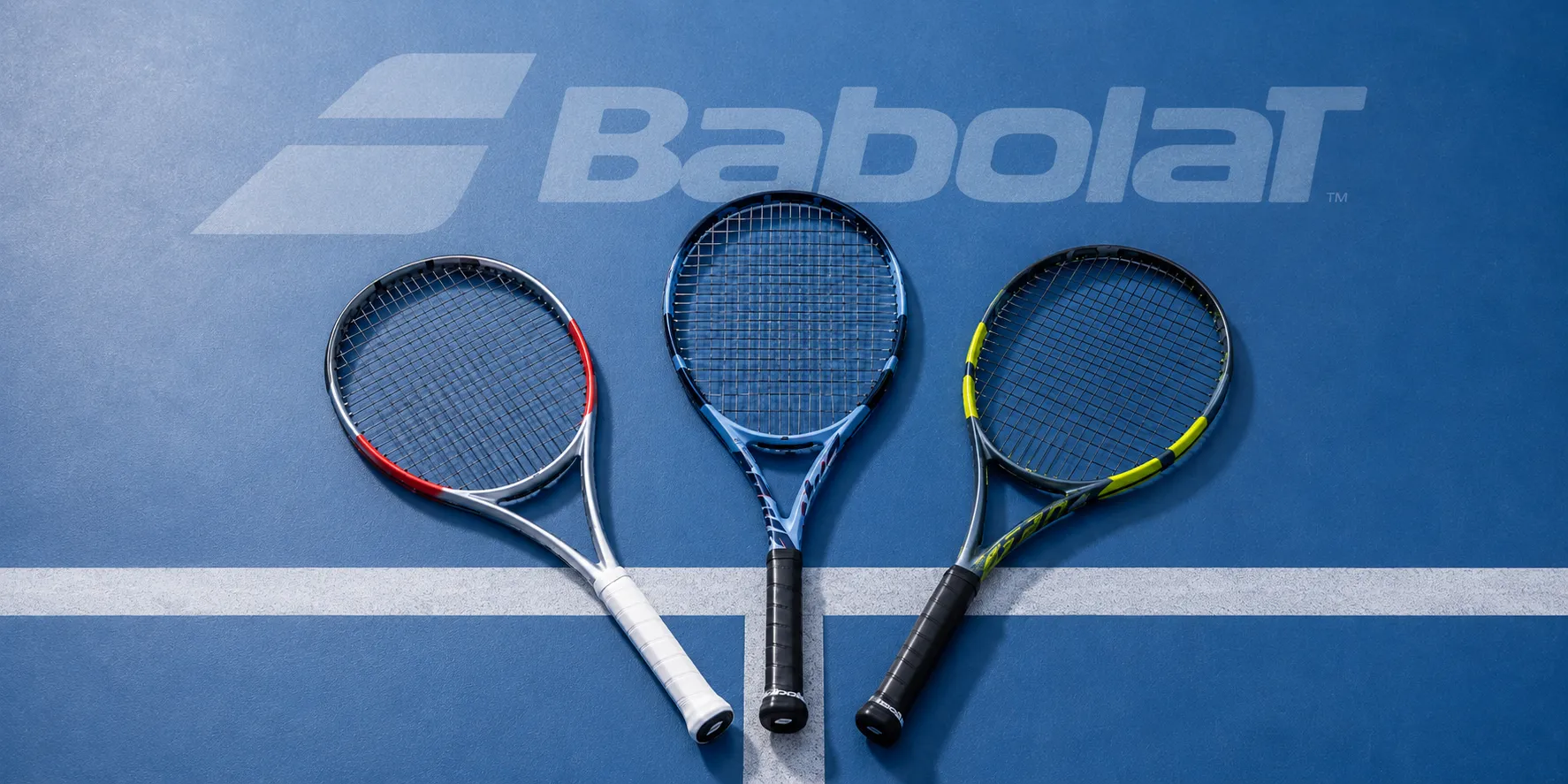
Babolat Rackets: Pure Aero, Drive and Strike
Babolat rackets are built around three main performance lines: Pure Aero, Pure Drive and Pure Strike. The simplest way to understand them is this:
- Pure Aero: spin, net clearance and heavy ball.
- Pure Drive: easy power, depth and ball speed.
- Pure Strike: control, precision and attacking with a full swing.
Your choice should not start with the paint job, the pro player who endorses it, or the newest cosmetic. It should start with your ball: do you want to lift it with more spin, hit deeper with less effort, or control a ball you already generate with power?
Quick note: when we mention professional players, we mean players historically associated with that line. On tour, many rackets are customized or may be pro stock frames with retail paint, so use them as style references, not exact spec references.
How to read Babolat racket versions
Before going line by line, it helps to understand the naming. If you want to go deeper on how specs such as weight, balance, stiffness or swing weight are measured, Tennis Warehouse University is a useful technical reference.
| Version | What it usually means | Who it fits |
|---|---|---|
| 100 | The main, most balanced option | Most intermediate and advanced players |
| 98 | More control, less forgiveness | Players with fast swings and consistent contact |
| 97 | Maximum precision and demand | Advanced players who generate their own pace |
| Team | Lower weight, more maneuverability | Intermediates, doubles players, advanced juniors |
| Lite / S Lite | Very easy to swing | Beginners, juniors or players prioritizing comfort |
| Plus | Extended length | More serve, reach and leverage, less quick handling |
| 107 | Larger head size | More power and forgiveness, less precision |
| 16/19, 16/20, 18/20 | String pattern | More open = more spin/power; denser = more control |
One important detail: listed factory weights are usually unstrung. Strings, overgrip and a dampener change total weight, balance and swing weight. That is why two rackets with the same published weight can feel different on court.
Babolat Pure Aero: for spin and margin
The Pure Aero is Babolat’s line for players who want topspin, higher net clearance and margin. It does not create spin by itself, but it works very well for players who accelerate the racket head from low to high.
It is a strong family for baseliners who build points with a heavy ball, wide angles and constant pressure. If your game is mostly flat and low through the court, a Pure Strike will probably feel more natural.
Famous examples: Rafael Nadal is the historic reference point for the Aero concept because of his heavy topspin ball. Carlos Alcaraz is associated with the Pure Aero 98, a more precise and competitive version of the family.
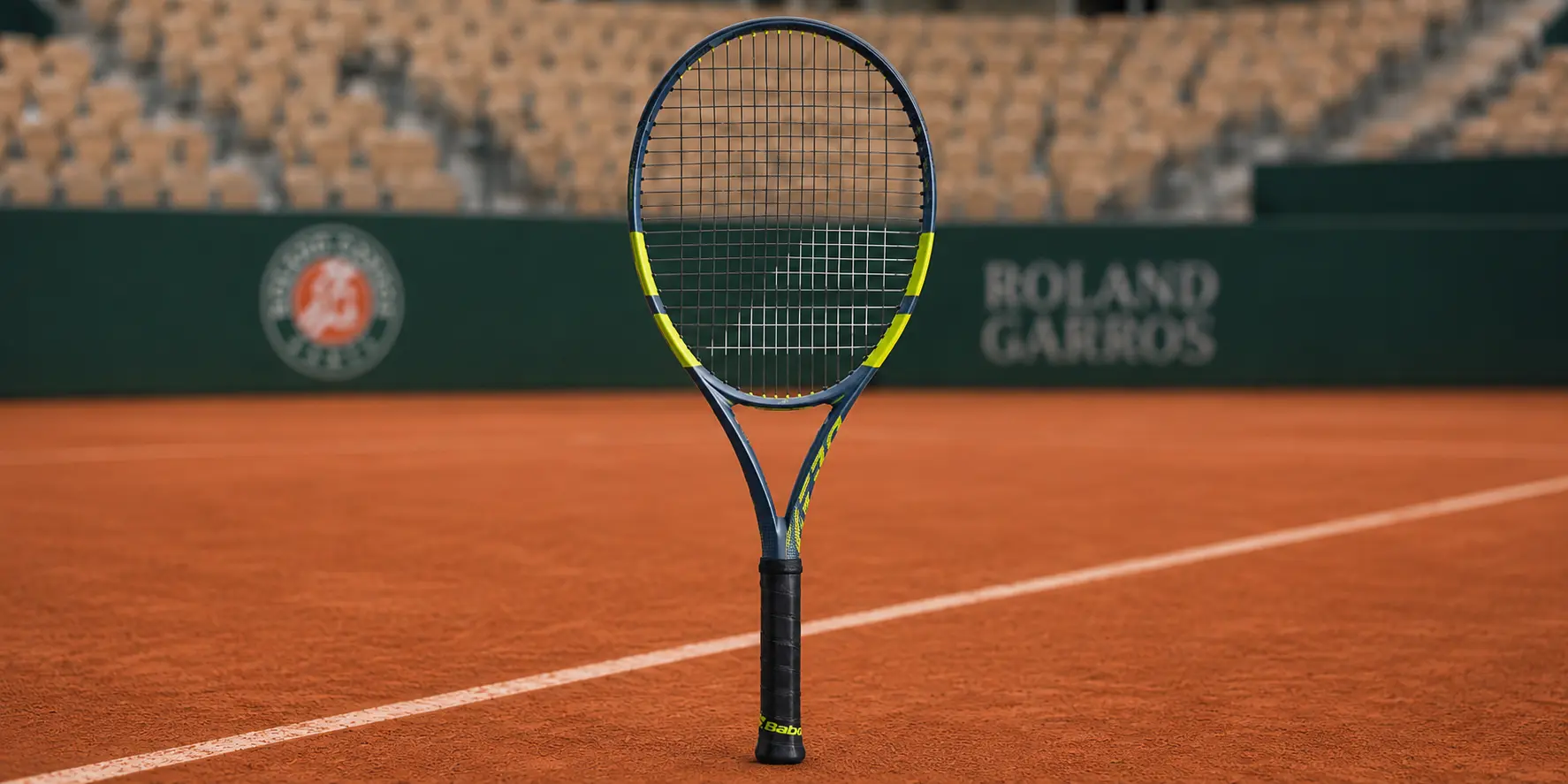
Key models: Pure Aero 100 and Pure Aero 98
Pure Aero 100 is the reference point of the line. It usually combines a 100 sq in head, weight close to 300 g unstrung and an open string pattern. It best represents the Pure Aero DNA: easy spin, useful power and enough forgiveness to compete without feeling every shot has to be perfect.
It fits especially well if you are an upper-intermediate or advanced player, play mainly from the baseline and want your ball to jump more after the bounce. It is also the most logical option if you are unsure which Pure Aero version you need.
Pure Aero 98 is more precise and more demanding. It keeps the spin identity, but with a more controlled response and a less forgiving sweet spot. It makes sense if you have a fast swing, good timing and want to attack with spin without the ball flying long.
The practical difference is simple: the 100 helps more; the 98 obeys more. Under pressure, the 100 usually forgives better. If you hit cleanly and accelerate well, the 98 gives you more confidence to aim.
Quick table: Pure Aero versions
| Model | Main trait | Ideal for | Watch out for |
|---|---|---|---|
| Pure Aero 100 | Spin, useful power and margin | Baseline players with topspin | Can feel lively if you hit very flat |
| Pure Aero 98 | More control and direct response | Competitors with fast swings | Less forgiveness off center |
| Pure Aero Team | Lower weight, easier swing | Intermediates, doubles, advanced juniors | Less stability against heavy balls |
| Pure Aero Lite | Very maneuverable | Transition to an adult racket | Less ball weight |
| Pure Aero S Lite | Maximum ease of swing | Beginners, juniors, compact swings | Can feel too light for competition |
| Pure Aero Plus | More leverage and reach | Spin serves and baseline play | Less agile on returns and volleys |
Babolat Pure Drive: for easy power and depth
The Pure Drive is Babolat’s line for easy power. Its goal is to send the ball fast and deep without demanding a perfect swing. That is why it works so well for many intermediate players: it helps defend, return deep and finish points when you are not perfectly set.
It is not only a beginner-friendly racket. The difference is that the harder you hit, the more discipline you need to control that power.
Famous examples: Andy Roddick is one of the names most closely tied to the Pure Drive, especially because of his serve and direct power. Kim Clijsters was also associated with the Pure Drive, showing that the line can work for both explosive ATP-style power and an athletic WTA game.
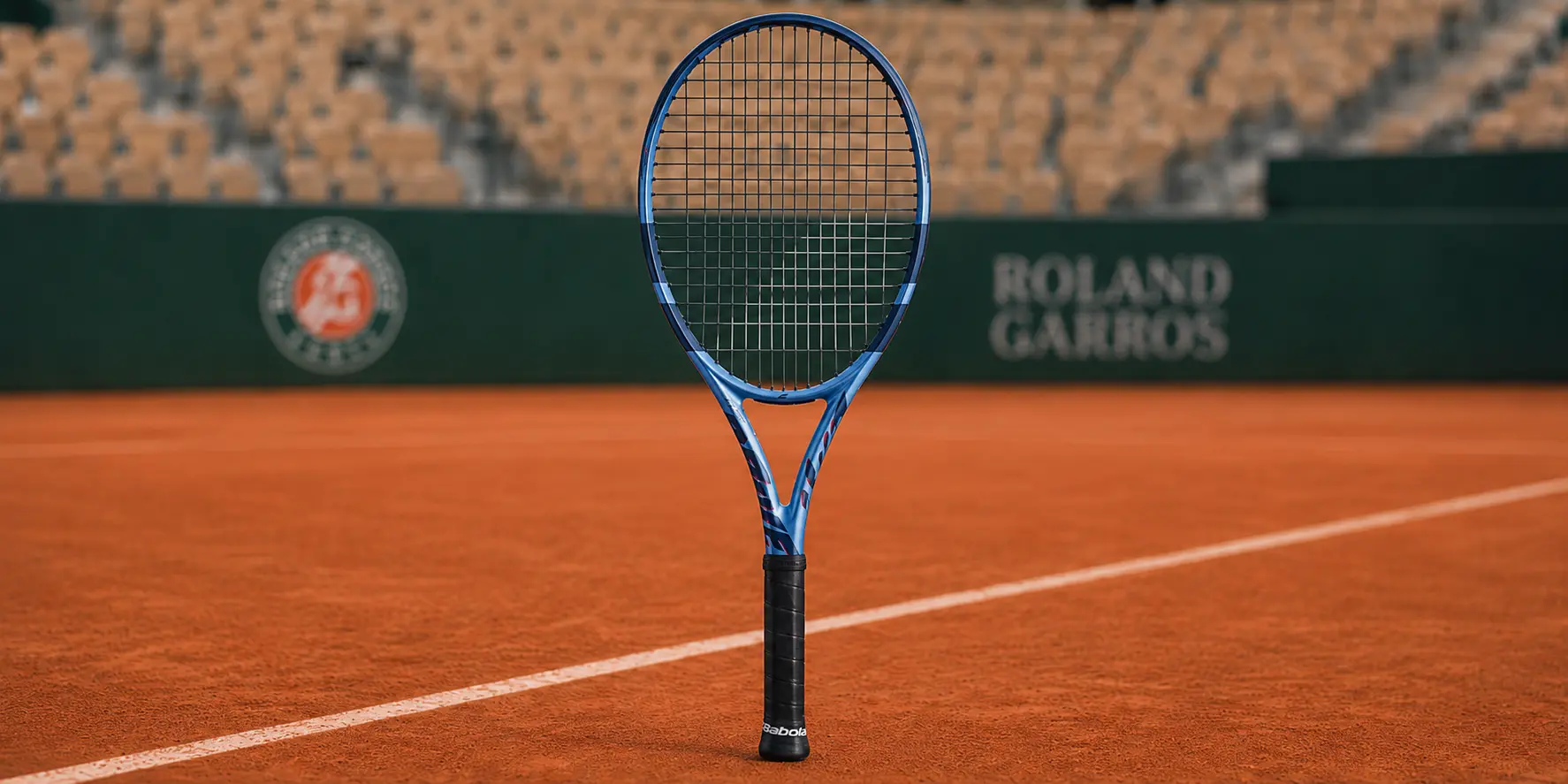
Key models: Pure Drive 100 and Pure Drive 98
Pure Drive 100 is the most representative version. A 100 sq in head, weight close to 300 g unstrung and a powerful response. If you want a versatile racket with immediate ball speed and strong performance in almost every situation, this is usually the first Pure Drive to try.
It fits players with medium or medium-long swings, not necessarily heavy topspin swings. It also helps a lot if your problem is leaving the ball short or struggling to get depth when defending.
Pure Drive 98 is the option for players who want Pure Drive power with more control. The smaller head lowers the margin for error, but makes the trajectory easier to manage. It is a good fit for offensive players who already generate pace and feel the Pure Drive 100 launches the ball too much.
The practical difference: the 100 gives you easier depth; the 98 lets you hit harder with less fear. For most intermediate players, the 100 will be more useful. For advanced players with fast swings, the 98 can be more precise.
Quick table: Pure Drive versions
| Model | Main trait | Ideal for | Watch out for |
|---|---|---|---|
| Pure Drive 100 | Easy power and depth | Intermediates to advanced players who want help | Can launch too much if you hit flat |
| Pure Drive 98 | Power with more control | Offensive players with good timing | Less forgiveness than the 100 |
| Pure Drive Team | Power in a lighter frame | Doubles, intermediates, players prioritizing speed | Less solid against heavy balls |
| Pure Drive Lite | Easy power and low weight | Beginners to intermediates | Less stability |
| Pure Drive S Lite | Maximum ease | Recreational players, juniors, compact swings | Limited for intense competition |
| Pure Drive 107 | Large sweet spot and lots of help | Seniors, returning players, short swings | Less directional precision |
| Pure Drive Plus | More serve, reach and leverage | Baseliners with good preparation | Less maneuverable |
Babolat Pure Strike: for control and attack
The Pure Strike is Babolat’s most offensive control oriented line. It does not give away as much power as the Pure Drive or as much easy spin as the Pure Aero. Its goal is to give you a more direct response for intentional hitting, changing direction and controlling depth.
It is the most interesting family if you already generate power and want a racket that helps organize it.
Famous examples: Dominic Thiem is the most representative Pure Strike name, with a heavy, aggressive baseline game and a full swing. Cameron Norrie has also been associated with this line, from a more tactical and control-based profile.
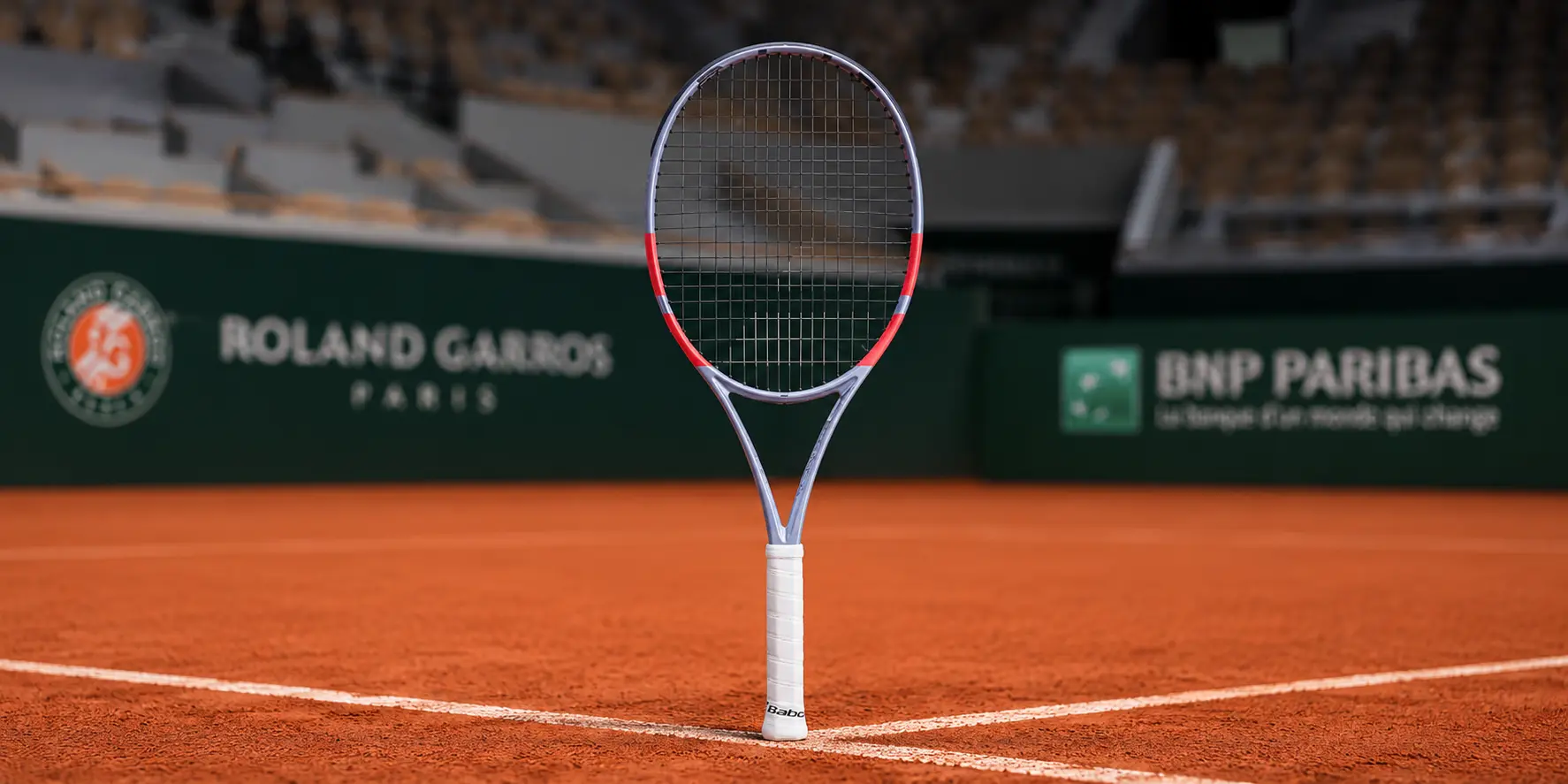
Key models: Pure Strike 100, Pure Strike 98 and Pure Strike 97
Pure Strike 100 16/20 is probably the most balanced entry into the line. The 100 sq in head gives more margin than the 98 or 97 versions, while the 16/20 pattern tries to keep control without killing ball speed. It is a good option if you want more precision than a Pure Drive, but do not want a racket that is too demanding.
Pure Strike 98 is usually the competitive heart of the family, especially in 16/19 and 18/20 versions. The 16/19 has a livelier response and accepts topspin more easily. The 18/20 is denser, more directional and more demanding. If you hit with a full swing and like attacking from the baseline, this is natural Strike territory.
Pure Strike 97 is the most precise and demanding. It makes sense for advanced players who hit cleanly, generate their own power and want a direct feel on flat shots, slice, volleys and direction changes. It is the least recommended option if you need help or forgiveness.
The practical difference: the 100 is the friendliest Strike, the 98 is the most competitive Strike, the 97 is the purest Strike.
Quick table: Pure Strike versions
| Model | Main trait | Ideal for | Watch out for |
|---|---|---|---|
| Pure Strike 100 16/20 | Control with more forgiveness | Upper-intermediate players and all-court players | Not as powerful as Pure Drive |
| Pure Strike 98 16/19 | Control with livelier response and moderate spin | Attacking baseliners who want versatility | Less precise than the 18/20 |
| Pure Strike 98 18/20 | Lower trajectory and directional control | Fast swings, flatter shots, advanced players | Can leave the ball short if you do not accelerate |
| Pure Strike 97 | Maximum precision and direct feel | Advanced players with clean contact | Very little forgiveness |
| Pure Strike Team | Control in a more manageable frame | Intermediates, doubles, transition to control rackets | Less stability than heavier versions |
Quick comparison: Pure Aero vs Pure Drive vs Pure Strike
| If you want… | Most logical line | Recommended starting model |
|---|---|---|
| More spin and margin | Pure Aero | Pure Aero 100 |
| More easy power | Pure Drive | Pure Drive 100 |
| More offensive control | Pure Strike | Pure Strike 100 16/20 |
| More precision without losing power | Pure Drive 98 or Pure Aero 98 | Depends on whether you hit flatter or with more spin |
| More competitive control | Pure Strike 98 | 16/19 for more response, 18/20 for more precision |
| Maximum demand and touch | Pure Strike 97 | Only if you hit very cleanly |
| More physical ease | Team, Lite or S Lite | Depends on the line and level |
Which Babolat racket to choose in practice
If you do not know where to start, use this rule:
Pure Aero 100 if your natural ball has topspin and you want more margin.
Pure Drive 100 if you want easy depth and a racket that helps you more.
Pure Strike 100 16/20 if you want control, but do not want to jump straight into a demanding 98.
Then look at 98 or 97 versions only if you have a clear reason: more precision, fast swing, consistent contact and less need for forgiveness. In rackets, choosing the “more pro” version does not always improve your tennis. Often, the best racket is the one that lets you hit deep, relaxed and with good timing for two hours.
And remember that the racket does not work alone. Stiffness RA, string type, head size, string pattern and swing weight can make two similar models feel very different.
Frequently asked questions about Babolat rackets
What is the easiest Babolat racket to use?
For most intermediate players, the Pure Drive 100 is usually the easiest because it offers power and depth with less effort. If you need physical ease because of weight, look at Team, Lite or S Lite versions.
Pure Aero or Pure Drive: which one is better?
Choose Pure Aero if your game is based on topspin, height and margin. Choose Pure Drive if you need more easy power and depth. If you hit very flat, the Pure Drive will usually feel more natural than the Pure Aero.
Is Pure Strike only for advanced players?
Not necessarily, but it is more demanding than Pure Drive. The Pure Strike 100 16/20 can work for upper-intermediate players who want control. The 98 and 97 versions are better for players with fast swings and clean contact.
Keep learning
Turn this information into a better decision for your game
Explore more guides on the same topic or visit the complete archive to compare your options with context.
Continue reading
Related articles

Prince Rackets Guide: Tour, Phantom, Ripstick and More
Compare Prince Tour, Phantom, Ripstick, Ripcord and Beast rackets, understand O3, and choose the right family to demo for your game.

Dunlop Rackets Guide: CX, SX, FX or LX?
Compare Dunlop CX, SX, FX and LX rackets, understand Tour and LS versions, and decide which models to demo for your swing and game.

Tecnifibre Rackets: T-Fight, TF-40, Fire or Tempo?
Compare Tecnifibre rackets by power, control, weight and head size to find which T-Fight, TF-40, Fire or Tempo you should demo first.