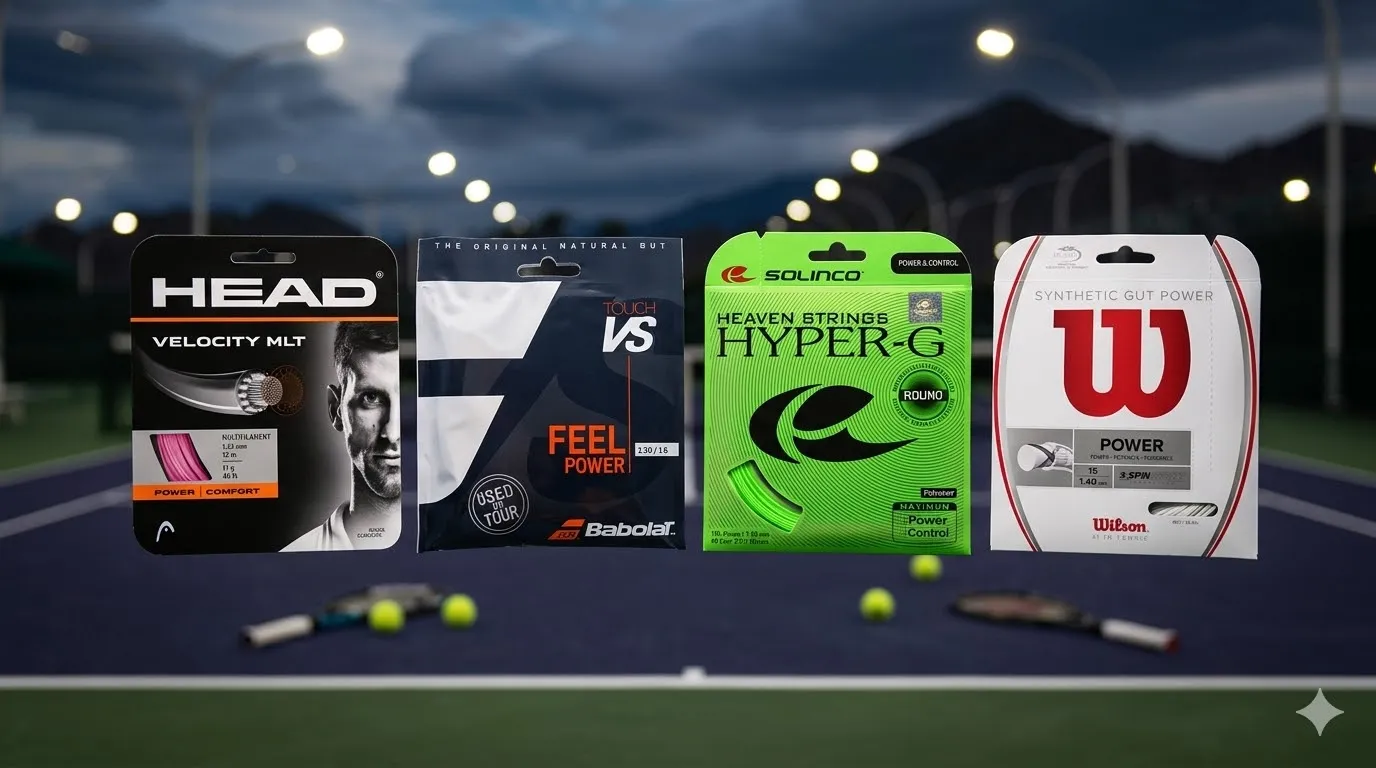
Tennis String Types: Polyester, Multifilament, Natural Gut & Synthetic
Complete guide to tennis string types. Learn the real differences between polyester, multifilament, natural gut, and synthetic to choose the best one for your game.
Choosing the right string type can completely change how your racket feels. Yet most players pay more attention to the racket than the strings, when in reality the strings are the only thing that touches the ball. Let’s break down each type so you can make an informed decision.
Why Does String Type Matter?
Strings are responsible for 100% of the contact between your racket and the ball. The string type you choose directly affects:
- Power: How much energy the string returns to the ball
- Control: How predictable the response is
- Spin: How much grip it generates on the ball
- Comfort: How much vibration your arm absorbs
- Durability: How long it lasts before breaking or losing its properties
Two identical rackets with different strings will feel like completely different rackets.
The Four Main Types
Polyester (Poly)
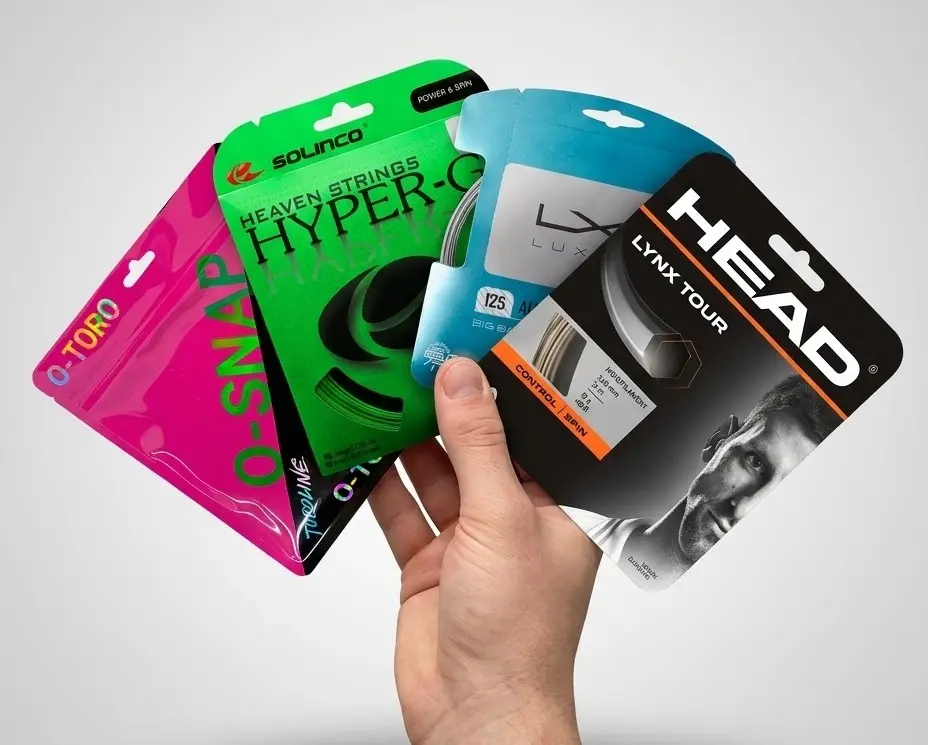
Polyester is the most popular string among intermediate and advanced players. It’s used by virtually every professional on the current tour.
Characteristics:
- High stiffness: The firmest string on the market
- Low elasticity: Little “trampoline effect”
- Excellent for spin: Its slippery surface allows strings to move and snap back into place, biting the ball
- High physical durability: Takes a long time to break
- Low performance durability: Loses tension and properties quickly
Advantages:
- Generates a lot of spin, especially in open patterns like 16x19
- Predictable control thanks to its stiffness
- Resistant to breakage
- Affordable price ($5-15 USD per set)
Disadvantages:
- Harsh on the arm: Higher risk of discomfort or injury (tennis elbow)
- Loses tension fast: After 10-15 hours of play it no longer feels the same
- Requires a fast swing: Without swing speed, it feels “dead” and powerless
Ideal for:
- Intermediate to advanced players with a fast swing
- Those looking for maximum spin and control
- Players who break strings frequently
- Not recommended for players under 14-16 years old or those with arm problems
Popular strings: Luxilon ALU Power, Babolat RPM Blast, Solinco Hyper-G, Tecnifibre Black Code
Multifilament
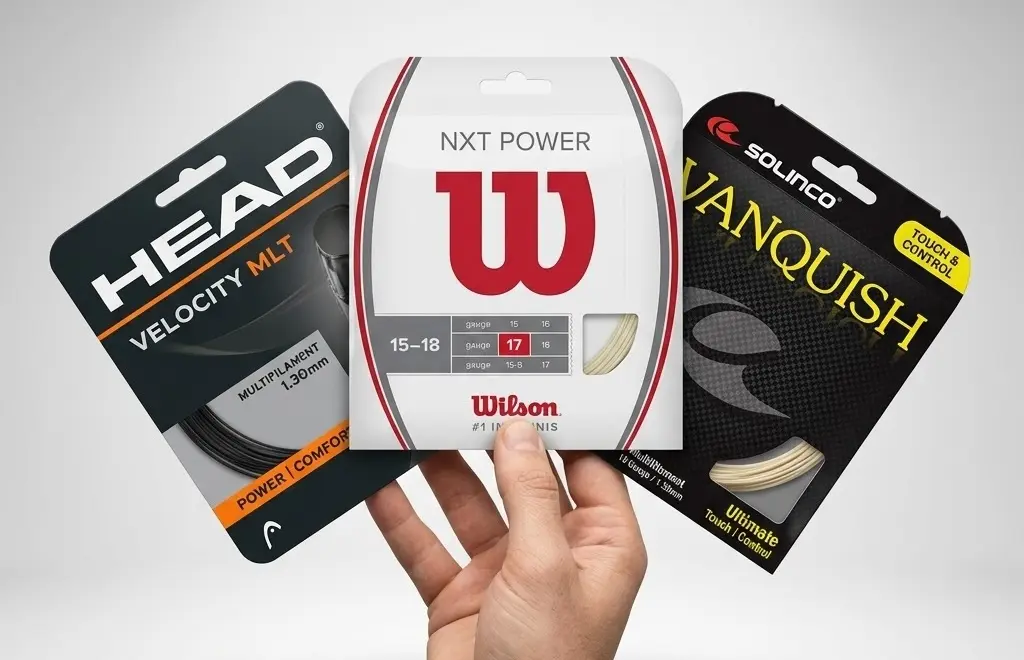
Multifilament is made of hundreds or thousands of braided microfibers. It was designed to mimic the feel of natural gut at a fraction of the cost.
Characteristics:
- Low stiffness: Feels soft and flexible
- High elasticity: Great trampoline effect
- Excellent vibration absorption: Very arm-friendly
- Loses tension moderately fast: Not as fast as poly, but more than natural gut
Advantages:
- Maximum comfort of all synthetic types
- Lots of “free” power thanks to its elasticity
- Excellent for players with arm problems
- Good feel and touch on the shot
Disadvantages:
- Breaks faster than polyester
- Less control than poly (more “elastic” = less predictable)
- Less spin generation than polyester
- Higher price than synthetic ($10-25 USD per set)
Ideal for:
- Players who prioritize comfort and feel
- Those who have or want to prevent arm problems
- Players with a moderate swing looking for extra power
- Doubles and net players who value touch
Popular strings: Tecnifibre NRG2, Wilson NXT, Babolat Xcel, Head Velocity MLT
Natural Gut
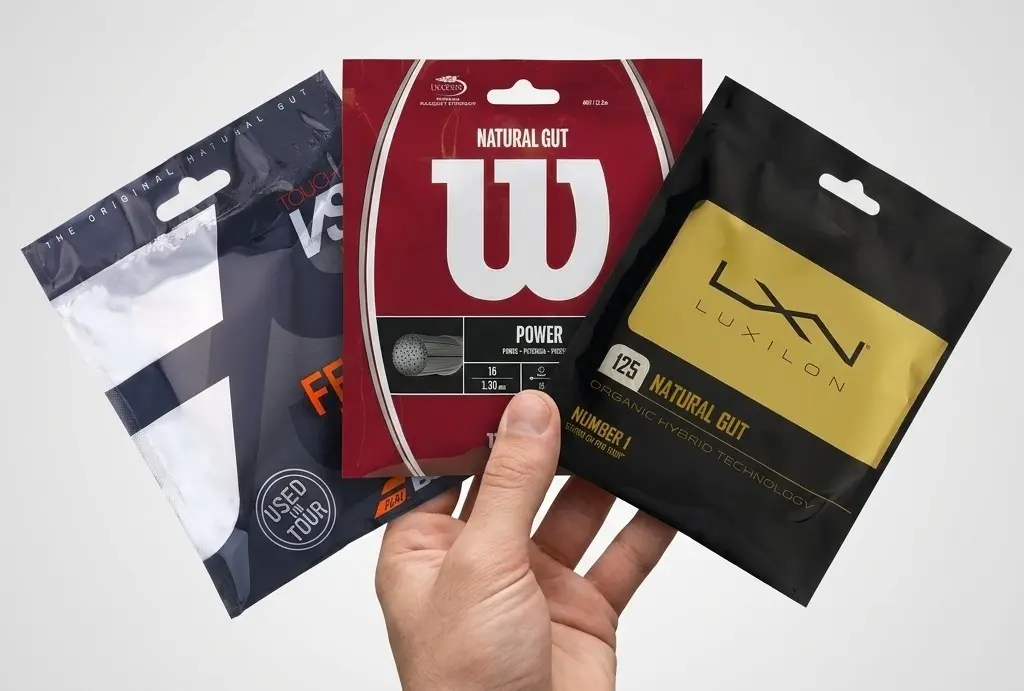
Natural gut is made from bovine intestinal serosa (not cat gut, as the myth goes). It’s the original tennis string material and remains, after more than a century, the benchmark against which all other strings are measured.
Characteristics:
- Superior elasticity: The best trampoline effect of all strings
- Exceptional tension retention: Maintains its properties much longer than any other
- Premium comfort: Absorbs vibrations better than any synthetic
- Unmatched feel: Most players who try it never want to go back
Advantages:
- The best combination of power and control that exists
- Retains tension significantly longer than poly or multi
- Maximum comfort, ideal for protecting the arm
- Excellent in any string pattern, from 16x19 to 18x20
Disadvantages:
- High price: $30-50+ USD per set
- Sensitive to moisture: Loses properties with water and high humidity
- Moderate physical durability: Breaks more easily than poly, especially with heavy spin techniques
- Limited availability: Not all stringers work with it
Ideal for:
- Players seeking the best possible performance regardless of cost
- Those with chronic arm problems
- Players of any level who value feel and comfort
- Classic or all-court technique
Popular strings: Babolat VS Touch, Wilson Natural Gut, Klip Legend
Synthetic Gut (Nylon)
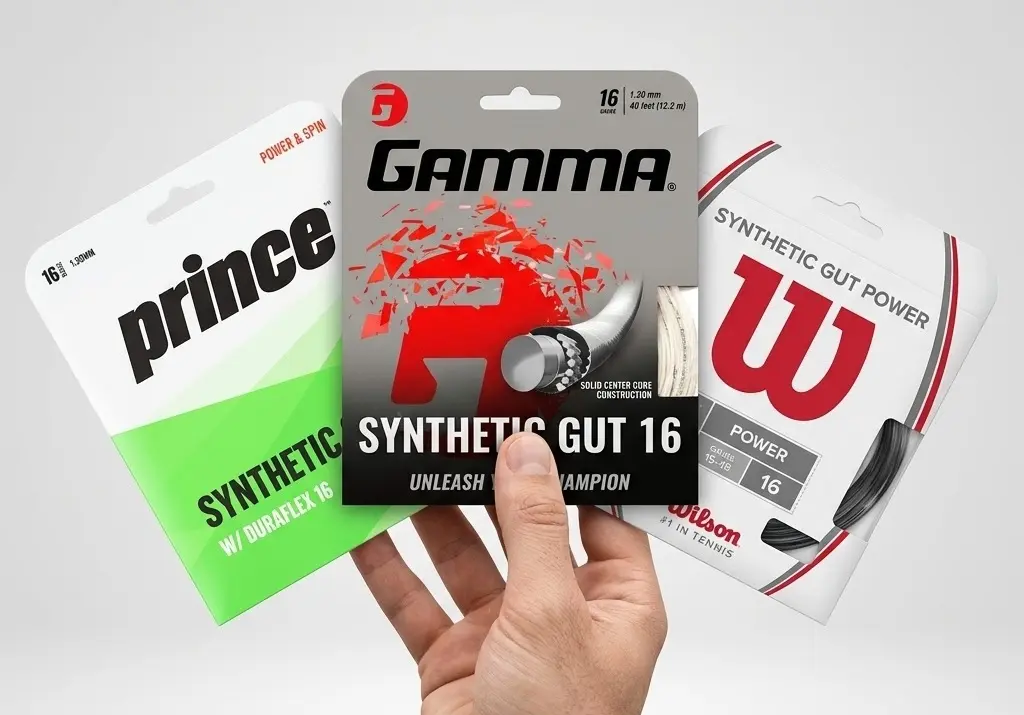
Synthetic gut is the “all-rounder” of the string world. It’s a nylon string with a solid core, designed to offer balanced performance at a low cost.
Characteristics:
- Medium stiffness: Neither too soft nor too firm
- Moderate elasticity: A decent trampoline
- Good tension retention: Better than multifilament
- Reasonable durability: Holds up well for its price
Advantages:
- Best value for money ($3-8 USD per set)
- Balanced performance across all aspects
- Available at virtually any tennis shop
- Good option as a starting point to find your preferences
Disadvantages:
- Doesn’t excel in any particular aspect
- Less comfort than multifilament and natural gut
- Less spin than polyester
- “Generic” feel for experienced players
Ideal for:
- Beginners and recreational players
- Those looking for a reliable and affordable string
- Players who don’t yet know what type of string they prefer
- Tight budgets
Popular strings: Prince Synthetic Gut, Gamma Synthetic Gut, Head Synthetic Gut PPS
Head-to-Head Comparison
| Feature | Polyester | Multifilament | Natural Gut | Synthetic |
|---|---|---|---|---|
| Power | Low-Medium | High | Very High | Medium |
| Control | High | Medium | High | Medium |
| Spin | Very High | Medium | Medium-High | Medium |
| Comfort | Low | High | Very High | Medium |
| Durability | High (physical) | Low-Medium | Medium | Medium-High |
| Tension retention | Low | Medium | Very High | Medium-High |
| Price | $5-15 | $10-25 | $30-50+ | $3-8 |
Hybrids: The Best of Both Worlds
A hybrid setup combines two different string types: one in the mains (verticals) and another in the crosses (horizontals). It’s one of the most popular configurations in modern tennis.
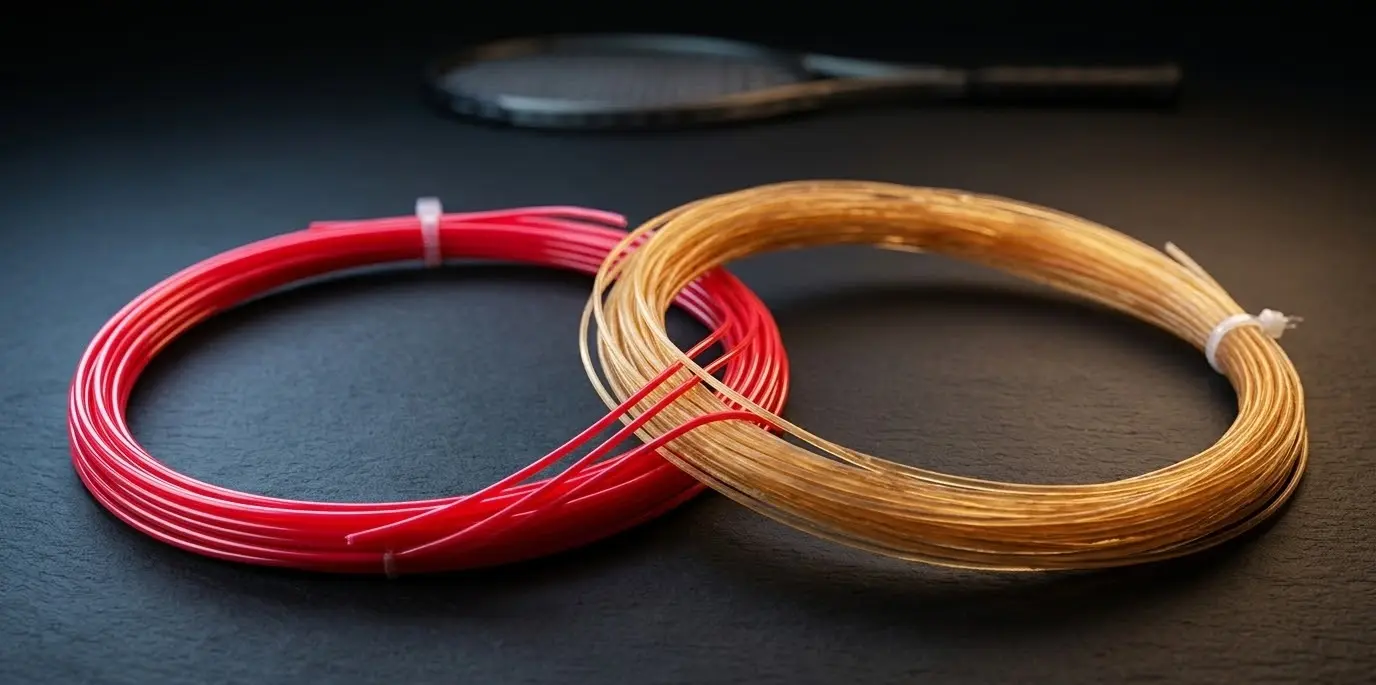
The Most Popular ATP Tour Combo: Poly + Natural Gut
- Mains (verticals): Polyester — for spin and durability
- Crosses (horizontals): Natural gut — for comfort and power
This is the setup many professionals use, including Roger Federer throughout much of his career.
Other Common Combinations
- Poly (mains) + Multifilament (crosses): More affordable alternative to poly + gut. Good balance of spin and comfort
- Poly (mains) + Synthetic (crosses): The most economical option to get some poly benefits without the full cost
What Goes in the Mains and What in the Crosses?
General rule: The mains string has a greater impact on spin and durability. The crosses string influences comfort and feel more.
That’s why the most common setup puts polyester in the mains (spin, control) and the softer string in the crosses (comfort, power).
How Does String Type Affect the String Pattern?
String type and string pattern work together. Some combinations work better than others:
- Polyester + 16x19 (open pattern): The maximum spin combination. Strings move freely and bite the ball. The most popular choice on the professional tour
- Polyester + 18x20 (dense pattern): Maximum control with good durability. For players with refined technique who generate their own spin
- Multifilament + 16x19: Lots of power and comfort, but breaks relatively quickly
- Natural gut + 18x20: Classic premium setup. Exquisite control with superior comfort
- Synthetic + any pattern: Works well in both, without excelling in either
Common Myths
Myth 1: “Natural gut is made from cat”
- Reality: It’s made from bovine (cow) intestinal serosa. It has never been made from cat intestine
Myth 2: “Polyester is only for professionals”
- Reality: It’s for any player with a fast enough swing. An intermediate player with a good swing can benefit greatly
Myth 3: “All polyester strings are the same”
- Reality: There are huge differences between polyesters. A Luxilon ALU Power plays completely differently from a Solinco Hyper-G
Myth 4: “More expensive strings are always better”
- Reality: The best string is the one that suits your game, not the most expensive one. An $8 polyester can be perfect for you
Which One Should You Choose?
Choose Polyester if:
- You have a fast, aggressive swing
- You prioritize spin and control
- You don’t have arm problems
- You break strings frequently
Choose Multifilament if:
- Comfort is your number one priority
- You have or want to prevent arm discomfort
- You’re looking for power without working as hard
- You don’t mind restringing a bit more often
Choose Natural Gut if:
- You want the best possible performance
- Price is not a deciding factor
- You value long-term tension retention
- You play in low-humidity conditions
Choose Synthetic if:
- You’re just starting out in tennis
- You’re looking for good value for money
- You don’t yet know what type of string you prefer
- You want something reliable without complications
Choose Hybrid if:
- You want to combine poly spin with another string’s comfort
- You’re looking to optimize performance without sacrificing too much comfort
- You’re willing to experiment with combinations
Conclusion
There is no universally “perfect” string. The best string depends on your level, playing style, physical condition, and budget. The most important thing is understanding that strings have a huge impact on how your racket plays — often even more than the racket itself.
If you’ve never experimented with different string types, I recommend trying at least two different types on your current racket. The difference will surprise you.
Remember: string type is just one part of the equation. The string pattern, tension, and your own technique complete the puzzle.