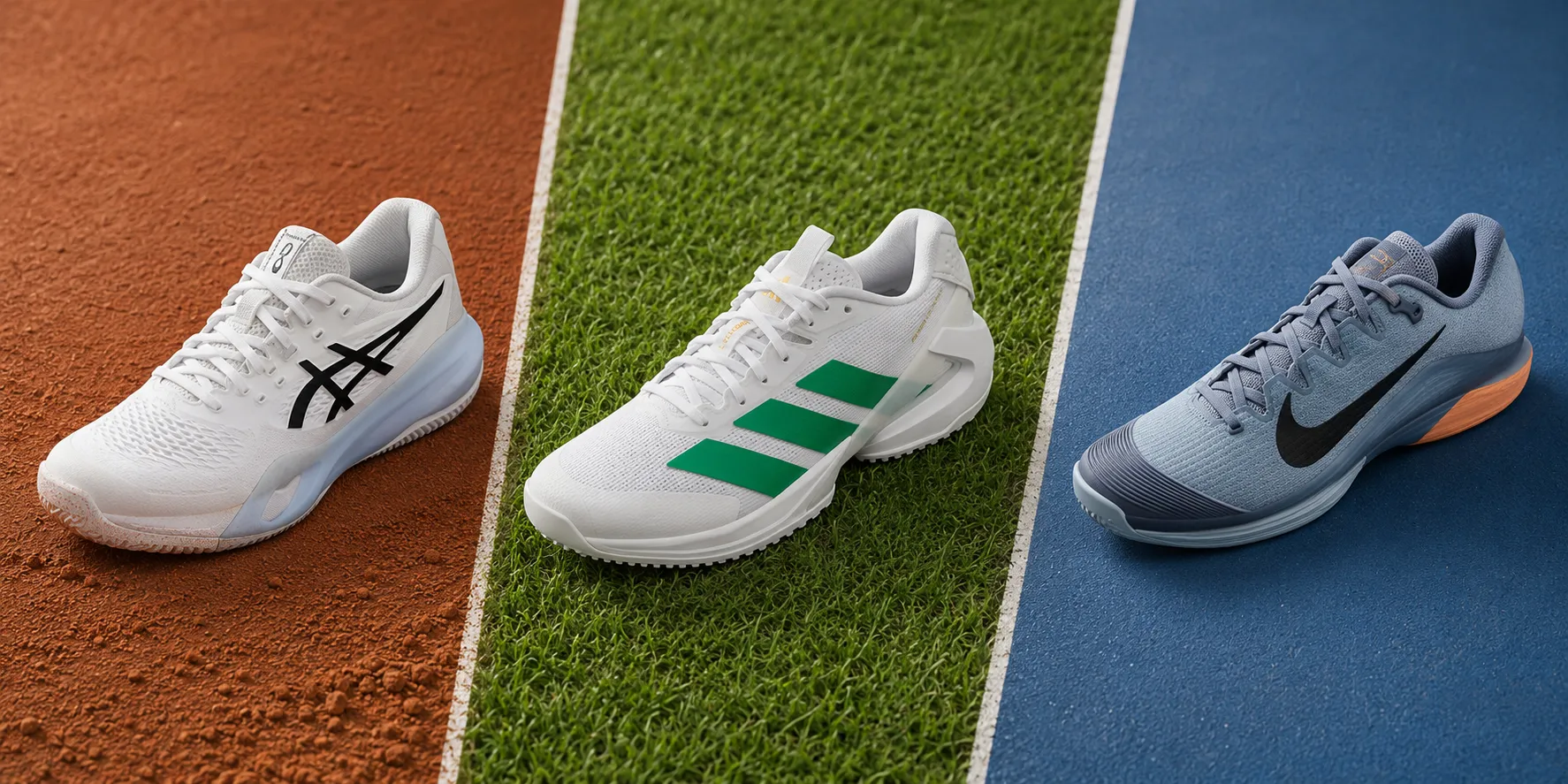
Tennis Shoes by Court Surface: Practical Guide
Buying tennis shoes because you like the color, or because a pro wears the brand, is an easy way to make the wrong choice. The same shoe that feels stable on hard court can grab too much on clay, slide unpredictably on grass, or wear out fast on abrasive concrete.
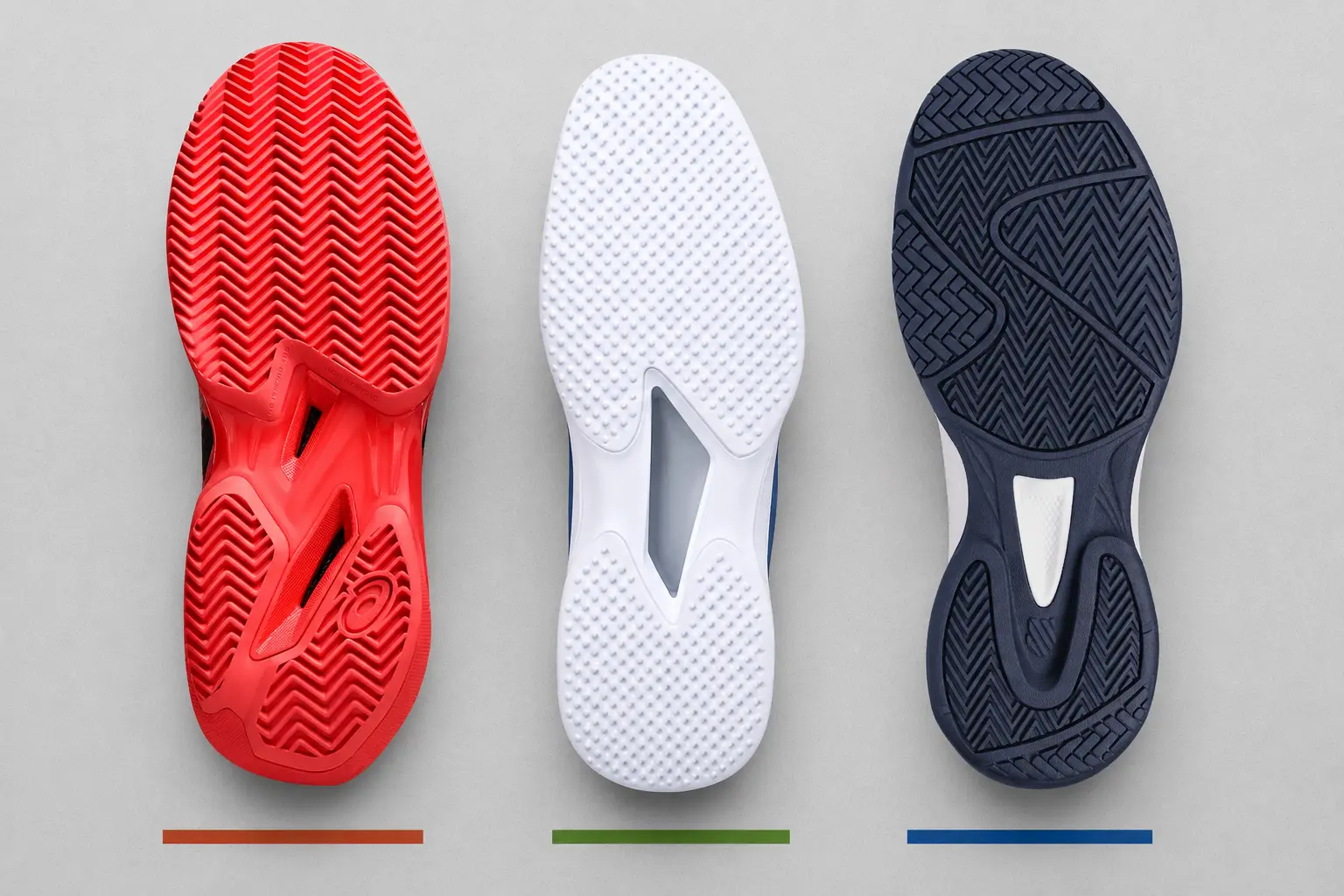
Short answer: to choose tennis shoes by court surface, start with the outsole. Clay needs a herringbone pattern that releases dust; hard courts need durable rubber and lateral support; grass needs low, court-approved traction that will not tear the turf; indoor or carpet courts need controlled grip and a responsive midsole. Cushioning matters, but traction comes first.
This is not a ranking of the single best tennis shoe. The useful question is more specific: how do you move, which surface do you play most, and what trade-off are you willing to make between grip, sliding, durability, and weight?
The basic rule: the outsole matters more than cushioning
The surface changes the relationship between your foot and the court. On an open-stance forehand, a blocked return, or a sprint toward a drop shot, the shoe has to do three things at once:
- Brake without sticking, so your knee does not absorb all the torque.
- Push off quickly, especially on short lateral steps.
- Slide just enough, when the surface allows it.
The ITF classifies court surfaces by pace and behavior, but for a club player the practical translation is simpler: each court asks for a different outsole pattern. If you want the deeper playing-style context, the guide to tennis court surfaces pairs well with this article.
| Surface | What you need | Recommended outsole | Common mistake |
|---|---|---|---|
| Clay | Progressive grip and controlled sliding | Full herringbone or clay-specific | Using a smooth all-court outsole that packs with dust |
| Hard court | Durability, lateral support, cushioning | Hard/all-court rubber with reinforced zones | Buying a shoe that is too light if you drag your foot |
| Grass | Low, safe traction that protects the turf | Small studs or approved grass-specific tread | Wearing aggressive clay shoes |
| Carpet/indoor | Moderate grip, stability, response | Clean non-marking all-court sole | Choosing an outsole that feels too sticky |
Clay courts: look for herringbone, not just more grip
On clay, you need a shoe that bites into loose material but also releases it. That is why the full herringbone outsole is still the reference point: the diagonal channels grip when you start moving and allow a controlled slide when you brake.
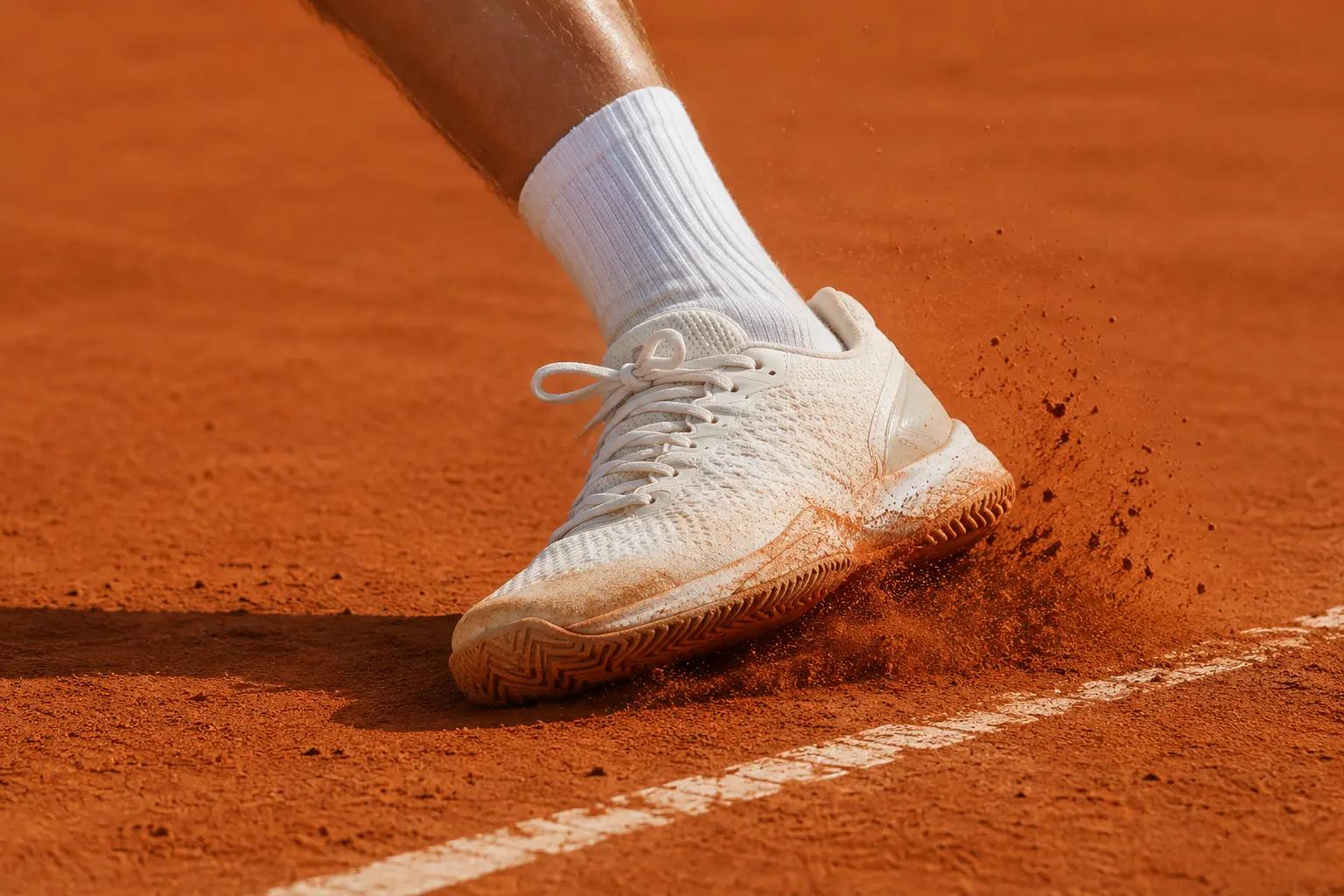
If the outsole packs with clay dust, you lose traction exactly when you need the first defensive step. If it grabs too hard, the foot stops while the body keeps rotating. On clay, a good shoe does not prevent sliding; it makes it predictable.
Prioritize:
- Full herringbone or clay-specific tread.
- Reinforced sides if you slide on the toe or drag your foot.
- Firm midfoot lockdown, because clay movement involves long repeated changes of direction.
- Reasonable weight: clay points usually run longer.
Three examples for clay courts
| Brand | Model | Why it fits |
|---|---|---|
| ASICS | GEL-Resolution X with clay outsole when available | Stable option for players who load hard into lateral movements and want durability. |
| adidas | adizero Ubersonic 5 Clay | Faster and lower than a maximum-stability shoe; useful if you prioritize reaction and lightness. |
| On | THE ROGER Pro 3 Clay | Premium option for players who want a firm feel, close fit, and clay-specific outsole. |
If you play clay three or four times per week, I would not try to save money with a generic all-court shoe. You feel the difference on the first long brake.
Hard courts: durability is part of performance
Hard courts punish the outsole, the midsole, and your legs. The problem is not only slipping; it is repeating hard stops on an abrasive surface that does not forgive lazy footwear choices.
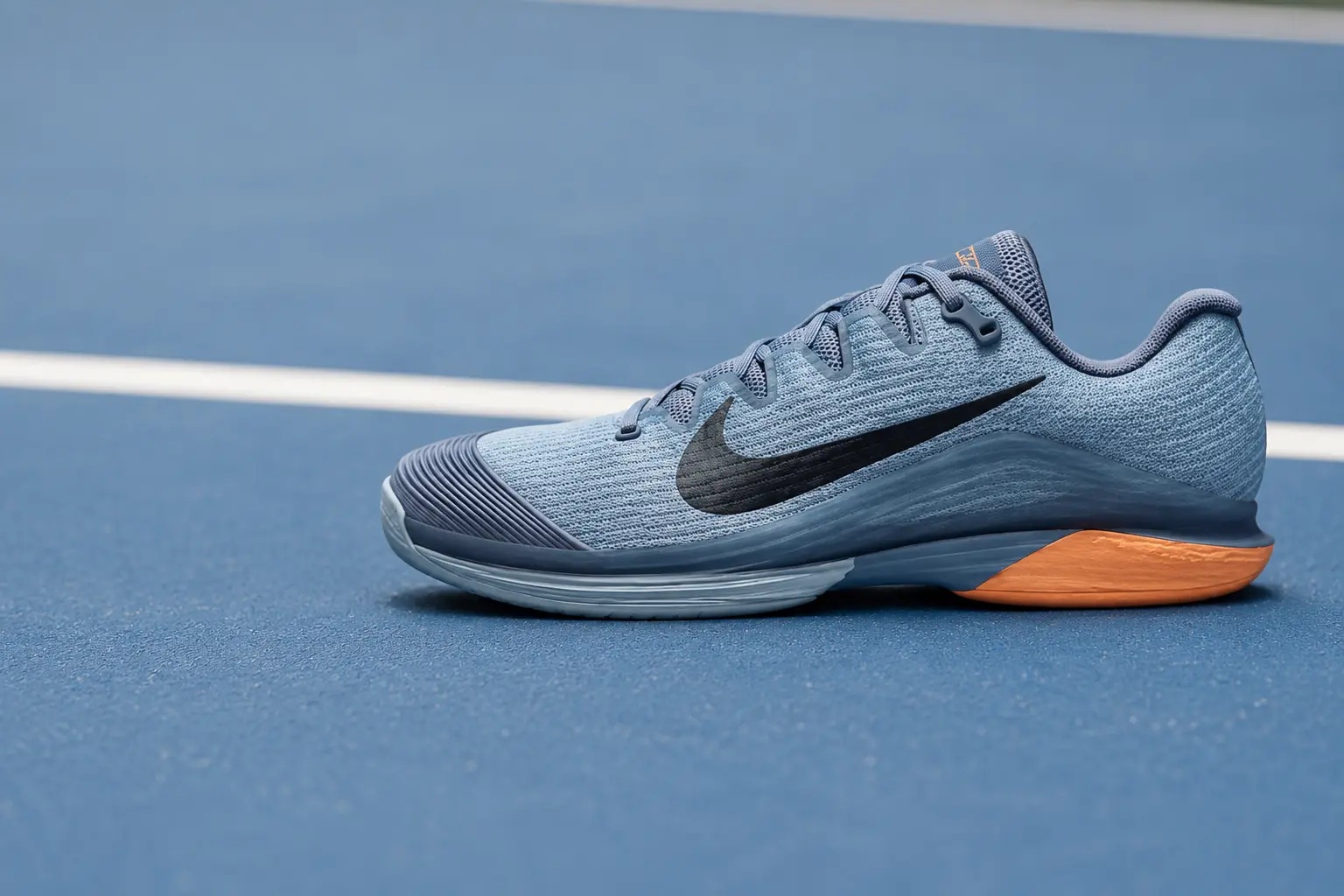
For most intermediate players, the best hard-court tennis shoe is not the lightest one. It is the one that stays stable when you arrive late. If you hit often from an open stance, look for lateral support. If you play tournaments or have a history of aches, you need cushioning and a base that does not collapse in a third set.
Prioritize:
- Durable rubber in high-drag areas.
- Stable base, especially on the outer lateral side.
- Solid cushioning under heel and forefoot.
- Reinforced upper if you drag the toe on serve or defensive balls.
Three examples for hard courts
| Brand | Model | Why it fits |
|---|---|---|
| ASICS | Court FF 3 or GEL-Resolution X | Court FF 3 feels more dynamic; GEL-Resolution X is the more conservative stability pick. |
| Nike | Nike Zoom GP Challenge Pro | Current hard-court option with support for lateral movement. |
| On | THE ROGER Pro 3 | Premium, firm, reactive option for players who do not want a soft shoe. |
Hard court is also where outsole durability guarantees, when available, matter most. That is not empty marketing if you wear through the medial edge in a few weeks.
Grass courts: less is more, and the club gets the final say
Natural grass is the trickiest surface for footwear. An aggressive outsole can damage the court; a sole that is too smooth can make you skate through the split step.
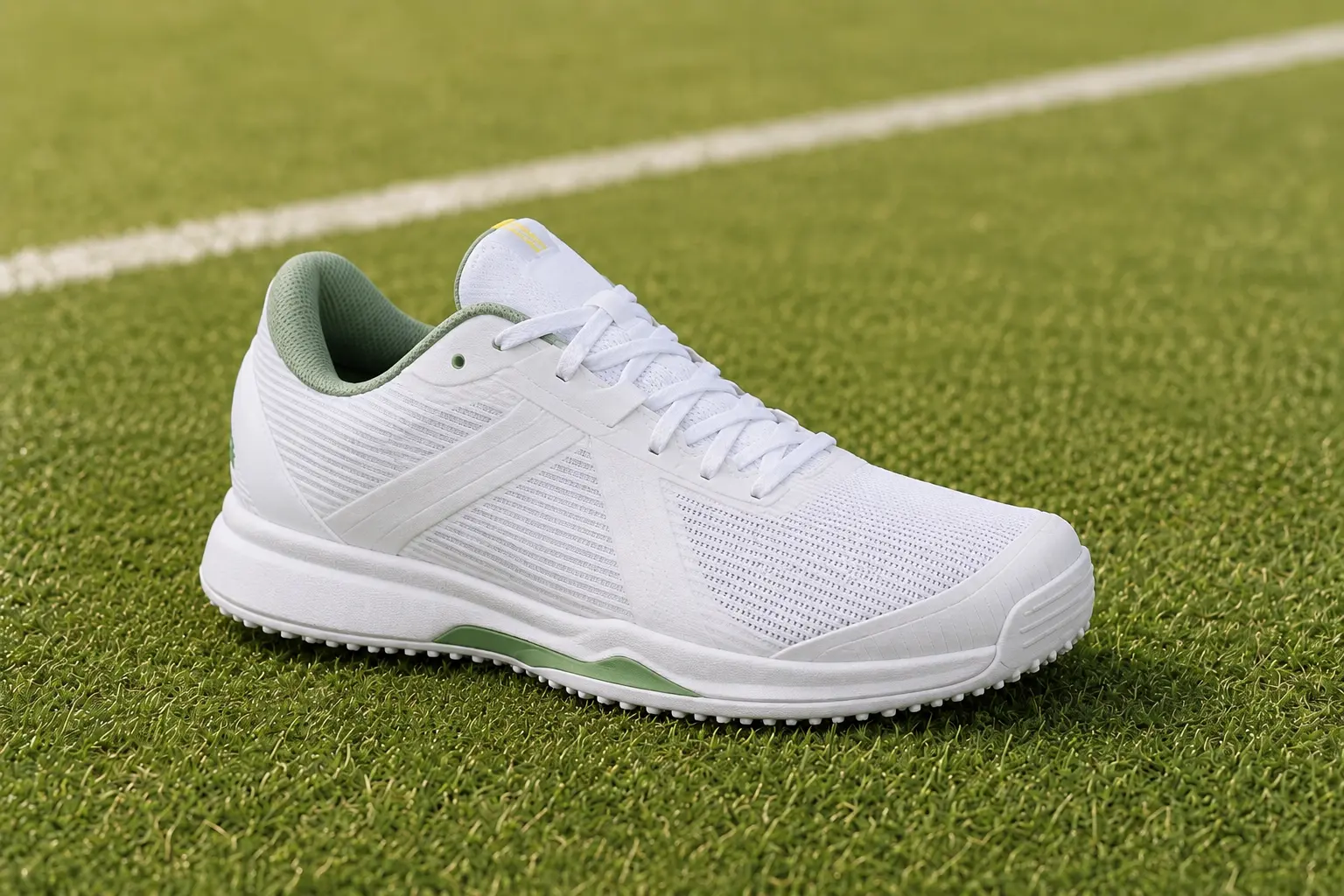
Always check the club or tournament rule before playing on grass. Some facilities allow small studs; others only allow approved models or low-profile all-court outsoles. At Wimbledon, for example, grass condition and maintenance are part of the surface performance. This is not the place to improvise with any random sole.
Prioritize:
- Small studs or grass-specific tread if allowed.
- Low profile and good flex for reacting to low bounces.
- Enough traction, but not deep clay herringbone.
- Secure upper fit: on grass, the steps are short and the foot cannot swim inside the shoe.
Three examples for grass courts
| Brand | Model | Why it fits |
|---|---|---|
| ASICS | Solution Speed FF 3 | Not always available in a grass version; as a light all-court option, it is realistic when the club does not allow studs. |
| adidas | adizero Ubersonic 5, if the club accepts all-court soles | Fast, low-profile option when you do not need a grass-specific outsole. |
| K-Swiss | Ultrashot 3 Grass | Clear example of a grass-specific shoe with traction built for natural turf. |
The honest point: there is much less choice than for clay or hard courts. If you play grass one week per year, renting, asking the club, or using an approved all-court shoe may be smarter than chasing a rare model.
Carpet and indoor courts: watch out for too much grip
Carpet has mostly disappeared from the pro tour, but it still shows up in clubs, textile indoor surfaces, fast synthetic courts, and covered courts with little dust. The risk is not only slipping; you can also get stuck.
On indoor courts, an outsole that grabs too much can block foot rotation. You feel it in the knee on open-stance shots and in the ankle when you try to recover toward the center. The priority is controlled grip, a clean sole, and stability in short movements.
Prioritize:
- Clean, non-marking outsole allowed by the club.
- All-court tread that is not too deep.
- Good response for fast points.
- Lateral stability, because the ball often stays lower and comes through quicker.
Three examples for carpet or indoor courts
| Brand | Model | Why it fits |
|---|---|---|
| ASICS | Solution Speed FF 3 | Light and quick for indoor courts where the first step matters more than maximum durability. |
| Nike | Nike Zoom GP Challenge Pro | Stable profile for aggressive players on fast indoor or covered hard courts. |
| On | THE ROGER Pro 3 | Good option if you want firm support and a drier, less plush ride. |
If the court is fast, avoid debuting new shoes in a match. A couple of easy sessions will tell you whether the outsole grabs too much or whether your foot moves inside the upper.
How to choose if you play on multiple surfaces
If 80% of your matches are on one surface, buy for that surface. “All-court” makes sense when your calendar is genuinely mixed, not when you clearly live on clay or concrete.
A practical rule:
- One pair: choose a stable all-court shoe if you alternate between hard court and indoor.
- Two pairs: one clay-specific shoe for clay and one hard/all-court shoe for everything else.
- Three pairs: add a grass-specific shoe only if you play grass regularly or compete at clubs that require it.
Your wear pattern matters too. If you always destroy the medial side, you need reinforcement and durability. If your calves are loaded after every match, look at cushioning and drop. If your foot slides inside the shoe, the issue may be last shape or lockdown, not the surface.
Frequently asked questions
Can I wear running shoes for tennis?
It is not recommended. Running shoes are built for linear movement; tennis demands lateral braking, pivots, and abrupt changes of direction. A proper tennis shoe protects the foot better when you arrive open or late to the ball.
Do all-court shoes work on clay?
They work occasionally, but they are not ideal if you play a lot on clay. Clay-specific herringbone releases dust better and lets you slide with more control.
Which surface wears out tennis shoes fastest?
Hard court usually wears out the outsole fastest because it is abrasive. Clay gets shoes dirty, but it does not sand down rubber the same way. On grass, the main concern is traction and club rules, not durability.
Should I choose the same brand as my racket?
No. Shoe fit is about last shape. ASICS, Nike, adidas, On, K-Swiss, New Balance, or Babolat can all work, but only if the fit suits your foot. A technically good shoe that pinches in the wrong place is a bad shoe for you.
Sources and further reading
- ITF: Classified Surfaces
- The Perfect Racket: tennis court surfaces
- SELF: best tennis shoes by surface
- The Strategist: best tennis shoes according to players and coaches
- POPSUGAR: current tennis shoe guide
The best buy is not the most technical shoe in the catalog. It is the one that lets you move with confidence on your main court: brake, push off, slide when appropriate, and repeat it without negotiating every step.
Keep learning
Turn this information into a better decision for your game
Explore more guides on the same topic or visit the complete archive to compare your options with context.
Continue reading
Related articles
Prince Rackets Guide: Tour, Phantom, Ripstick and More
Compare Prince Tour, Phantom, Ripstick, Ripcord and Beast rackets, understand O3, and choose the right family to demo for your game.
Dunlop Rackets Guide: CX, SX, FX or LX?
Compare Dunlop CX, SX, FX and LX rackets, understand Tour and LS versions, and decide which models to demo for your swing and game.
Tecnifibre Rackets: T-Fight, TF-40, Fire or Tempo?
Compare Tecnifibre rackets by power, control, weight and head size to find which T-Fight, TF-40, Fire or Tempo you should demo first.