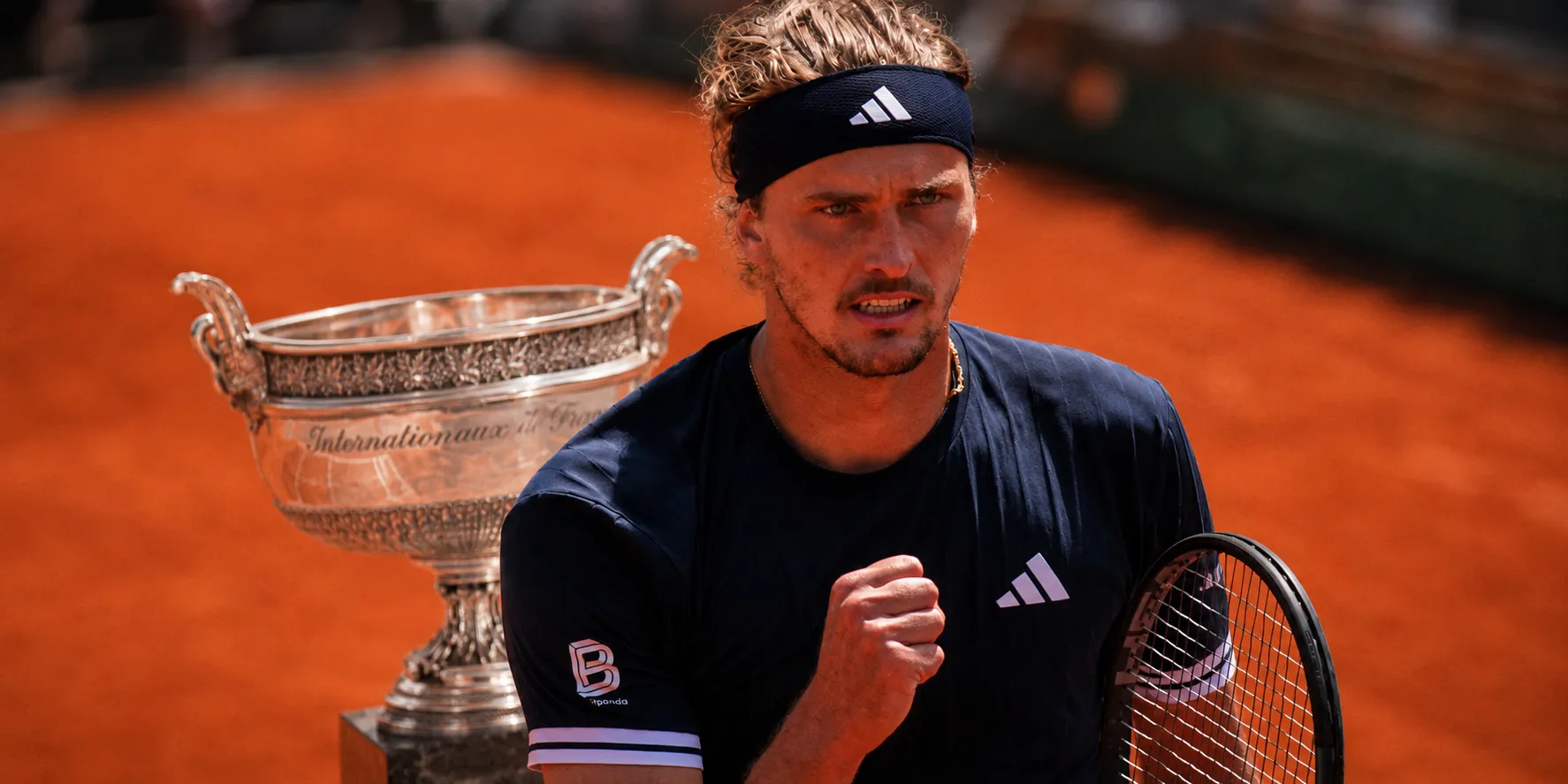
Zverev Wins Roland Garros 2026: Finally
Alexander Zverev finally has the Grand Slam title that was missing. In the Roland Garros 2026 final, the German defeated Flavio Cobolli 6-1, 4-6, 6-4, 6-7(5), 6-1, closing one of the longest waiting stories among the current elite.
It was not a perfect final. For understanding Zverev, it was better than that: dominant in stretches, nervous when the trophy came too close, and ultimately decided by his two most reliable foundations: serve and baseline solidity.
Zverev’s fourth Grand Slam final
The question before the match was simple: how many more chances would Zverev need to win a major?
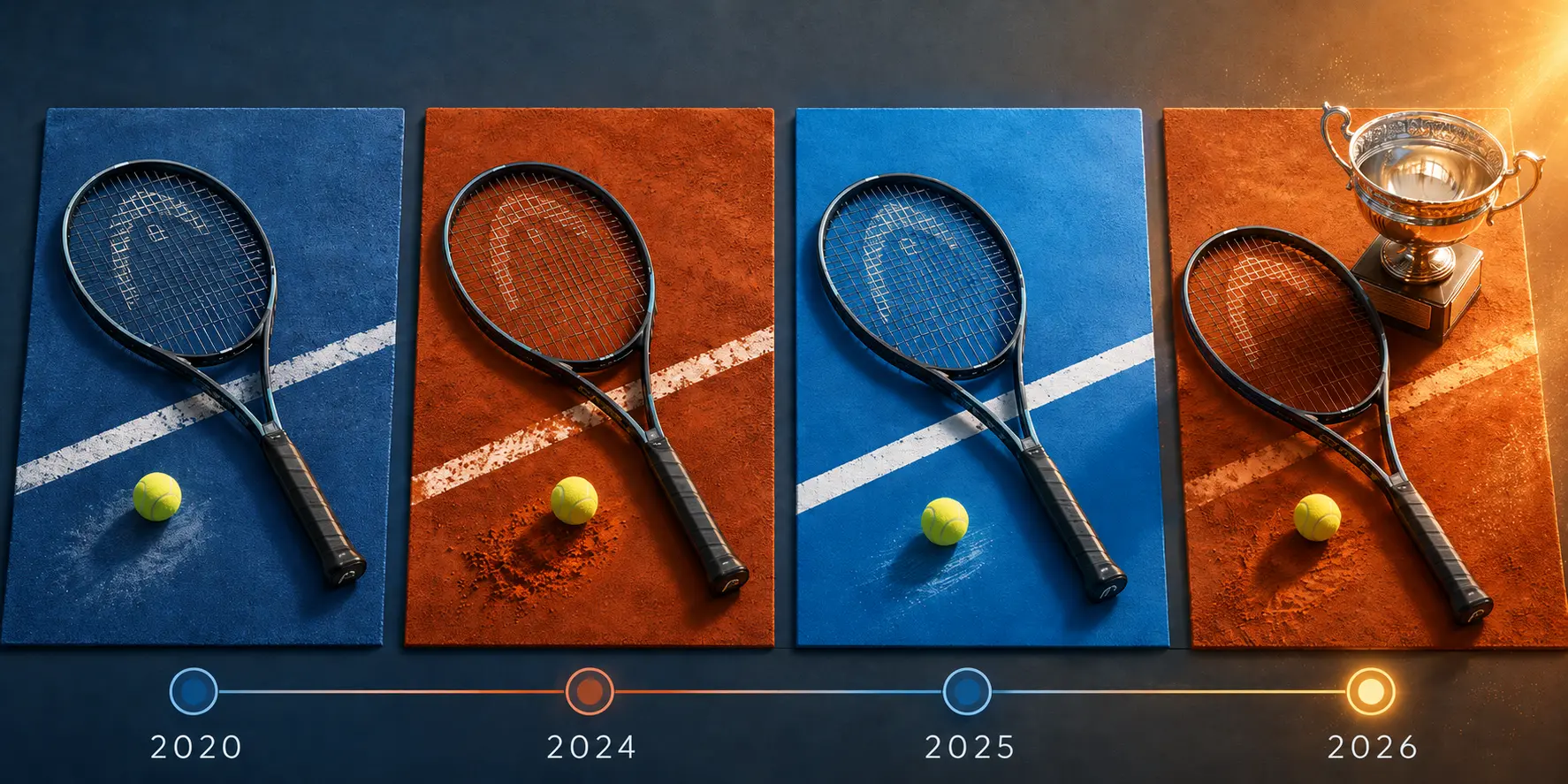
This was his fourth Grand Slam final. The first three had left clear scars:
| Year | Tournament | Final opponent | Result |
|---|---|---|---|
| 2020 | US Open | Dominic Thiem | Lost in five sets |
| 2024 | Roland Garros | Carlos Alcaraz | Lost in five sets |
| 2025 | Australian Open | Jannik Sinner | Lost in three sets |
| 2026 | Roland Garros | Flavio Cobolli | Won in five sets |
The difference this time was not only the opponent. It was the response in the fifth set. Cobolli had won the fourth in a tie-break, and the match seemed to be drifting back into that uncomfortable territory where Zverev had already watched big trophies slip away. But the German did not collapse: he raised his first-serve percentage, defended break points and played the deciding set with an authority he had not shown in his previous major finals.
According to the ATP Tour, Zverev won the title in four hours and 16 minutes, becoming the first German man to lift the Coupe des Mousquetaires in the Open Era. For historical context, he is also the first German men’s Grand Slam champion since Boris Becker at the 1996 Australian Open. The last German man to win Roland Garros was Henner Henkel, who took the men’s title in Paris in 1937.
The big titles Zverev had already won before Paris
Saying that Zverev “needed” a Grand Slam does not mean the rest of his career was incomplete. Quite the opposite: that is why the absence carried so much weight.
Before this Roland Garros, Zverev already had the title list of a major player:
- Two ATP Finals titles: 2018 and 2021, winning the year-end event that brings together the best players of the season. The historical list of Nitto ATP Finals champions confirms it.
- Seven ATP Masters 1000 titles, the most important tier below the Grand Slams.
- Olympic gold in singles at Tokyo 2020, beating Novak Djokovic in the semi-finals and Karen Khachanov in the final.
- 25 ATP titles in total after adding Roland Garros 2026, according to ATP’s match report.
For a recreational player who watches the tour through the lens of equipment and performance, that career path says something interesting: Zverev was not a one-week specialist. He had won indoors, on clay, at Masters 1000 level, at the Olympics and in high-pressure tournaments. What was missing was not level. It was closing seven best-of-five matches on the right stage.
That detail matters. Winning a Grand Slam does not only reward peak tennis. It rewards endurance, fatigue management, the ability to hold technique together when the arm feels heavy and the mind starts making noise.
Zverev vs Cobolli: an H2H that already had clay tension
The head-to-head between Zverev and Cobolli came in with the German ahead. Before the final, ATP listed a 3-1 overall lead for Zverev, with their 2026 record tied 1-1.
The recent sequence mattered because it had been played on clay:
- Cobolli had beaten Zverev in Munich.
- Zverev had answered with a win in Madrid.
- At Roland Garros, Zverev extended the lead with the biggest win of all.
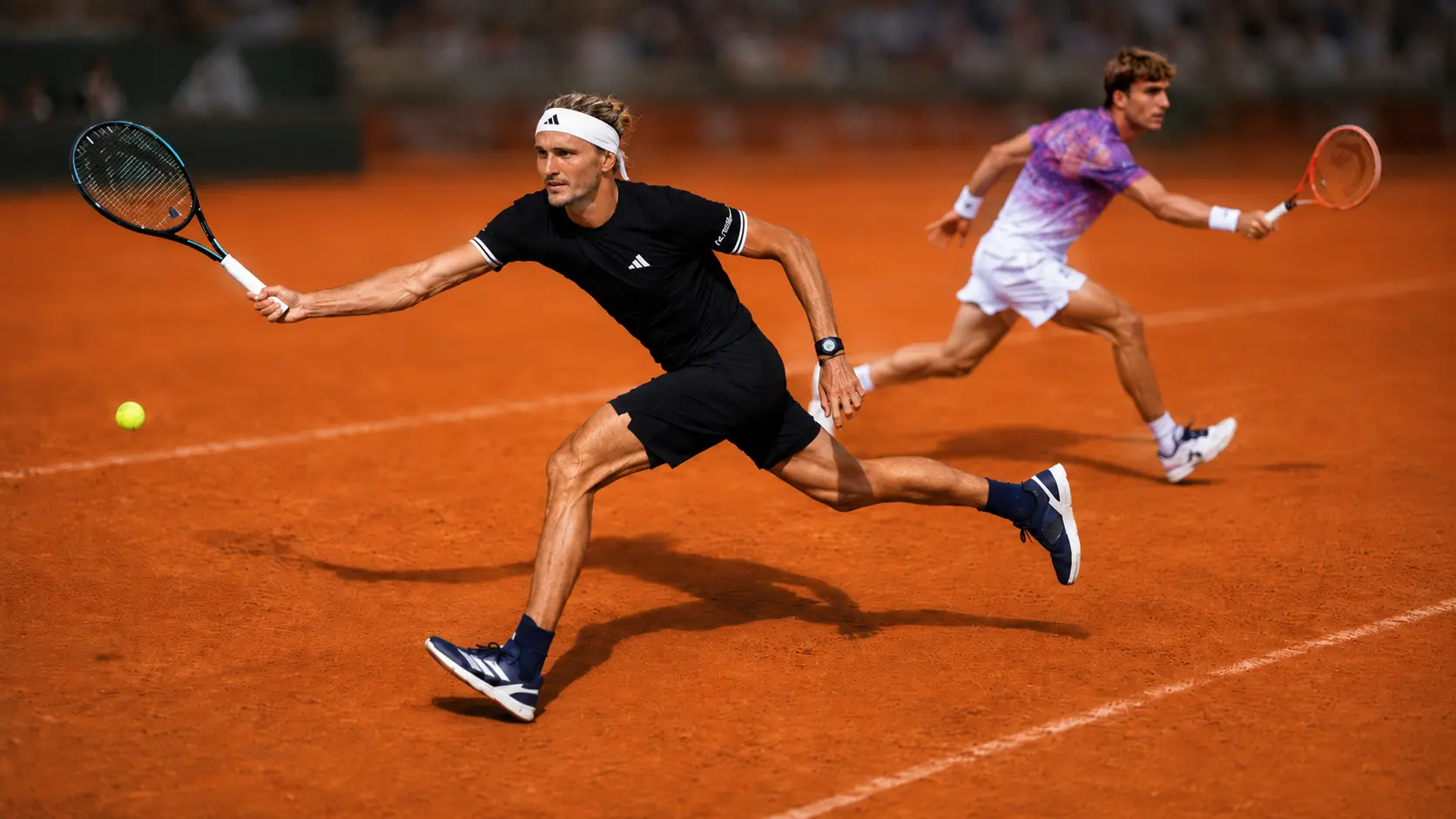
After Paris, the matchup stands at 4-1 for Zverev in official ATP meetings, counting the Roland Garros 2026 final as their fifth recorded meeting.
Cobolli, even in defeat, was not a random finalist. He reached his first Grand Slam final after a strong ranking rise and with a clear playing identity: a heavy forehand, a willingness to attack with spin and a competitive edge that did not disappear after losing the first set 6-1.
What racket does Zverev use?
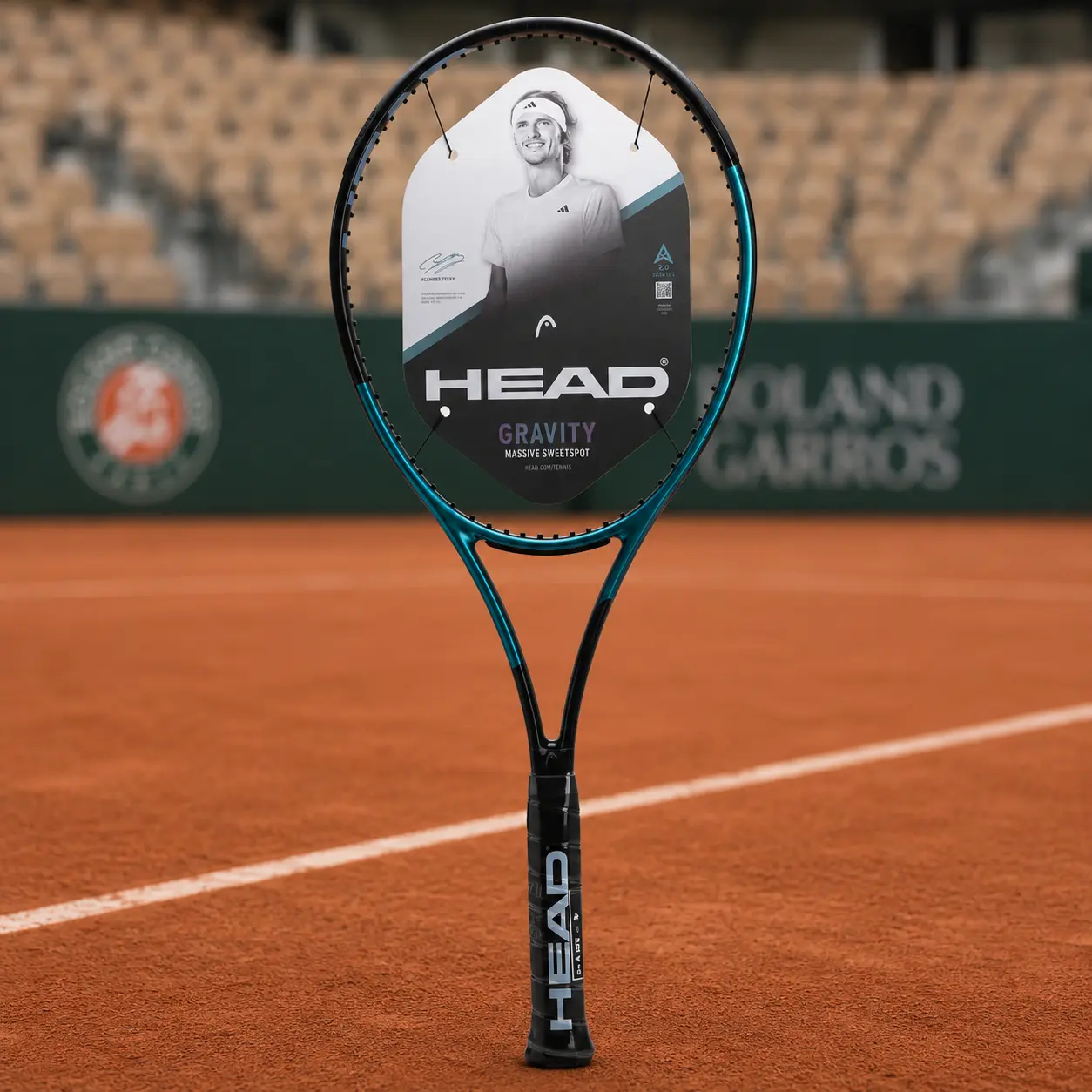
Zverev is associated with the HEAD Gravity family, and Tennis Warehouse lists him with the HEAD Gravity Pro 2025. That fits his game profile: plenty of stability, directional control and a lower level of free power that asks the player to accelerate properly.
The retail Gravity Pro 2025 has a 100 sq in head, an 18x20 string pattern, a strung weight of 332 g and a published swing weight of 329. If you want to understand why those numbers matter, they connect well with our guides on swing weight, racket head size and string patterns.
As always with professionals, two things need to be separated:
- The commercial racket a player promotes or appears with in retailer listings.
- The actual competition frame, which may be customized in weight, balance, grip, silicone, lead, mold or exact pattern.
For Zverev, the useful takeaway for an amateur player is not to copy his exact setup. It is to understand the profile: a stable, control-oriented frame built for long swings and clean contact. It is not a racket that gives you easy depth if you arrive late.
What racket does Cobolli use?
Cobolli is linked with HEAD Radical. Tennis.com described him in 2025 with a HEAD Radical Pro 2025, while equipment databases such as kit.tennis verify him with HEAD Radical as of May 2026.
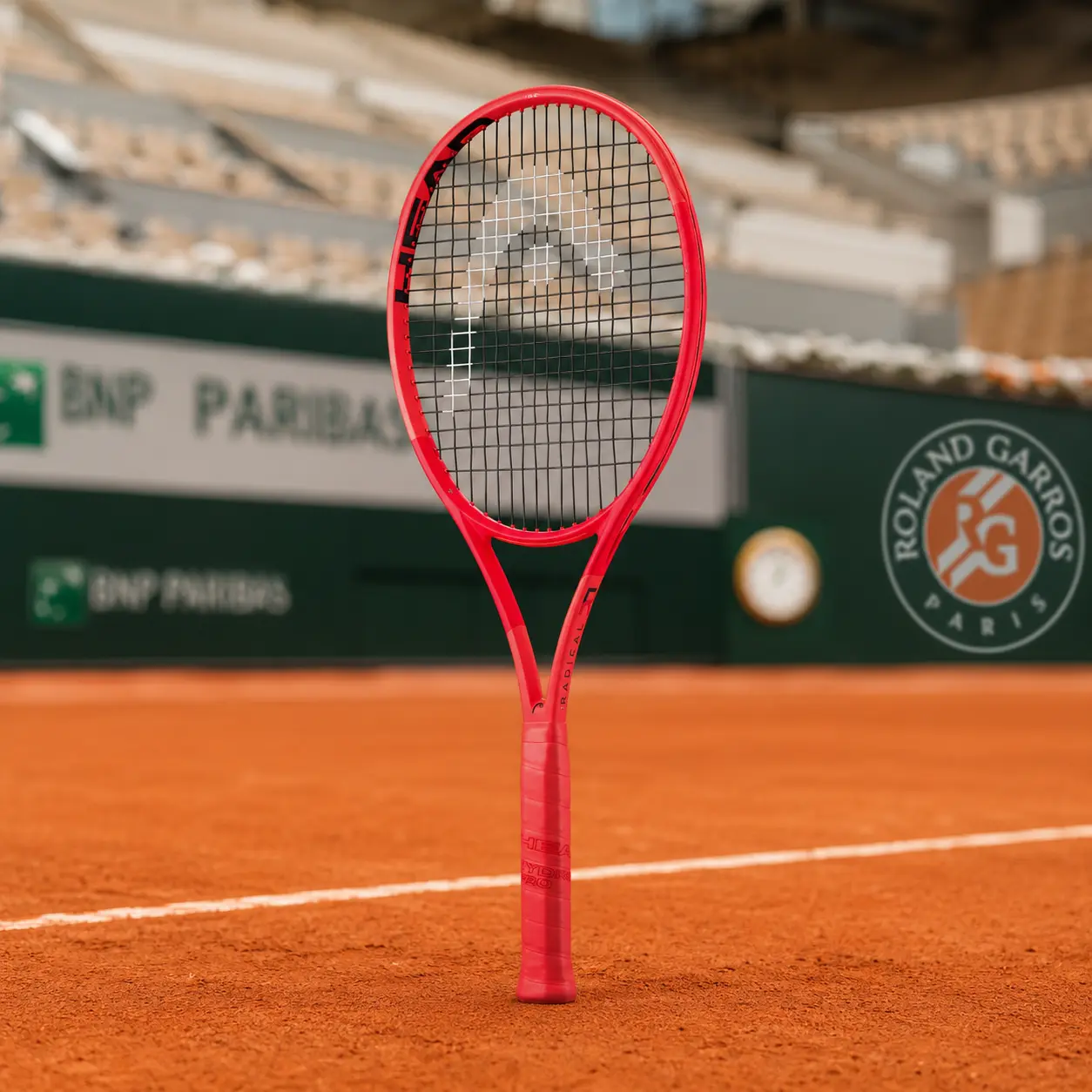
Tennisnerd, which often looks closely at pro stock frames, notes that Cobolli’s frame appears to be a professional Radical mold and that there is no fully public information on his exact specifications. That caution matters: on the ATP Tour, the paint job and the retail model rarely tell the whole story.
In playing-feel terms, Radical sits in a different zone from Zverev’s Gravity. It is more of an all-court line: it lets a player accelerate, change directions and attack early without feeling as specialized for heavy baseline control. For Cobolli, who wants to take the ball aggressively and mix in drop shots, that base makes sense.
The racket contrast also explains part of the match:
| Player | Racket family | Technical read |
|---|---|---|
| Alexander Zverev | HEAD Gravity | Control, stability, denser pattern, sustained weight of shot |
| Flavio Cobolli | HEAD Radical | Versatility, acceleration, forehand attack and rhythm changes |
No racket wins a final on its own. But it does shape which solutions feel natural under pressure. Zverev won when he turned the match into a test of repetition, depth and first serve. Cobolli caused problems when he broke that rhythm with aggression, drop shots and changes of height.
What can a club player learn?
Zverev’s title leaves a practical lesson: your equipment should amplify your main pattern, not disguise it.
Zverev does not play with an easy racket for everyone. He plays with a tool that rewards his height, leverage, ability to hit deep and tolerance for long rallies. If an intermediate player without that swing speed tries to copy him without adjusting weight and tension, the likely result is less depth and more fatigue.
Cobolli offers another reading. A Radical frame, or a racket with a similar profile, may make more sense for a player who mixes baseline play, attacking, rhythm changes and transitions. But it also requires good technique: it is not simply an “easy” racket, it is a more versatile platform.
Before buying by imitation, ask three questions:
- Do I create easy depth, or do I need help with power?
- Is my main shot heavy and repeatable, or do I rely more on acceleration and variation?
- Can I handle the swing weight for two hours without arriving late to contact?
If those ideas are not clear yet, start with our guides on racket stiffness and tennis string types. Often the right change is not a new frame, but a different string, tension or weight adjustment.
Why this Grand Slam felt inevitable
The phrase may sound emotional, but it has a sporting basis: among active players who had not yet won a Grand Slam, Zverev was probably the one with the strongest case.
He had been world No. 2, Olympic champion, two-time ATP Finals champion, a multiple Masters 1000 champion and a finalist at three different majors. He had lost finals from winning positions, come back from a serious injury at Roland Garros 2022 and carried the “best player without a Grand Slam” label for years.
Roland Garros 2026 does not erase the previous finals. It rearranges them. They now belong to a career that finally has the title it was missing.
And if there was one player who deserved more than anyone to leave the list of great tennis players without a Grand Slam, it was Alexander Zverev.
Sascha, from The Perfect Racket team, we want to say: Herzlichen Glückwunsch zu deinem ersten Grand-Slam-Titel!
Keep learning
Turn this information into a better decision for your game
Explore more guides on the same topic or visit the complete archive to compare your options with context.
Continue reading
Related articles
US Open History: Records, Surfaces and Facts
Explore US Open history: when it began, its three court surfaces, who won the most singles titles, the latest American champions and New York traditions.
Extra Duty vs Regular Duty Tennis Balls: Which Court?
Learn when to use Extra Duty or Regular Duty tennis balls on hard courts, clay, indoor courts, and grass, plus when altitude matters more than felt.
Prince Rackets Guide: Tour, Phantom, Ripstick and More
Compare Prince Tour, Phantom, Ripstick, Ripcord and Beast rackets, understand O3, and choose the right family to demo for your game.