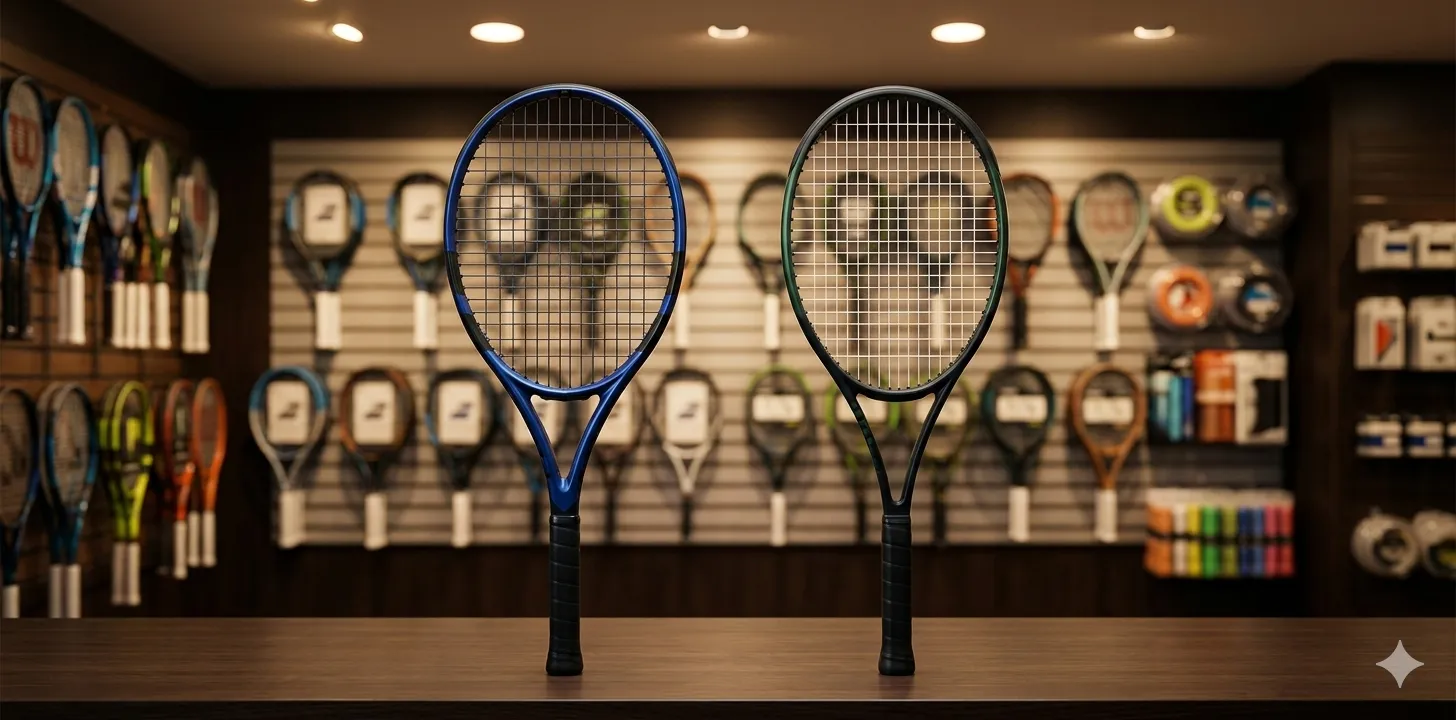
Racket Stiffness (RA): Power, Control and Your Arm
You open a racket’s spec sheet and there it is: RA 68. Does that number matter? More than you’d think. Racket stiffness is one of the specifications that most directly influences three things that affect your game: the power you generate, the control you have over the ball, and the health of your arm. If you’ve ever felt like your racket “launches” the ball too much, or that every shot sends vibration rattling up to your elbow, the answer is probably in the RA rating.
Let’s break this number down so you know exactly what to look for next time you’re choosing a racket.
What Is RA and How Is It Measured?
RA (Racquet Analysis) is a numerical scale that measures how much a racket frame flexes under pressure. It’s measured using a machine called the Babolat RDC (Racquet Diagnostic Center), which clamps the racket at the handle and applies force to the head to measure how much it deforms. You can learn more about how racket specs are measured at Tennis Warehouse University.
The result is a number that typically ranges from 50 to 75 on commercial rackets:
- Low RA (55–64): Flexible frame. More comfort and control.
- Mid RA (65–69): Balance between power and comfort.
- High RA (70–75): Stiff frame. More power, less shock absorption.
One important detail: RA is measured unstrung. Once you string the racket, stiffness drops by approximately 1 to 3 points. A racket rated RA 68 unstrung may measure 65–66 when strung.
Stiffness and Power: Does Stiffer Always Mean More Powerful?
The short answer is yes, but the mechanism isn’t what most people think.
Many players believe a flexible racket “catapults” the ball as it snaps back to shape, like a trampoline. The reality is that the ball stays on the strings for only 4 to 5 milliseconds — far less time than it takes the frame to return to its original position. The frame never returns energy to the ball.
What actually happens is that a stiff frame absorbs less energy on impact. Because it doesn’t flex, less energy is lost to frame deformation and more is transferred to the ball. A flexible frame, by contrast, absorbs more energy as it bends, resulting in less ball speed off the strings.
In practice:
- High RA (70+): Ideal if you want power with a short or compact swing. The racket does the work for you.
- Low RA (55–64): You need to generate your own power through technique and swing speed.
Stiffness and Control: Why Flexible Rackets Are More Precise
If stiff rackets generate more power, why do advanced players typically prefer flexible frames?
The key is predictability. A flexible frame deforms slightly on impact, creating what’s known as “ball pocketing” — the ball sinks slightly deeper into the string bed. This creates a fraction of a second of extra dwell time that lets the player feel the ball better and direct it more precisely.
With a stiff frame, the ball leaves faster with less margin for correction. For a player with a full swing and solid technique, that extra power is unnecessary and actually makes it harder to control depth.
This explains a clear pattern on the pro tour: the majority of ATP and WTA players use rackets rated RA 60 to 66, making up for the reduced power with their own swing speed.
Frame Beam Width and Stiffness: The Combination That Defines Your Racket
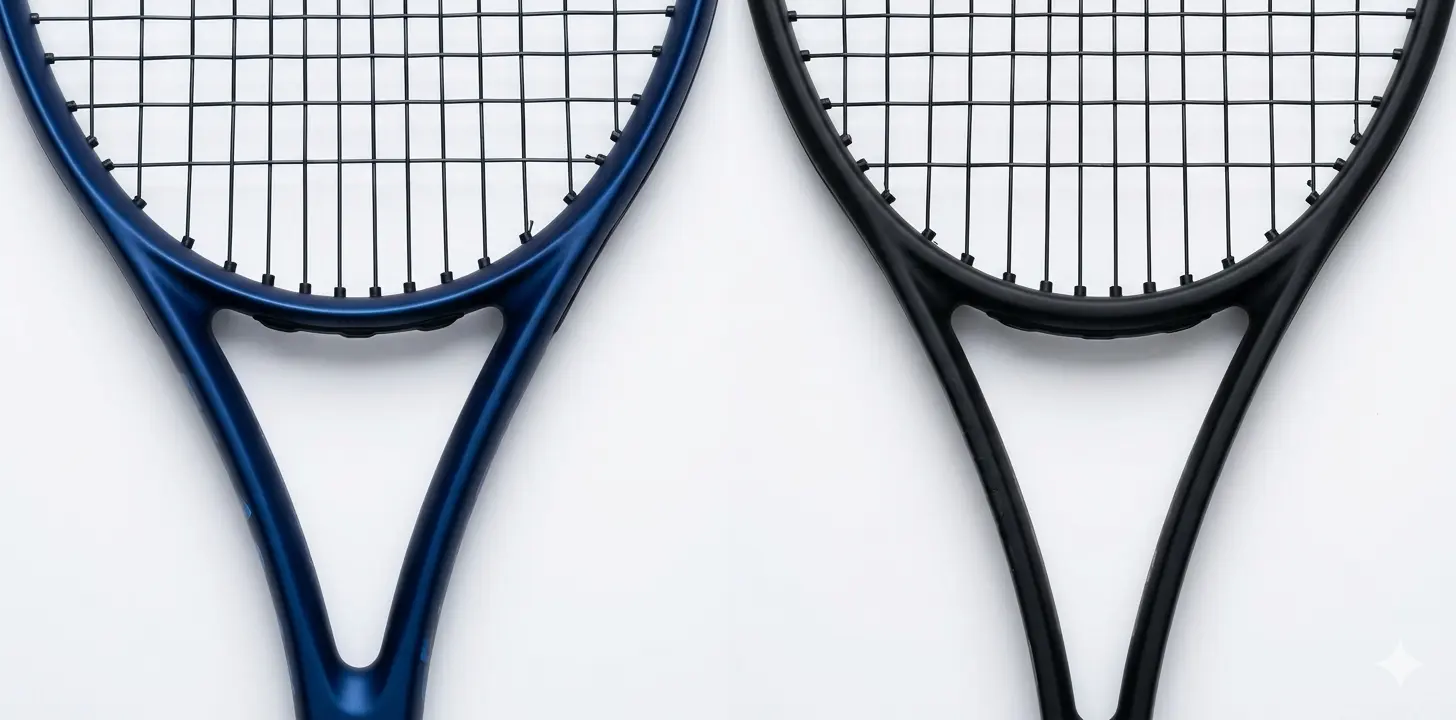
Here’s where things get interesting. Stiffness doesn’t act alone — the frame beam width is its inseparable partner.
Beam width is measured in millimeters and refers to how wide the frame looks from the side:
- Thin beam (17–22 mm): Control rackets. Frames that flex more.
- Medium beam (22–24 mm): Balance between power and maneuverability.
- Thick beam (24–28 mm): Power rackets. Stiffer frames with more material to push the ball.
The logic is straightforward: the thicker the beam, the more material there is to resist flexing, which naturally increases stiffness. Think of a plastic ruler — a thin one bends easily, a thick one barely moves.
The combination that matters:
| Racket Type | Beam Width | Typical RA | Best For |
|---|---|---|---|
| Pure control | Thin (17–21 mm) | 55–63 | Advanced players with fast swings |
| All-around | Medium (22–24 mm) | 63–68 | Intermediate to advanced |
| Power | Thick (25–28 mm) | 68–75 | Beginners to intermediates, compact swings |
There are exceptions. Modern materials like graphene and high-density carbon fiber allow some relatively thin-beamed rackets to achieve high RA ratings. But as a general rule, thin beam + low RA = control, and thick beam + high RA = power.
Your Arm Matters: Stiffness and Tennis Elbow
This is the point many players discover too late — when their arm is already hurting.
A stiff frame transmits more vibration and shock to the arm on every shot. Research published in journals such as Sports Engineering and PMC/NIH has shown that high-RA rackets generate higher-frequency vibrations that transfer directly to the player’s elbow and shoulder.

The result: a higher risk of lateral epicondylitis (tennis elbow), especially for players who:
- Use rackets with RA above 68
- Combine a stiff racket with polyester strings
- Don’t consistently hit the center of the string bed (where head size matters)
- Play frequently (3+ times per week)
What to do if your arm hurts:
The recommendation backed by most specialist sources is to look for a racket with RA 66 or lower. But stiffness isn’t the only factor — pairing a lower RA with multifilament or natural gut strings multiplies shock absorption significantly. Switching from an RA 72 racket with polyester to an RA 62 with multifilament can make a dramatic difference for your arm.
Real Racket Examples by RA Range
To put these numbers in context, here are real rackets organized by stiffness:
Low RA (55–64) — Control and comfort:
- Wilson Clash 100 V3: ~54 RA — One of the most flexible rackets on the market. A 24mm beam but with Wilson’s SI3D technology that dramatically reduces stiffness.
- Head Gravity MP 2025: ~57 RA — Thin 22mm beam, plush feel. Part of the line used by Zverev (the Gravity Tour model).
- Wilson Blade 98 V8: ~61 RA — The control classic. A 21mm beam, the reference point for aggressive baseliners.
Mid RA (65–69) — Balance:
- Babolat Pure Aero: ~66 RA — Nadal’s commercial racket. A solid balance of spin, power, and feel.
- Yonex EZONE 100: ~67 RA — Versatile with good comfort thanks to its variable beam design.
High RA (70+) — Power:
- Babolat Pure Drive: ~71 RA — The power benchmark. Variable thick beam at 23/26/23mm. Ideal for players who need the racket to generate power for them.
Which RA Should You Choose? A Quick Guide
There’s no universally “correct” RA. Your choice depends on three factors:
1. Your swing speed:
- Fast, full swing → Low RA (55–64). You don’t need extra power — prioritize control.
- Moderate swing → Mid RA (65–69). A solid balance.
- Short or compact swing → High RA (70+). The racket compensates with power.
2. Your arm health:
- No issues → Choose based on your playing style.
- Occasional discomfort → Look for RA 66 or lower, and evaluate your strings.
- Diagnosed tennis elbow → RA 63 or lower, multifilament or natural gut strings, and consult a specialist.
3. Your level:
- Beginner → RA 65–70 with a thicker beam to help generate power.
- Intermediate → RA 62–68. The widest and most versatile range.
- Advanced → RA 55–65. Prioritize control, touch, and feel.
Next time you see an RA number in a racket’s specifications, you’ll know exactly what to expect. And if you’re deciding between two options, remember: it’s easier to add power through technique than to undo the damage a stiff frame is doing to your arm. If you want to dive deeper into racket specs, don’t miss our guide on string patterns.