Extra Duty vs Regular Duty Tennis Balls: Which Court?
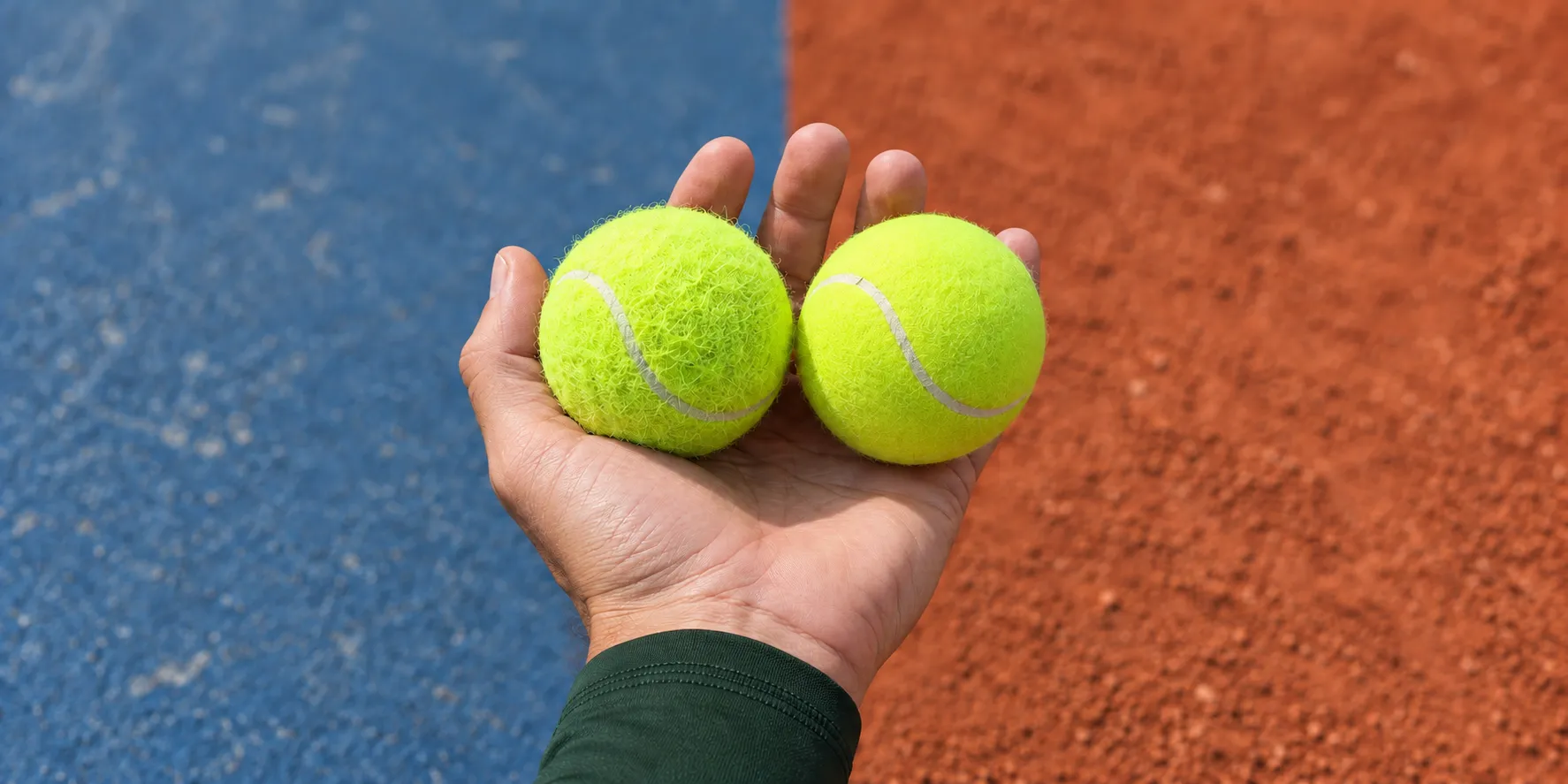
Two cans of the same tennis ball can carry one small-looking distinction: Extra Duty on one, Regular Duty on the other. Extra Duty is not the premium version, and Regular Duty does not mean lower pressure. The choice is mainly about which felt cover will handle the court through hundreds of impacts.
On an abrasive hard court, start with Extra Duty. On clay, choose Regular Duty or a clay-specific ball. Indoors, look at the floor rather than the roof: a covered acrylic court is still a hard court, while smooth carpet may suit Regular Duty better. The actual surface decides.
| Surface | Starting choice | What to watch |
|---|---|---|
| Acrylic, concrete, or asphalt | Extra Duty | Regular Duty may play faster at first, but its felt handles abrasion less well |
| Red or green clay | Regular Duty or clay-specific | Dust and moisture can open, soil, and load the felt |
| Indoor acrylic | Extra Duty | Covering the court does not make it less abrasive |
| Carpet or smooth indoor surface | Regular Duty or all court | Some carpets are rougher than they look, so follow the club’s recommendation |
| Natural grass | Grass-specific or a recommended all-court ball | Regular Duty is not automatically a grass ball |
| Sand-filled artificial grass | All court, then compare wear | Sand quantity and surface roughness vary widely between facilities |
The generic court name does not always tell the whole story. Our guide to tennis court surfaces explains how bounce and pace change, while the guide to tennis shoes by surface applies the same surface-first logic to traction and movement.
What changes between Extra Duty and Regular Duty
A match ball combines a rubber core, internal pressure, and a felt cover. When you compare Regular and Extra Duty versions from the same product family, that cover is the main difference.
Wilson describes Extra Duty as using thicker felt with a somewhat looser weave around the core to withstand the cutting action of hard courts. Regular Duty felt is thinner and more tightly woven. It tends to play faster but holds up less well on abrasive surfaces. Dunlop uses the same distinction: Extra Duty for hard courts and Regular Duty for clay and indoor courts.
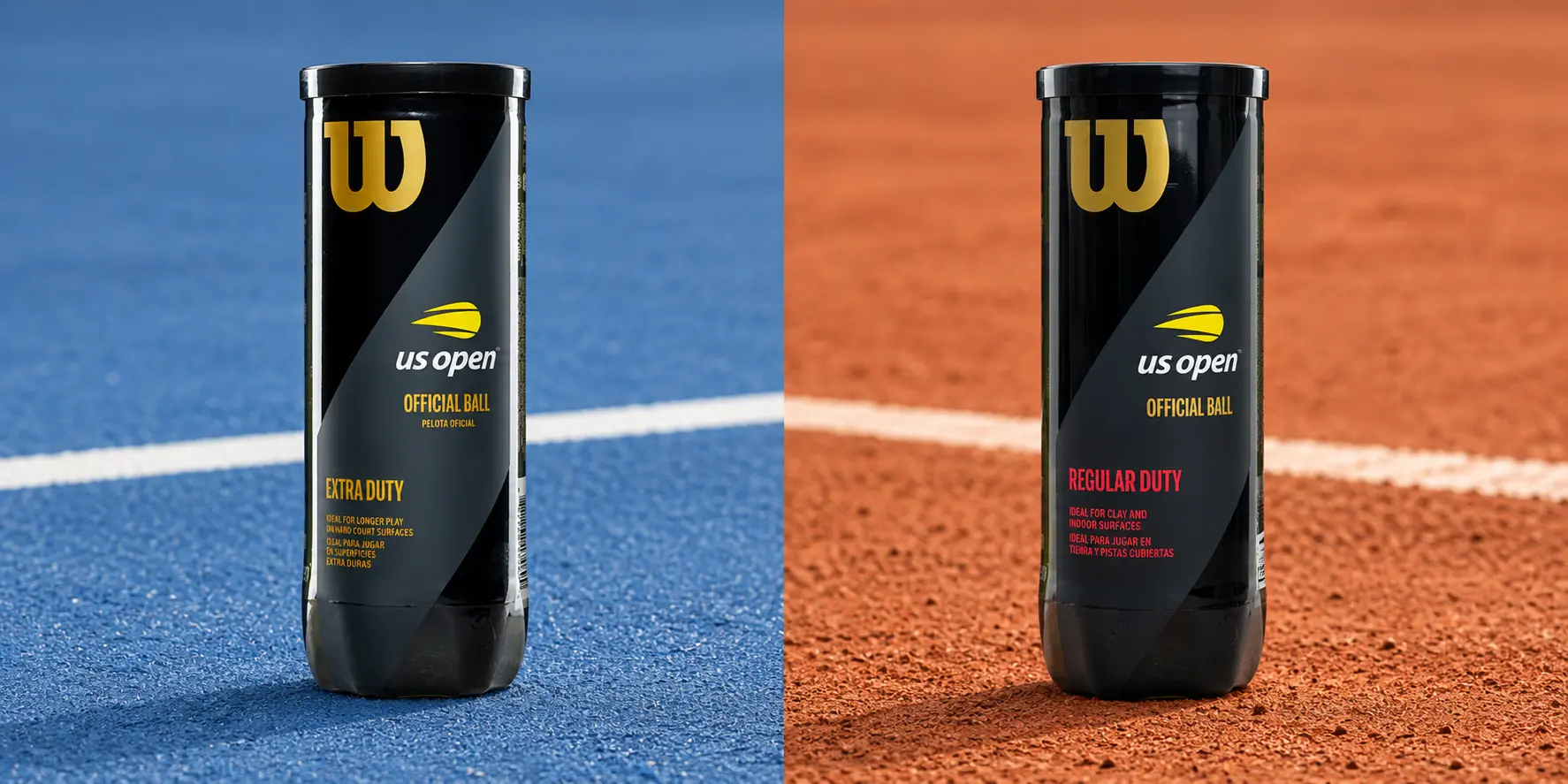
That does not make every Extra Duty ball slow or every Regular Duty ball fast. Core construction, pressure, felt blend, and product tier also vary between brands. The clean comparison is between two duty versions of the same model, not a premium ball from one company and a budget ball from another.
Felt condition is not cosmetic. A 2026 study in Sports Engineering linked raised fibers from use with increased aerodynamic drag. Two balls with similar pressure can stop flying alike when one has fluffed up much more than the other. Matching the felt to the surface is meant to make that performance drift slower and more predictable.
Hard courts: Extra Duty is the starting point
Sand-filled acrylic, concrete, and asphalt act like sandpaper on the cover. You can use a Regular Duty ball without harming the court or your racket, but its felt will usually deteriorate sooner. On a rough public court, it may wear unevenly while the core still produces an acceptable bounce.
For matches or practice sessions with only a few fresh balls, choose Extra Duty. The point is not to keep a yellow ball usable for months. It is to stop the felt from failing before the session ends. If a can does not use the Extra Duty label but says hard court or all court, follow the manufacturer’s stated surface recommendation.
There is a deliberate exception. Within the same ball line, you may prefer Regular Duty if you want a slightly quicker response and accept replacing the balls sooner. Judge it over a normal session; the first ten minutes will not tell you how the felt ages.
Clay courts: Regular Duty or a clay-specific ball
Clay presents a different problem from hard-court abrasion. Dust works between the fibers, darkens the ball, and may retain moisture. Thinner, more tightly woven felt is designed to stay compact instead of opening up and collecting material. That is why Regular Duty is the usual starting choice.
A clay-specific ball can go beyond the Regular Duty label. In its explanation of the ball engineered for Roland Garros, Wilson describes felt designed to limit clay and water ingress, plus a core tuned for that version. This is why Regular Duty, clay court, and Type 1 should not be treated as three names for the same thing. They may overlap in intended use, but they describe different design decisions.
Can you play with Extra Duty balls on clay? Yes. Nothing disastrous happens in a casual match. The likely trade-off is that the more open felt picks up dust or fluffs sooner, leaving the ball heavier through the air. In competition, use the designated ball. If you buy by the case and play mainly on clay, Regular Duty or a clay-specific model makes more sense.
Indoor courts: look at the floor, not the roof
Many guides reduce the choice to Regular Duty = clay/indoor. That shorthand works when indoor means carpet or a smooth synthetic surface. It fails as soon as a club puts a roof over an ordinary acrylic court.
- Rough acrylic under a roof: treat it as a hard court and start with Extra Duty.
- Textile carpet or a smooth synthetic surface: Regular Duty or all court is usually the better first test.
- Unknown surface: ask which ball the club uses for competition and inspect the felt after an hour. Bald patches suggest too little abrasion resistance; a heavily fluffed ball loaded with court material points toward a more compact cover.
Indoor tennis removes wind and changes temperature and humidity. None of that turns an abrasive floor into a soft one. For ball selection, indoor describes the environment; you still need to know what the court is made from.
Natural grass and artificial turf: do not force a binary rule
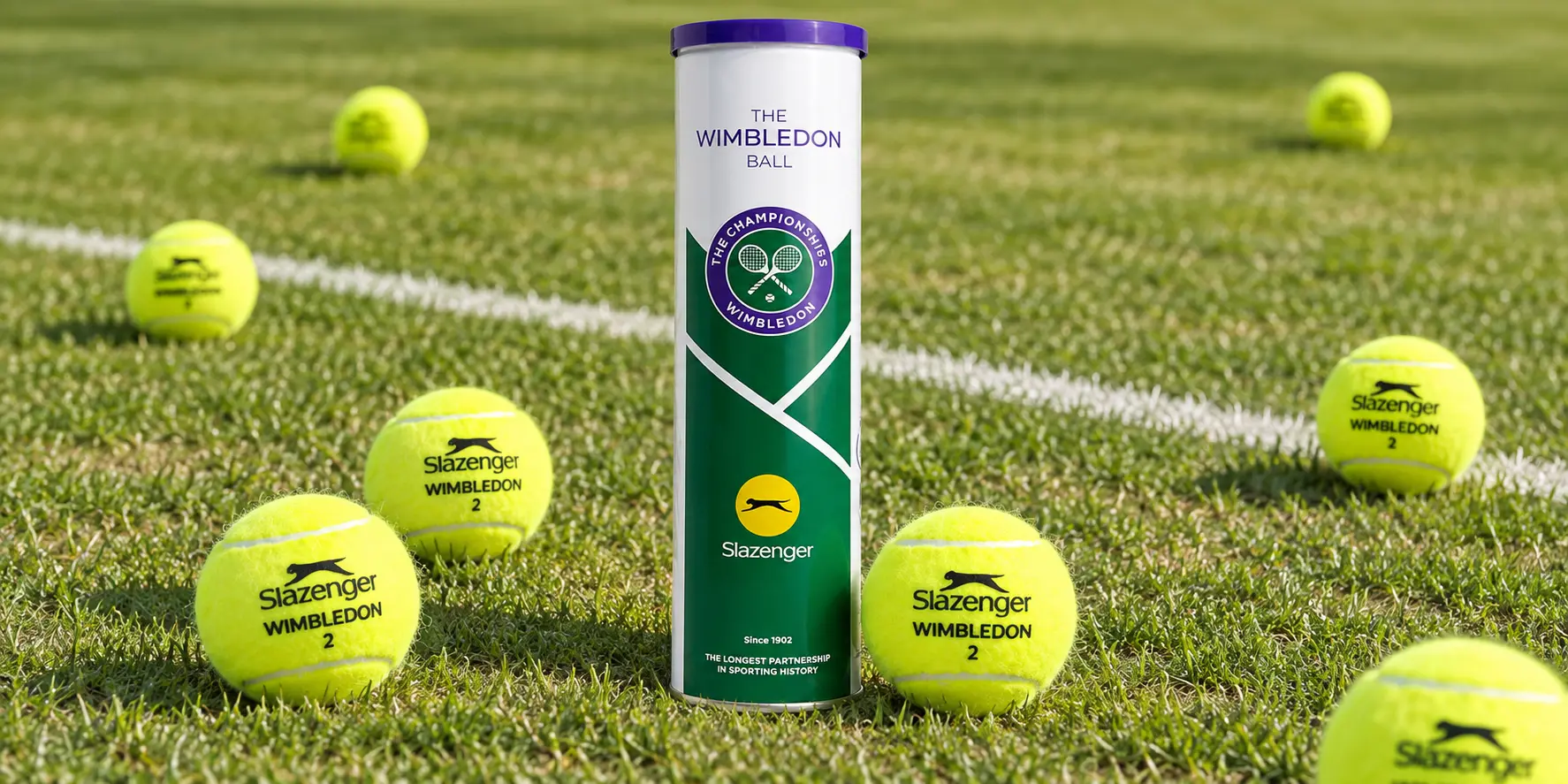
On natural grass, do not choose a can solely because it says Regular or Extra Duty. Brands sell grass-specific balls, and tournaments or clubs may nominate a particular model. That instruction overrides the general rule. If no specific ball is required, a manufacturer-recommended all-court ball is a better starting point than assuming Regular Duty automatically means grass.
Artificial grass makes the decision less tidy. A short, clean surface may be relatively gentle; another court with heavy sand infill may abrade the felt while filling it with particles. Start with the club’s recommendation or an all-court ball, then compare the wear pattern. One controlled session tells you more here than the generic surface name.
Extra Duty and Regular Duty are not ITF Types 1, 2, and 3
Commercial labels and the rule book are describing different things. In the 2026 ITF Rules and Technical Booklet, the categories include:
- Type 1, fast: intended for courts classified as slow.
- Type 2, medium speed: intended for medium-slow, medium, and medium-fast courts.
- Type 3, slow and larger in diameter: intended for fast courts.
- High Altitude: a pressurized ball for play above 1,219 m (4,000 ft).
ITF types adjust the pace of play through measurable ball properties. Regular Duty and Extra Duty describe how a manufacturer adapts the felt to different conditions. One can may mention court surface, ITF speed type, and altitude; those classifications are not interchangeable.
ITF Approved is not enough information by itself. The 2026 approved-ball list confirms which models meet competition specifications, but the ITF also states that approval is not another form of recommendation. You still need to read the can and the event conditions to choose for a surface.
Altitude is a separate decision
Above 1,219 meters (4,000 feet), choosing the correct felt will not fix a standard ball that flies and bounces too much in thinner air. Look for a High Altitude version or use the ball authorized by the competition. Then check whether the product also specifies Extra Duty, Regular Duty, or an intended surface.
These choices are not mutually exclusive. High-altitude balls with Extra Duty felt exist for hard courts. Solve the altitude problem first, then the abrasion problem.
Before you buy a case
- Use the designated ball in a tournament or league. Consistency between matches matters more than personal preference.
- Identify the court material, not just the facility label. Acrylic, concrete, and asphalt point toward Extra Duty; clay points toward Regular Duty or clay-specific.
- Resolve altitude first. Above 1,219 m (4,000 ft), the correct core matters before you fine-tune the felt.
- Compare cans within the same product family. Otherwise you may mistake a different core, pressure, or quality tier for a duty difference.
Do not mix duty versions during a match. If the balls have different flight and wear characteristics, you will not know whether a change came from your stroke or the equipment.
Outside the US, you may see all court, hard court, or clay court more often than the American Regular Duty and Extra Duty labels. This Tennis Warehouse ball guide explains the same surface-based distinction. Do not translate the label by guesswork; follow the surface stated by the manufacturer.
Before buying a case, open one can and play a normal session. If Regular Duty starts lively but ends up bald on hard court, move to Extra Duty. If Extra Duty opens up, darkens, and collects too much clay, switch to Regular Duty or a clay-specific ball. The better choice is not the one that wins the first five minutes. It is the one that stays useful through the match.
Keep learning
Turn this information into a better decision for your game
Explore more guides on the same topic or visit the complete archive to compare your options with context.
Continue reading
Related articles
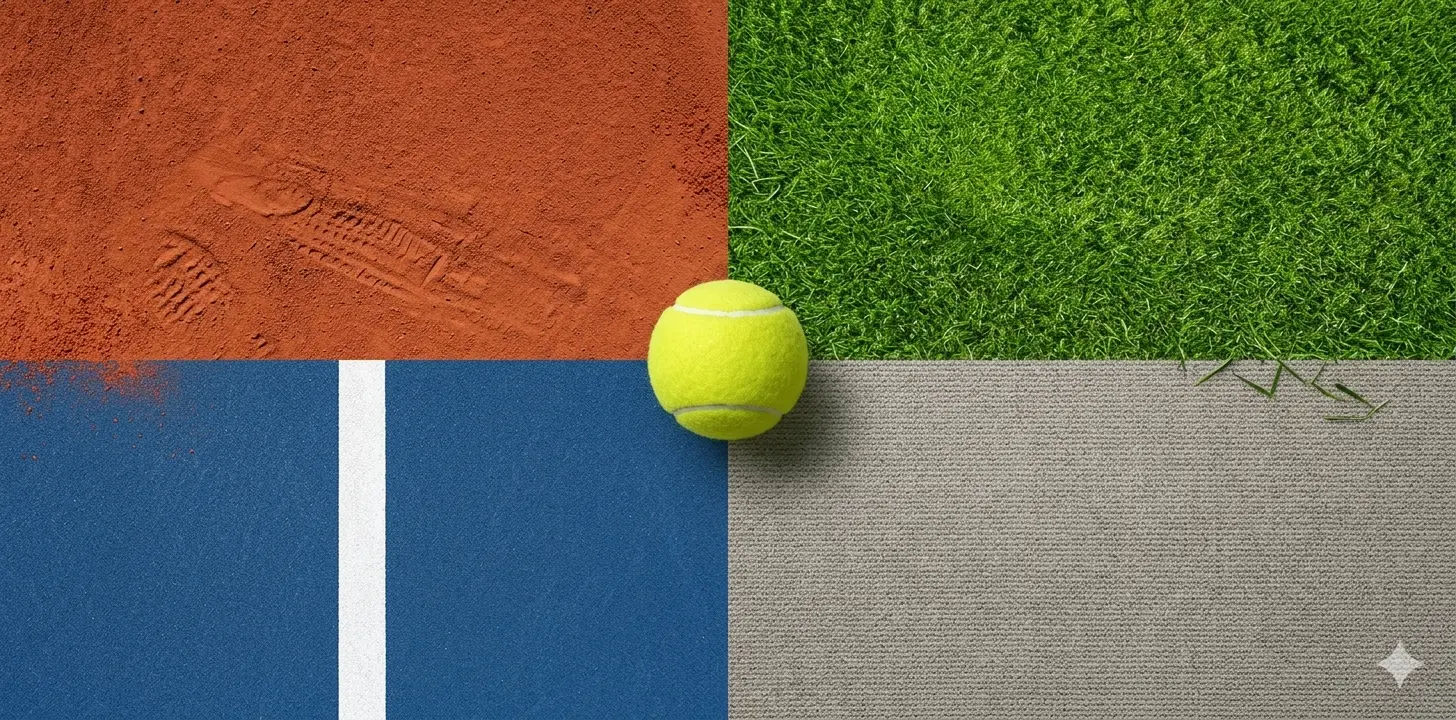
Tennis Court Surfaces: Clay, Grass, Hard Court & Carpet
Complete technical guide to tennis court surfaces: clay, grass, hard court, and carpet. Speed ratings, bounce, injuries, tournaments, and why carpet was banned.
Tennis Racket Types: Power, Control and Spin
What separates power, control and spin tennis rackets, which specs matter, and what to demo based on your swing and typical miss.
Tennis Racket Beam Width: Power, Control and Feel
What tennis racket beam width measures, how thin and thick frames affect power, control and feel, and why beam width is not the same as RA stiffness.