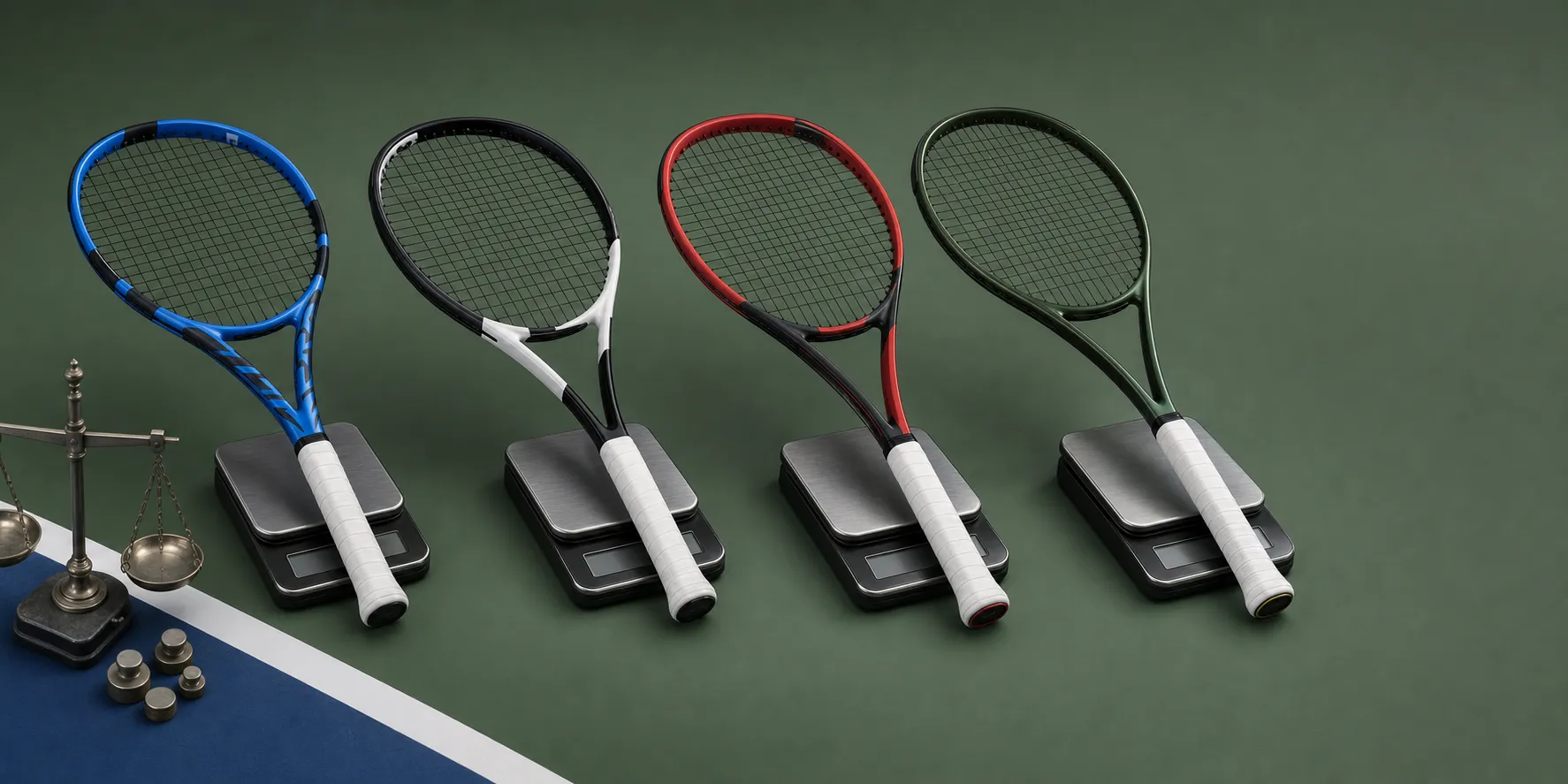
Tennis Racket Weight: 260g, 285g, 300g or 315g
Two 300 g rackets can behave nothing alike. One whips through a late return; the other makes you feel a half-step slow. Tennis racket weight is the most obvious number on a spec sheet, but it is only the starting point.
Quick answer: a 260 g (9.2 oz) racket usually prioritizes easy handling; 285 g (10.1 oz) is a useful middle ground for improving adults, doubles players and juniors moving into adult frames; 300 g (10.6 oz) is the modern club-player reference point; and 315 g (11.1 oz) asks more of your timing and fitness but can feel very solid when you can accelerate it. Compare unstrung weights with unstrung weights.
Treat weight as an early filter, not a verdict. Then check swingweight, balance, head size, stiffness and strings. A light frame can still feel slow when too much mass sits in the head. A heavier one can be surprisingly quick when it is head-light.
What static weight means
Static weight is the number you get by placing the whole racket on a scale. Tennis Warehouse University describes it as resistance to straight-line motion. That is different from swingweight, which measures resistance to rotating the racket during the swing.
The other common source of confusion is unstrung versus strung. Manufacturers usually publish unstrung weight; shops and reviews may list the ready-to-play number. Strings normally add about 15-20 g (0.5-0.7 oz), and an overgrip or dampener adds a little more. A racket advertised at 300 g unstrung can end up around 318-323 g (11.2-11.4 oz) once it is ready for court.
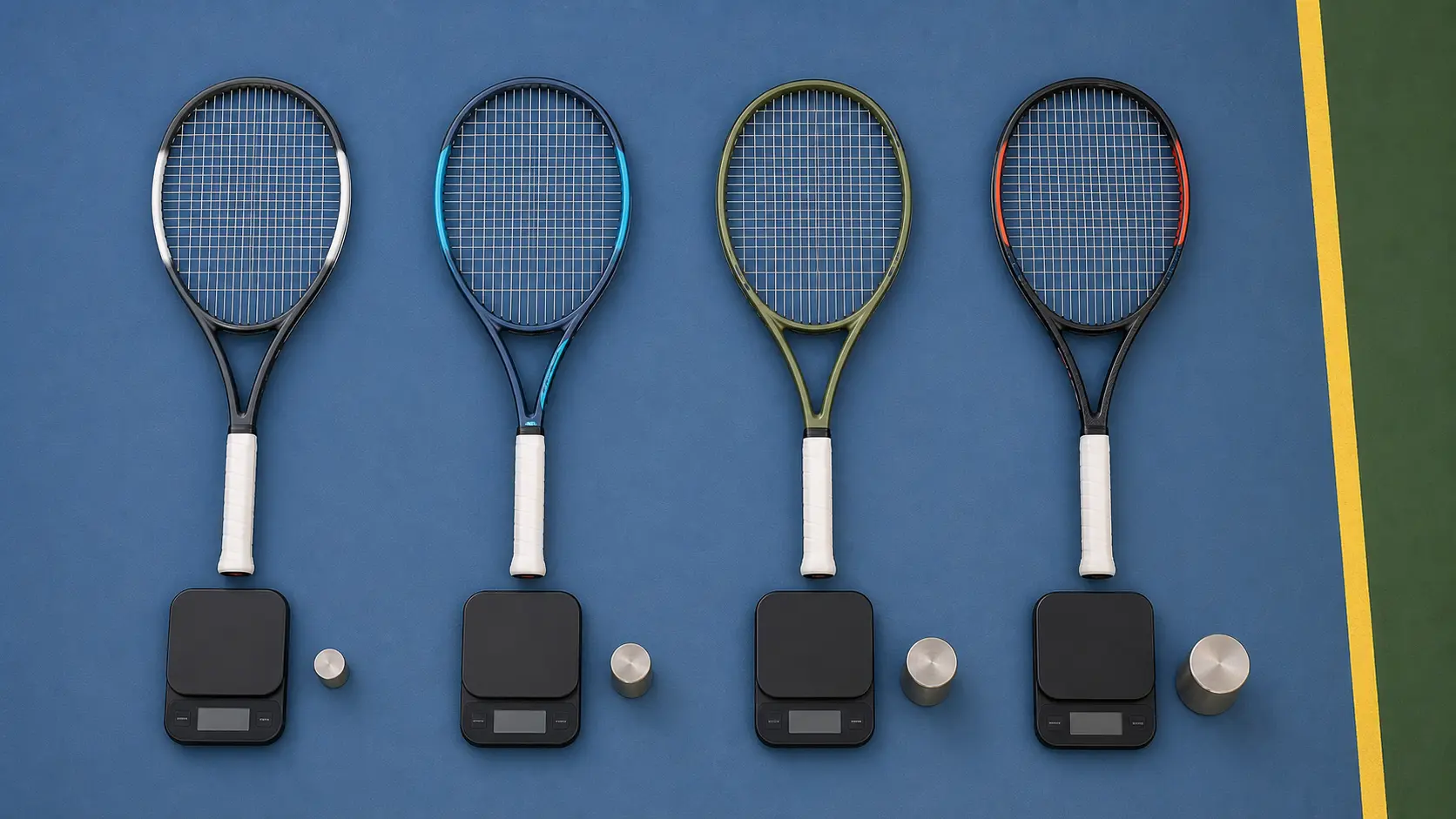
Tennis racket weight: 260g, 285g, 300g and 315g
These ranges refer to unstrung weight, the most common convention in manufacturer spec sheets.
| Unstrung weight | Typical feel | Who it can suit | Watch out for |
|---|---|---|---|
| 260 g / 9.2 oz | Very easy to move | Beginners, juniors moving to adult frames, compact swings | May lack stability against a heavy ball |
| 285 g / 10.1 oz | Light, but more substantial | Intermediates, doubles players, players who value hand speed | Can feel underpowered against strong pace |
| 300 g / 10.6 oz | Competitive middle ground | Strong intermediates and advanced club players | Swingweight varies greatly from frame to frame |
| 315 g / 11.1 oz | Solid and demanding | Advanced players with full swings and sound conditioning | Can tire the arm and make contact late |
This is not an age, gender or rating rule. It is a place to begin a demo. A fast swinger who is late on defense may play better with 300 g than 315 g. Someone who blocks returns against big hitters may find 285 g unstable even if it felt comfortable in the shop.
260g: easy acceleration before stability
A racket around 260 g is built to get moving without much effort. That helps players still building their stroke, players with compact preparation, or anyone who needs to reduce the physical load. The trade-off appears against pace: off-center contact can make the frame twist, recoil or send back a shorter ball.
285g: a useful bridge for many intermediate players
The 285 g range is interesting because it no longer feels like a pure beginner frame, yet it keeps plenty of hand speed. That is why it often appears in versions labelled Team, MP L or L. The Head Speed MP L, for example, is listed at 285 g, as is the Yonex EZONE 100L.
For an intermediate player, 285 g can be a sensible test range when technique is improving but the arm should not be overloaded. It is also handy in doubles, where blocked returns and reactions at net matter. The question is whether it gives you enough ball weight: if the frame gets pushed backward by stronger opponents, move toward 300 g or test a 285 g option with more swingweight.
300g: the modern competitive club standard
Many adult performance rackets sit around 300 g unstrung. Models such as the Yonex EZONE 100 and Head Speed MP use this neighborhood because it can combine useful stability, accessible power and maneuverability. For many NTRP 3.5-5.0 players, or the equivalent at club level, it is the first serious range worth testing.
Here is where many players misread the number. Two 300 g rackets can play very differently. One with more headward balance carries more mass through contact and can produce a heavier ball, but it may feel slow on defense. Another with more mass near the handle can accelerate more freely, even if it does not drive through the ball with quite the same authority.
When you compare 300 g rackets, do not stop at the headline figure. Check head size, string pattern and RA stiffness. A powerful, stiff 100 sq in frame will not play like a flexible 98 sq in frame with a denser pattern, even if both weigh 300 g.
315g: more mass, more demand
A 315 g unstrung racket is already a physical commitment. It is not automatically better or more professional. It simply asks more from your preparation. Classic player frames such as the Wilson Pro Staff 97 have used this range to deliver precision, stability and a traditional response.
When you move it well, the upside is obvious: more solidity on blocked shots, more confidence against a heavy ball and less sense that the frame gets knocked around at impact. The cost is timing. If you start arriving late or lose racket-head speed in the third set, the extra mass has stopped helping.
Static weight vs swingweight: why both matter
Advanced players often say swingweight matters more than static weight. They are right, but only partly.
Swingweight better explains how heavy a racket feels at contact because it depends on how much mass sits away from your hand. Tennis Warehouse University captures the trade-off: lower swingweight is easier to accelerate, but the ball moves the frame more; higher swingweight adds stability and frame-driven power, but takes more work to move.
So why not ignore static weight? Your body still carries the racket between shots, on serve, at net, during direction changes and through a full match. If you can accelerate it late in a session, it stays stable outside the center and your arm is not loaded afterward, the static weight is probably in a sensible range.
How to choose racket weight in a real demo
Ten clean forehands in the warm-up tell you very little. Nearly every racket feels good there. Use the situations where weight actually shows itself.

- Serve returns: if you are late or block the ball short, total weight or swingweight may be too high.
- Long rallies: if your ball loses depth as you tire, the frame may demand more than it first seemed to.
- Wide defensive balls: if you cannot recover with topspin, you may be losing racket-head speed.
- Fast volleys: if your hand cannot react, the setup may be too slow.
- High-pace exchanges: if the frame twists, you may need more mass, twistweight or stability.
A practical rule: choose the heaviest racket you can accelerate naturally under pressure, not the heaviest one you can swing during a relaxed warm-up.
Frequently asked questions
How much should an adult tennis racket weigh?
Most adult tennis rackets fall between 260 g and 315 g unstrung. As a starting point, 260-275 g favors easy handling; 285 g suits intermediates who want maneuverability; 300 g is a common competitive-club reference; and 315 g suits advanced players who can move more mass.
Is a 300g or 315g tennis racket better?
It depends on your swing. A 315 g racket can offer more stability if you have the preparation, strength and timing for it. A 300 g model is easier to accelerate and may work better over a long match. If you are unsure, test 300 g first and move up only when you truly need more solidity.
Does strung weight change much?
Yes. Strings usually add 15-20 g (0.5-0.7 oz). Babolat notes that many Pure rackets are sold unstrung, so the published weight may not match what you take on court. An overgrip, head tape or dampener adds mass too.
Does a lighter racket help prevent injuries?
Not necessarily. A light racket takes less effort to swing, but it can be less stable when the ball pushes the frame around. Arm comfort also depends on stiffness, string type, tension, head size and whether you can strike the ball with relaxed technique. If you already have pain, assess the whole setup, not just the grams.
Final decision
If you are coming from a very light recreational racket, test 285 g before jumping straight to 300 g. If you already compete and want an even reference point, 300 g is the sensible place to start. If you strike the ball cleanly, create your own racket speed and want more stability, 315 g may make sense.
Tennis racket weight does not replace swingweight, and swingweight does not erase the role of static weight. The scale tells you how much mass your body is carrying; swingweight tells you how that mass behaves through the swing. The useful answer is the one you find on an awkward ball: does the racket still let you play your best tennis?
Keep learning
Turn this information into a better decision for your game
Explore more guides on the same topic or visit the complete archive to compare your options with context.
Continue reading
Related articles
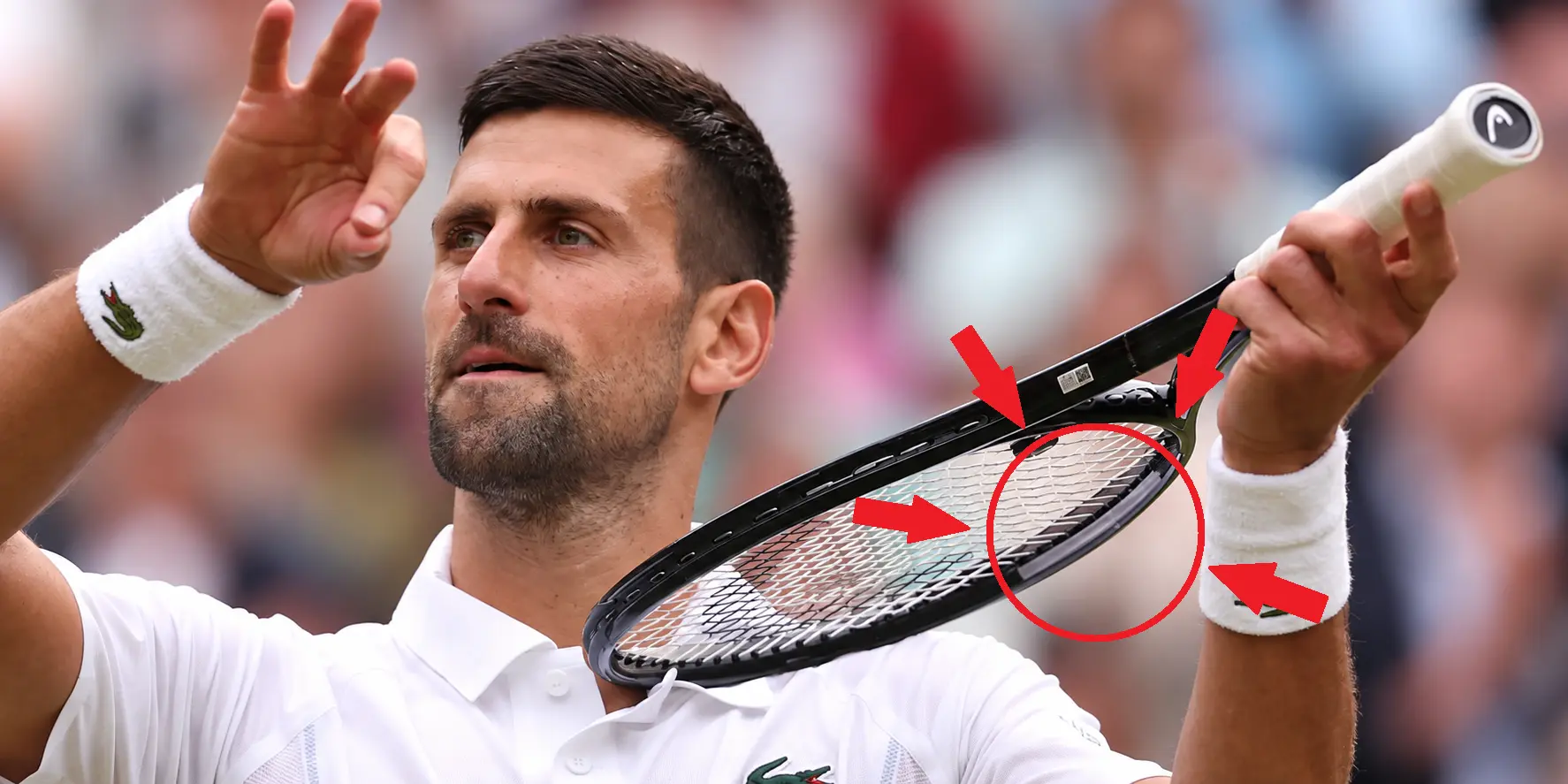
Lead Tape on a Tennis Racket: Where to Put It and How Much to Use
Learn how lead or tungsten tape changes racket weight, balance, swingweight and the sweet spot, where to place it and how to test without overdoing it.
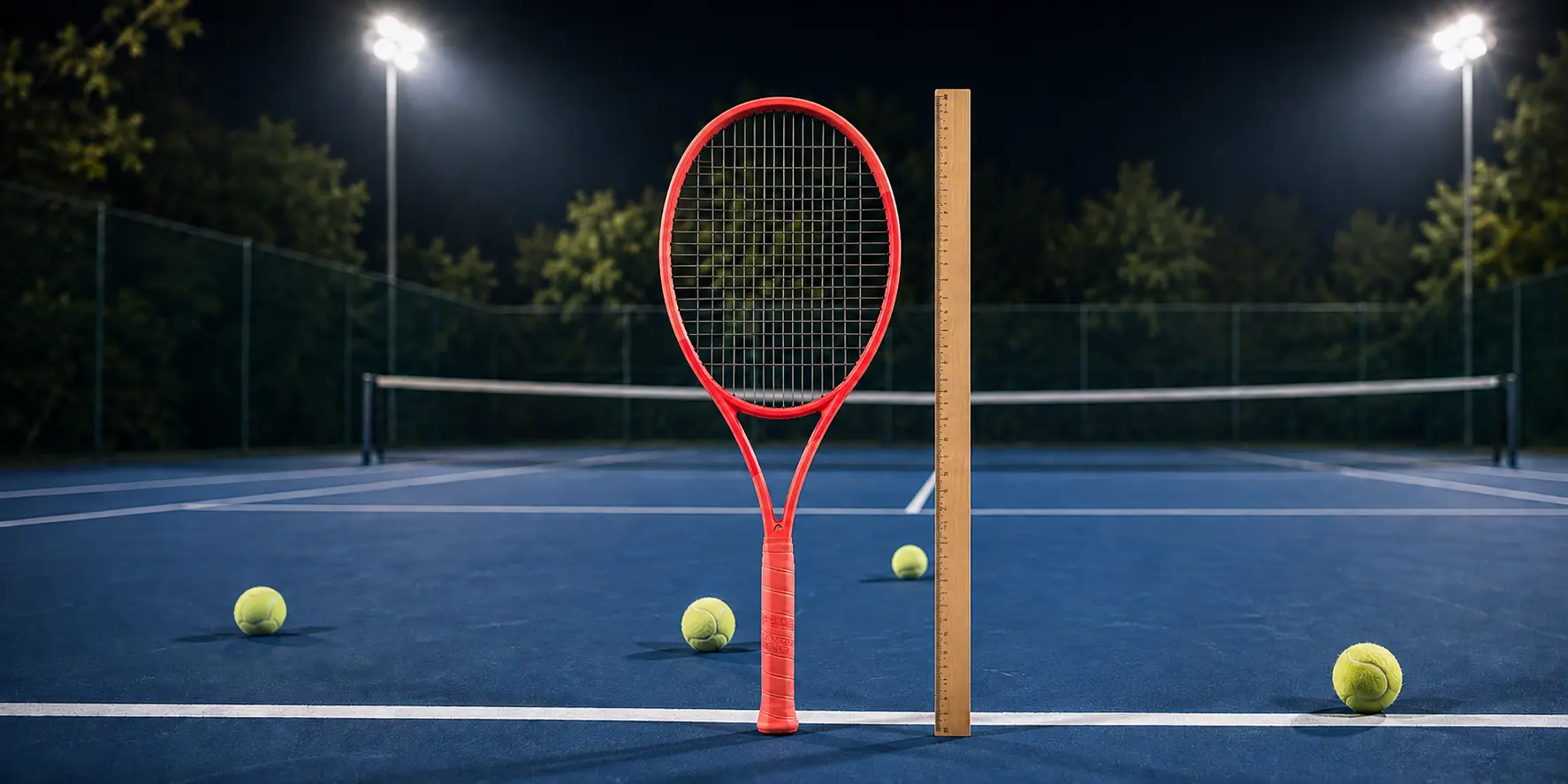
Tennis Racket Length: 27 vs 27.5 Inches
How long is an adult tennis racket? Compare 27 and 27.5 inches for reach, serve leverage, swingweight and maneuverability, then choose for your game.
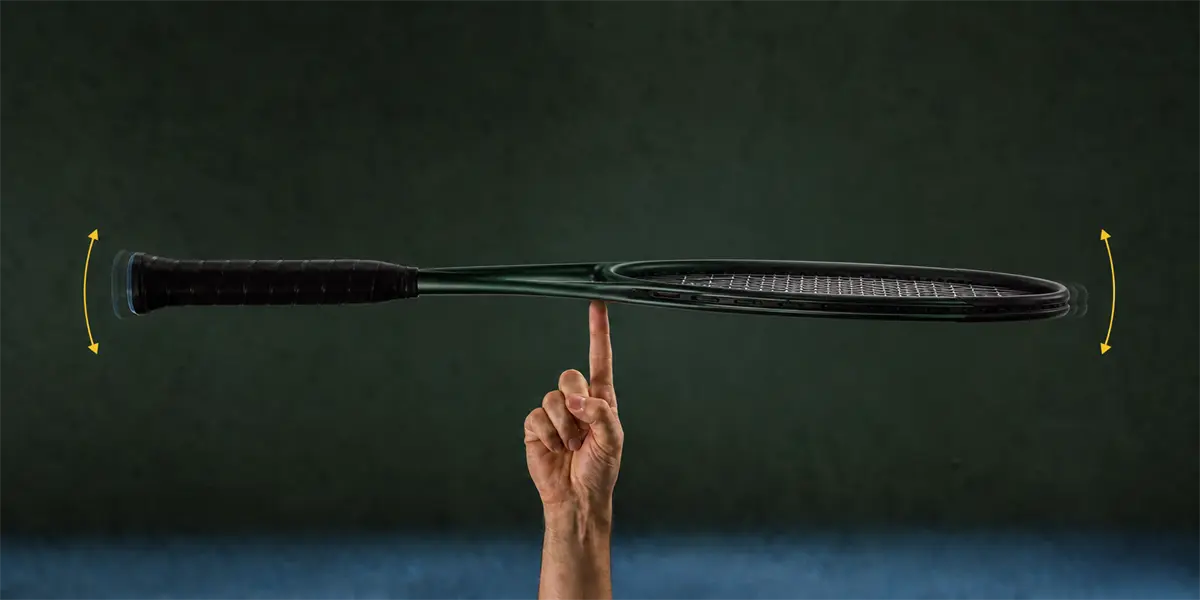
Tennis Racket Balance: Head Light, Even or Head Heavy
Learn how tennis racket balance works, how to measure it, and what head-light, even-balance and head-heavy frames change on serves, returns and volleys.