
When to Restring a Tennis Racket
The common mistake with when to restring a tennis racket is waiting until a string snaps. If you use multifilament or synthetic gut and play occasionally, that may work. If you use polyester, it does not. Poly can stop playing well long before it breaks, and that is when balls start flying long, the impact feels dry, and you wonder whether the problem is your technique or your racket.
Quick answer: restring your racket when you lose control, notice less spin, see strings stop snapping back into place, feel new arm discomfort, or reach a reasonable hour range for your string type. As a starting point: polyester every 8-15 hard playing hours, multifilament or synthetic gut every 20-40 hours, and sooner if the string frays, notches deeply, or loses tension clearly.
That rule is not perfect. It is just better than looking at the string bed and thinking, “it has not broken, so it must be fine.”
How often should you restring a tennis racket?
You have probably heard the old rule: restring as many times per year as you play per week. If you play twice a week, restring twice per year. For casual players it is a useful floor, but it breaks down if you train with polyester, play tournaments, or hit with heavy topspin.
Strings age through impact, friction between mains and crosses, tension loss, swing style, and material. So it is better to think in playing hours and performance signs, not only calendar months.
When to restring by string type
The most important variable is material. In the guide to tennis string types, we covered why polyester, multifilament, natural gut, and synthetic gut do not age the same way. For restringing, that difference matters.
| String type | Practical restring range | Main warning sign |
|---|---|---|
| Polyester | 8-15 hard playing hours | Less snapback, less spin, dry feel |
| Multifilament | 20-40 hours | Fraying, too much launch, tension loss |
| Synthetic gut | 20-40 hours | String movement, dull feel, likely breakage |
| Natural gut | 30-50+ hours if well cared for | Visible wear, humidity damage, tension drop |
Treat these as ranges, not laws. If you hit hard, use an open string pattern such as 16x19, and play with heavy topspin, you will wear strings faster. If you hit flatter, use a denser pattern, and play less often, you can usually stretch the string job longer. String gauge also matters: a thinner string often feels better, but it notches and breaks sooner.
How do you know tennis strings are dead?
Polyester is tricky because it often refuses to break. That physical durability is part of its appeal: it handles friction and lets strong players swing hard with control. But its performance life is usually much shorter.
Tennis Warehouse University has a useful technical explanation of how strings “go dead.” In its testing, performance loss is not just tension loss. It also comes from changes in perpendicular stiffness and rising string-to-string friction, which affects lateral string movement and return: the famous snapback. You can read the technical breakdown in How Tennis Strings Go Dead.
On court, that often shows up like this:
- The ball starts flying long with the same swing.
- Topspin becomes harder to produce.
- The strings stay displaced instead of returning to center.
- Impact feels harsher or less lively.
- You start tightening your arm to control the ball.
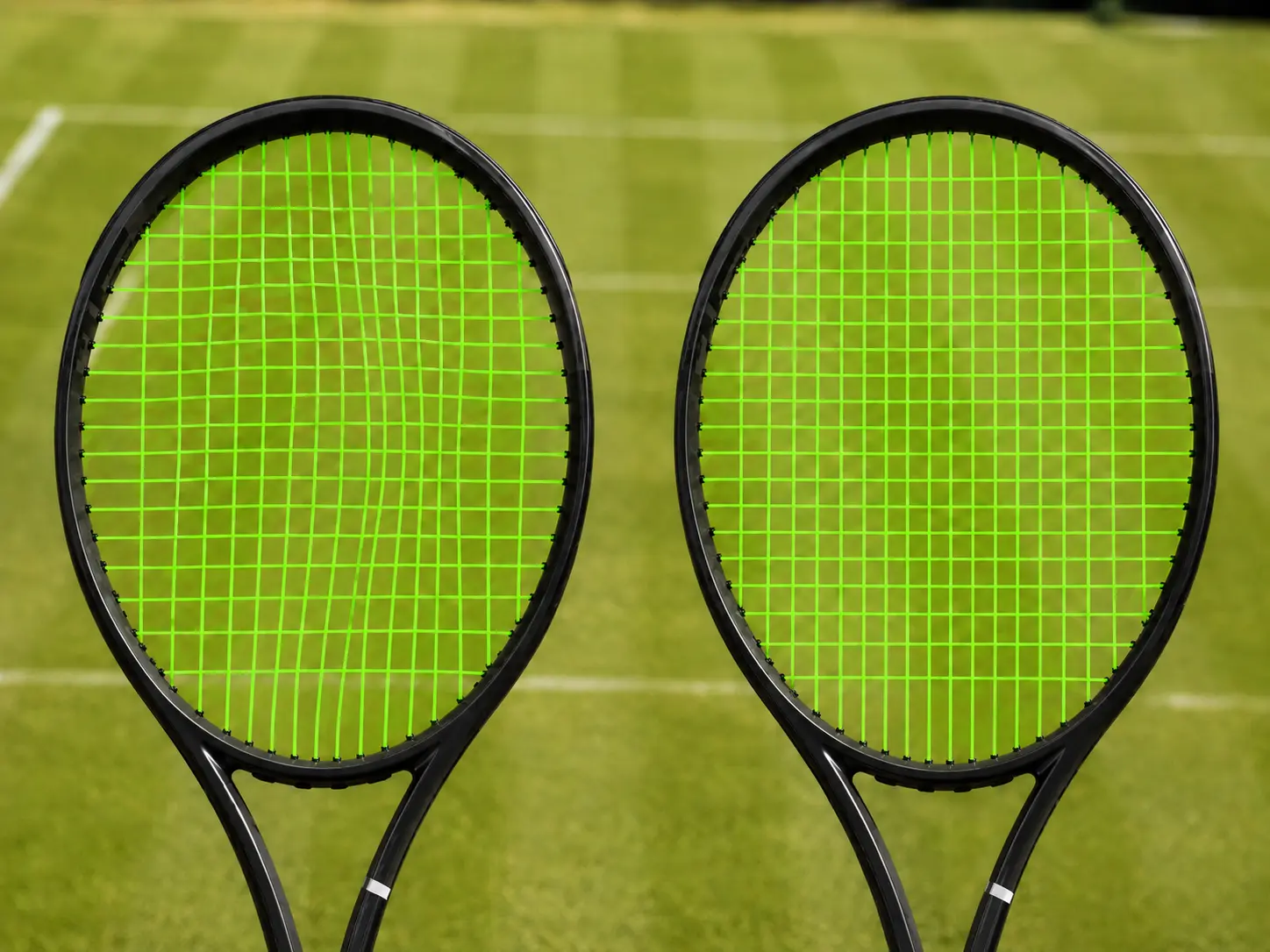
That last point matters. Old poly can make you play with more muscle tension, especially if you already use a stiff racket, high string tension, or have a sensitive elbow.
Clear signs it is time to restring
You do not need a lab to decide. If one or several of these signs appear, your string bed is probably past its best window.
You lose depth control
If balls start landing long without a change in intention, technique, or ball type, check the strings. One bad day is still one bad day; the sign becomes more reliable when it repeats across two or three hitting sessions.
Spin drops
Strings do not create spin by themselves, but fresh poly helps the mains slide and snap back quickly. In experiments by Rod Cross and Crawford Lindsey, polyester strings produced more spin than nylon under controlled conditions; the details are in Which Strings Generate the Most Spin?.
When that movement drops, the ball stops biting the same way: more balls fly long, the shot dips less at the end, and you lose net clearance confidence.
The strings stay out of place
With multifilament or synthetic gut, string movement is not always a disaster. With polyester, if the mains are crooked after every point, that is usually a bad sign. The string is no longer sliding and returning the way it should.
Your arm starts complaining
Do not blame every ache on the strings. Technique, volume, balls, grip size, and racket weight all matter. But if new discomfort appears when the string job already has many hours, pay attention. Tennis elbow is often related to repeated loading of the forearm extensor tendons; a stiff or dead string bed can be one part of the problem.
You can see wear
Multifilament frays. Synthetic gut develops notches and moves more. Natural gut frays and dislikes moisture. Polyester may show very little, and that is exactly the trap.
Quick table: when to restring by playing frequency
If you do not want to track exact hours, use this table as a starting point:
| Playing frequency | If you use polyester | If you use multi or synthetic gut |
|---|---|---|
| Once per week | Every 2-3 months | Every 4-6 months |
| Twice per week | Every 4-8 weeks | Every 2-4 months |
| 3+ times per week | Every 2-4 weeks | Every 1-2 months |
| League or tournaments | Before competing if worn | Earlier if control drops |
For a beginner playing once a week with synthetic gut, restringing every few weeks would be overkill. For a strong intermediate using poly three times per week, six months with the same string job is too long.
How to extend string life without ruining feel
More frequent restringing is not the only answer. You can also choose the setup better.
- If you break strings too fast, go slightly thicker: from 1.25 mm to 1.30 mm, for example.
- If your arm hurts, consider multifilament or a hybrid instead of full poly.
- If control drops too quickly, test a string with better tension maintenance. The TWU String Performance Database lets you compare stiffness, tension loss, and spin potential across models.
- If you carry two matched rackets, rotate both so you do not enter a match with one dead frame and one freshly strung frame that feels totally different.
For most intermediate players, the product recommendation is simple: if you do not break strings and do not need maximum spin, do not start with a stiff polyester. A durable multifilament, a quality synthetic gut, or a soft hybrid may give you more real value.
FAQ about restringing tennis rackets
Should I restring even if the strings are not broken?
Yes, especially if you use polyester. A string can lose control, snapback, and comfort before it breaks. If you notice less spin, a harsher feel, or repeated long balls, the string bed may already be past its best window.
How long does a polyester string job last?
For many intermediate players, polyester keeps good performance for roughly 8-15 hard playing hours. It may last physically much longer, but that does not mean it still plays well.
Do strings lose tension if I do not play?
Yes. Tension starts dropping from the moment the racket comes off the stringing machine, even before you hit a ball. That is why a racket stored for months can feel different even if the strings look intact.
Which tennis strings last the longest?
Polyester usually lasts longer before breaking, but it loses performance quickly. Natural gut holds tension very well if cared for, although it is expensive and moisture-sensitive. Multifilament and synthetic gut depend heavily on gauge, pattern, and hitting style.
The practical rule
If you want one simple rule: do not restring only when strings break; restring when they stop helping you.
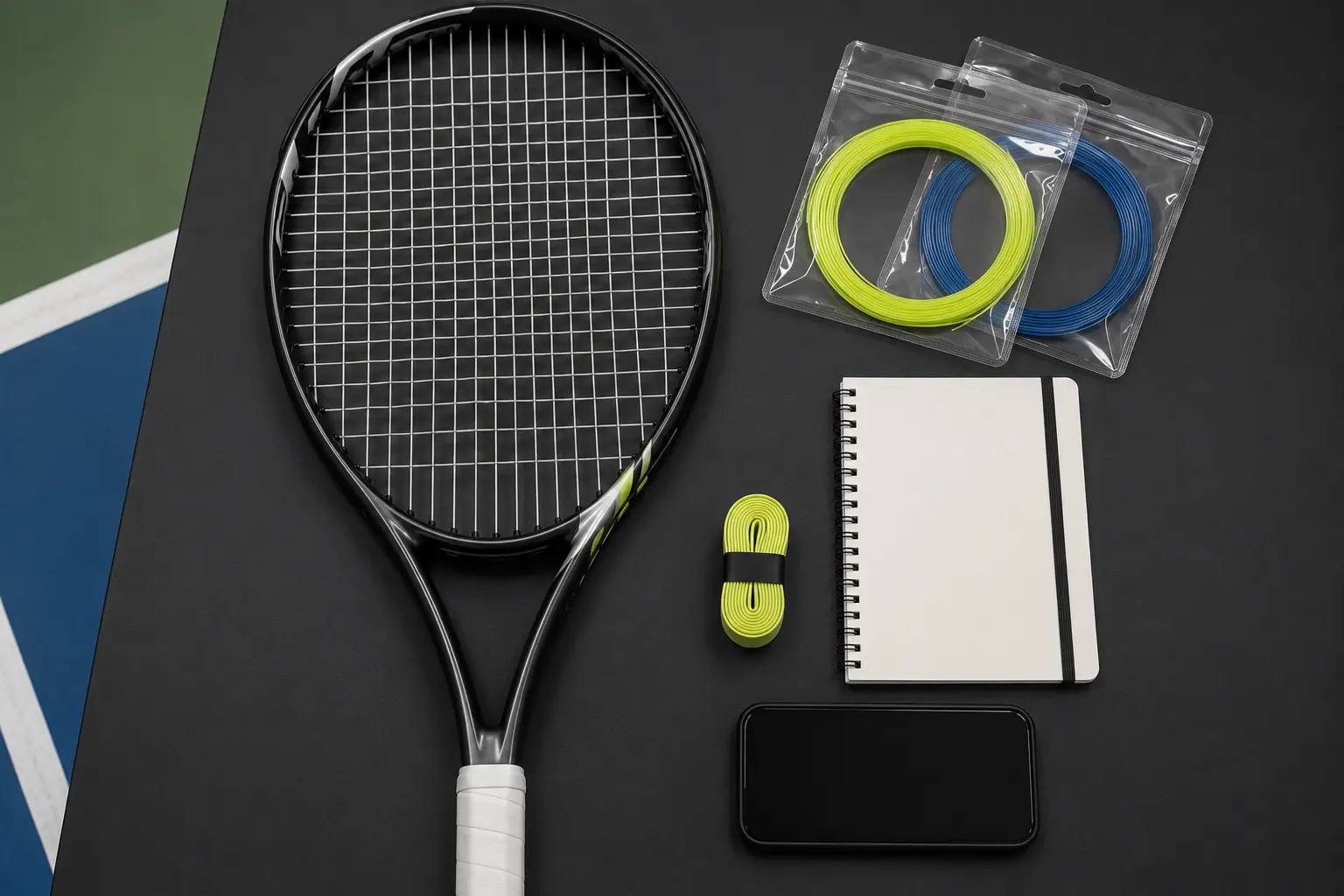
For a beginner or intermediate player, the best system is to write down the string date, string type, tension, and estimated playing hours. After two or three string jobs, you will know your real range.
And if you are choosing between buying a new racket and checking the string job, start with the strings. Many times the racket is not wrong. It is just playing with an engine that has lost its response.
Keep learning
Turn this information into a better decision for your game
Explore more guides on the same topic or visit the complete archive to compare your options with context.
Continue reading
Related articles
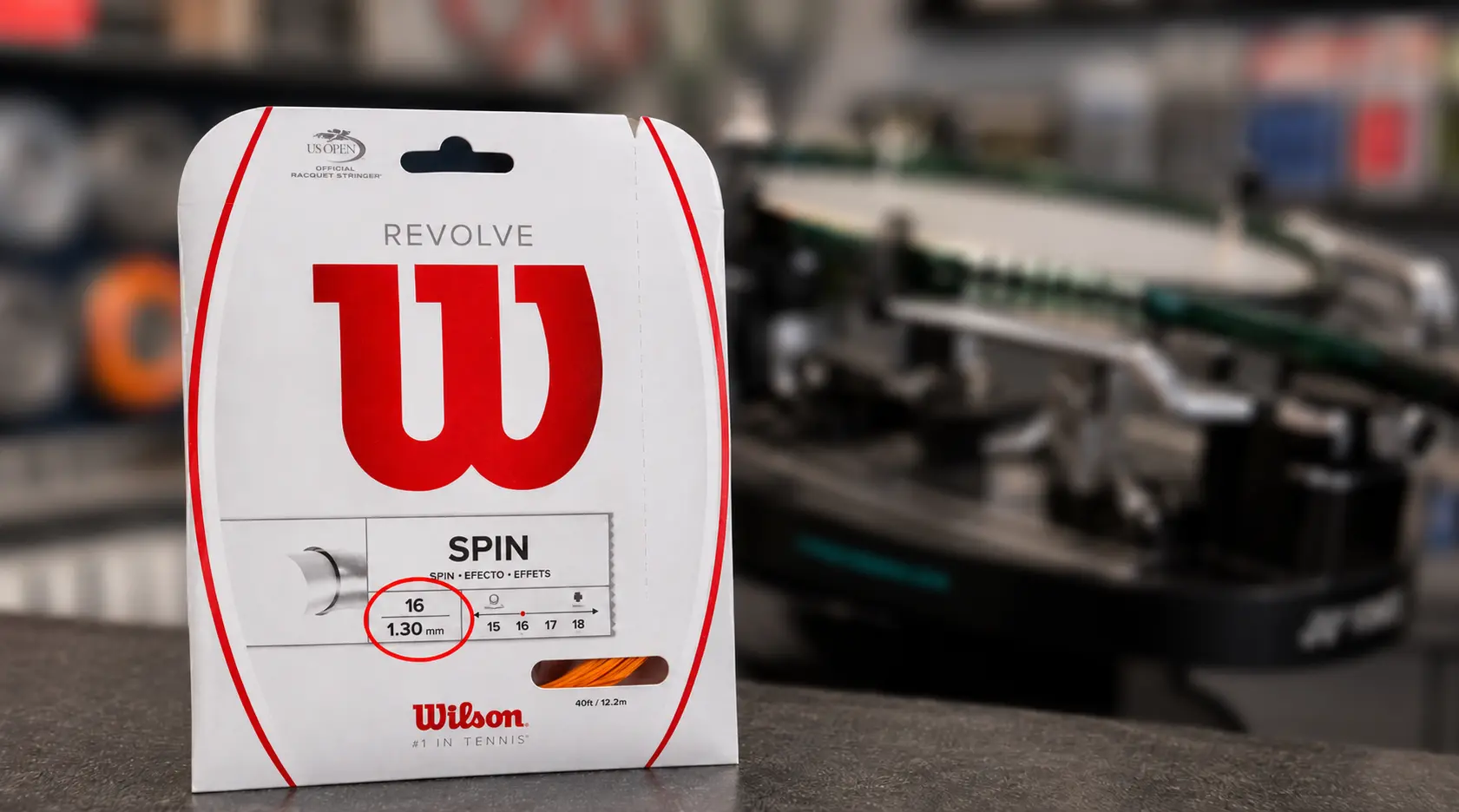
Tennis String Gauge: 1.20 vs 1.25 vs 1.30 mm
Tennis string gauge guide: compare 1.20, 1.25, and 1.30 mm for spin, control, comfort, durability, and the best fit for your game.
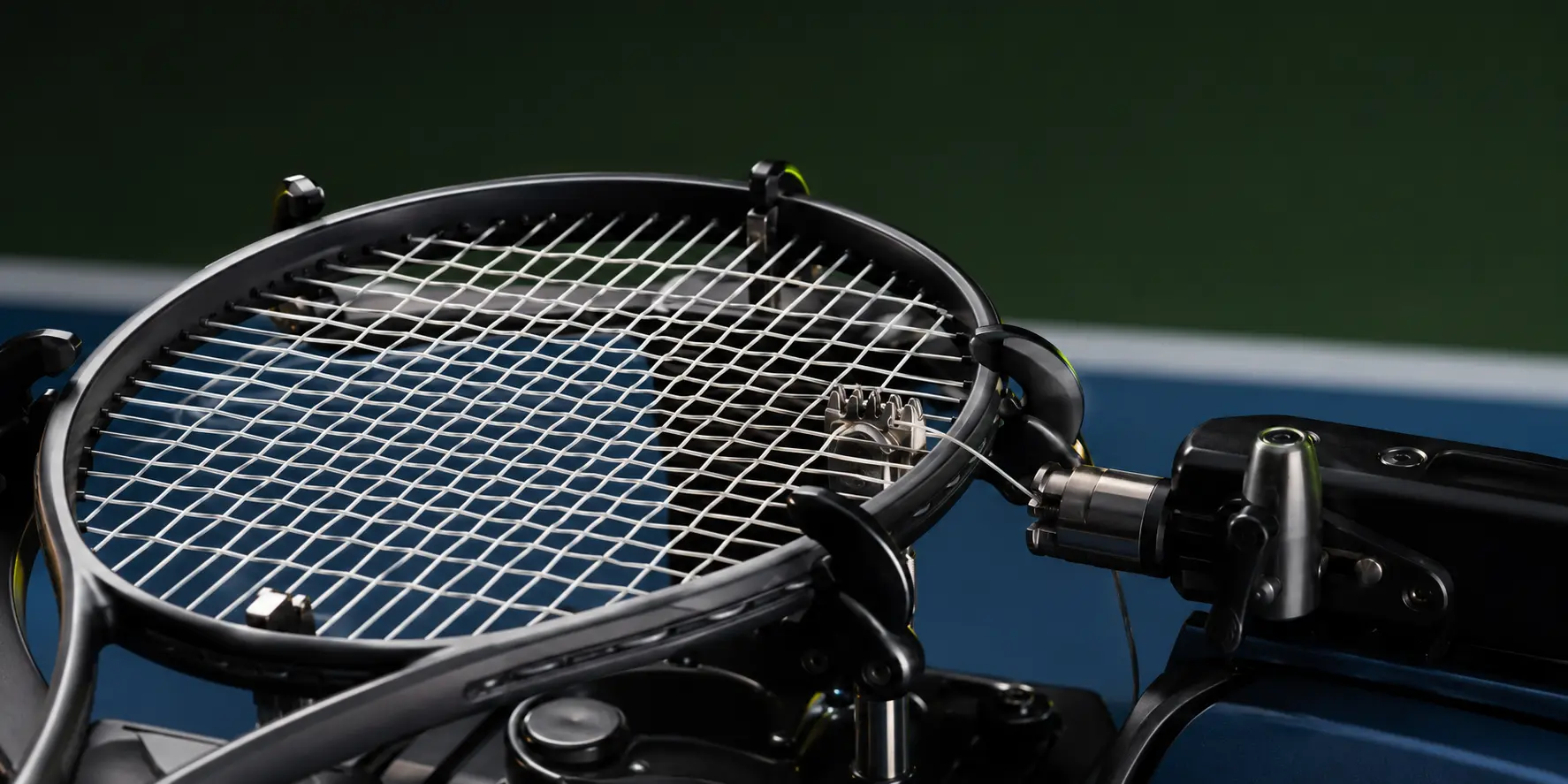
Tennis string tension: pounds, kilos, control and arm
Learn how to choose tennis string tension in pounds or kilos based on power, control, spin, string type and arm comfort.
String Patterns: 16x19 vs 18x20 Explained
Complete guide to string patterns. Discover the real differences between 16x19 and 18x20 and how they affect your game.