Tennis string tension: pounds, kilos, control and arm
String tension is one of those settings many players change by habit: “if the ball flies, go tighter; if it does not move, go lower.” That idea is not wrong, but it is incomplete. Two kilos can change depth, sound, sweet spot feel and the load your arm feels, especially if you play with polyester.
Quick answer: most intermediate players should start near the middle of the racket’s recommended range. If you use polyester, it often makes sense to string 1-3 kg lower than with multifilament or synthetic gut. Lower tension if you need power, comfort or easier depth; raise tension if the ball flies and you already create your own racket speed.
The key is to adjust tension as part of the full system: string type, string pattern, racket stiffness, swing and arm health.
What tennis string tension means
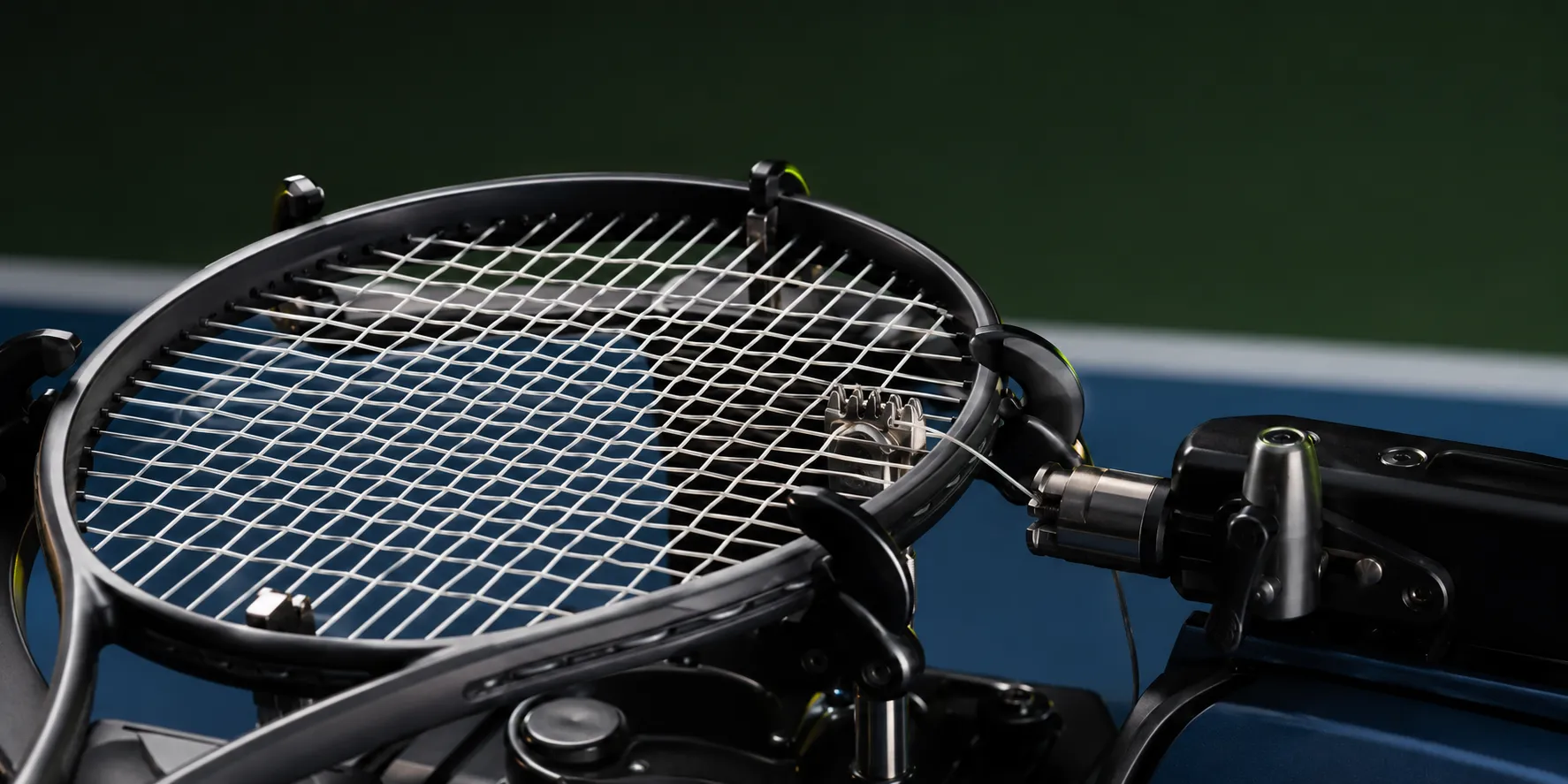
String tension is the force used by the stringer when installing the strings in the racket. It is usually expressed in pounds (lbs) or kilograms (kg). The practical conversion is simple:
- 50 lbs = 22.7 kg
- 52 lbs = 23.6 kg
- 55 lbs = 24.9 kg
- 60 lbs = 27.2 kg
Interactive converter
From pounds to kilos, shown on the racket
Move the tension between 30 and 70 lbs. The string bed shifts from white and green at lower tensions to orange, red, and dark red at higher tensions.
That number is not the real tension you will have forever. Strings start losing tension as soon as they leave the machine, and some string families lose performance faster than others. That is why a racket freshly strung at 23 kg does not feel the same as the same racket two weeks later, even if the string has not broken.
It also helps to separate two ideas: the reference tension you ask the stringer for and the dynamic stiffness of the string bed when you hit. Tennis Warehouse University measures string stiffness under dynamic impacts; that helps explain why a stiffer string or string bed usually feels like more control, less power and less comfort.
Low vs high tension: what changes on court
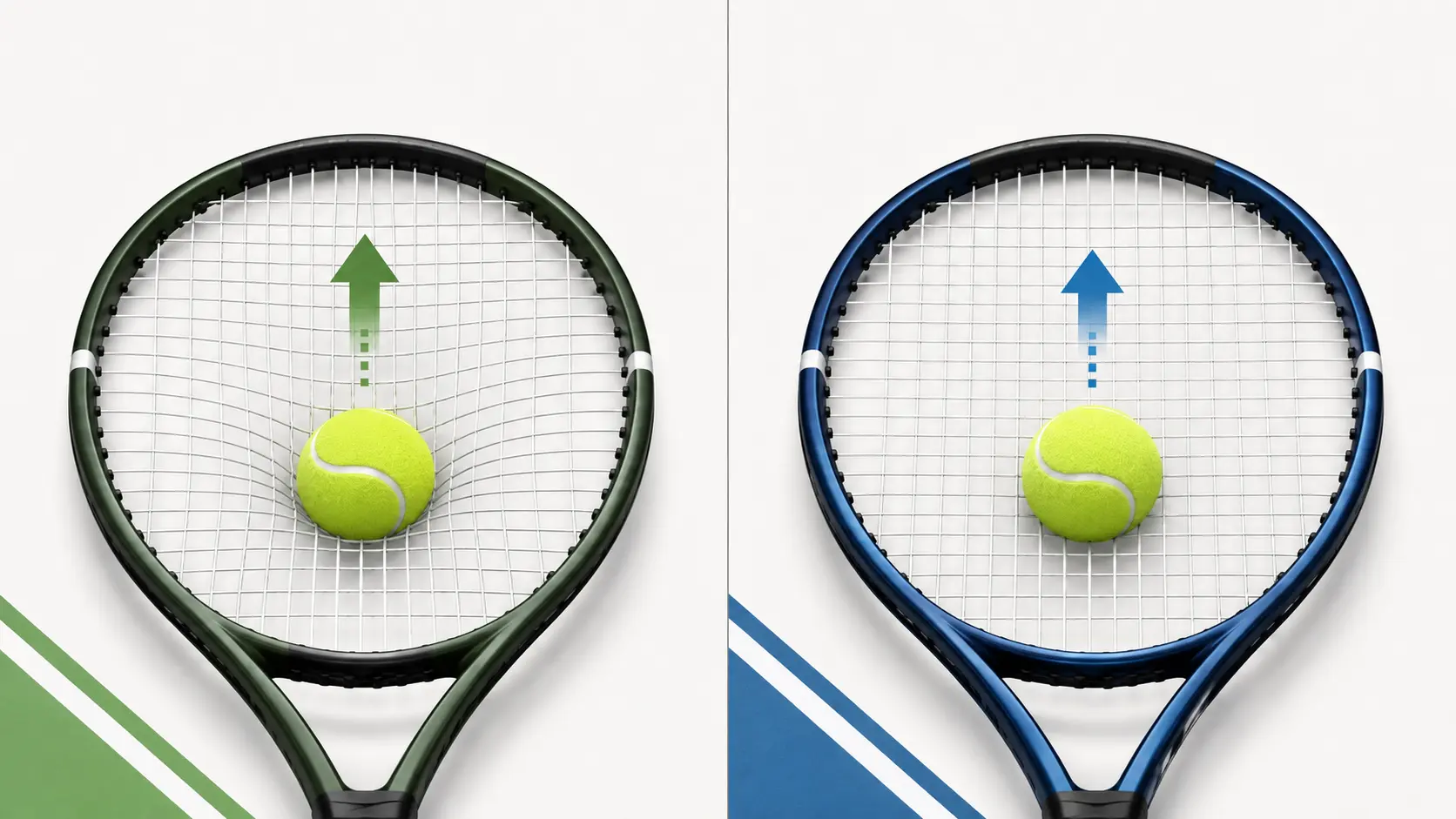
You do not need to memorize physics. Think in terms of these playing consequences:
| Adjustment | What you usually gain | What you may lose | Who it makes sense for |
|---|---|---|---|
| Lower tension | Easier power, depth, larger sweet spot, comfort | Depth control, livelier response | Medium swing speed, sensitive arm, slow court, firm polyester |
| Higher tension | Lower launch, drier response, control on big swings | Free power, comfort, forgiveness off center | Fast hitter, ball flying long, very elastic multifilament |
The word “control” can be misleading here. A higher tension does not improve your technique or aim the ball for you. It reduces string bed deformation and shortens contact time. For a player with a fast swing and clean contact, that can feel more predictable. For a player who hits late or off center, it can feel harsh, small and punishing.
Practical tension ranges by string type
Exact ranges depend on the racket and string, but these starting points work well for many adult players using modern 98-100 square inch rackets. If you want to go deeper, the TWU String Performance Database lets you compare stiffness, tension loss and friction between specific strings.
| String type | Reasonable starting point | Typical adjustment |
|---|---|---|
| Polyester | 20-23 kg / 44-51 lbs | Start low if you do not break strings often |
| Multifilament | 23-26 kg / 51-57 lbs | Raise if the ball flies too much |
| Synthetic gut | 23-26 kg / 51-57 lbs | Neutral range for learning preferences |
| Natural gut | 24-27 kg / 53-60 lbs | Handles higher tensions without losing as much comfort |
| Poly + multi/gut hybrid | Poly 1-2 kg lower than the soft string | Adjust based on the mains |
Do not treat the table like a medical prescription. Treat it as a starting zone. If your racket recommends 22-26 kg, the middle of the range is a sensible first test. If your stringer asks and you have no history, asking for “24 kg with multi” or “22 kg with poly” is usually more reasonable than copying a professional’s tension.
How to choose tennis string tension for power, control and arm comfort
If you want more power
Drop 1-2 kg and watch depth, not just speed. Lower tension usually helps you send the ball deeper with less effort, especially in long rallies or when you arrive late.
The risk appears if your swing is already big and fast: the ball may launch higher or fly longer. In that case, the answer is not always to raise tension a lot. Sometimes you need to check whether the string pattern is very open, whether the string is dead, or whether you are using a multifilament that is too lively for your speed.
If you want more control
Go up slowly: 1 kg, not 4 kg at once. Useful control comes from a more predictable response, not from turning the racket into a board.
If you use polyester and you are already above 24-25 kg, be careful. Many recreational players raise poly tension to control it, but end up with a stiff, low-powered string bed that asks more from the arm. It can work for a strong hitter. For an intermediate player who plays twice a week, it is often better to lower tension a bit, choose a less lively string, or revisit string gauge.
If you care about your arm
Start by lowering tension and avoiding strings that are too stiff. Tennis elbow is linked to overuse, grip, repeated wrist extension, poor mechanics and unsuitable equipment; NCBI Bookshelf describes it as a repetitive-load injury, not a simple equipment problem. Still, a stiffer string bed can increase the shock you feel on off-center hits.
If you are coming from discomfort, a friendlier combination is usually:
- Multifilament or synthetic gut instead of full polyester.
- Medium or medium-low tension within the racket’s range.
- A racket with moderate RA stiffness.
- Restringing before polyester feels dead.
A dampener can change the sound, but it should not be your main arm solution. As explained in the article on tennis dampeners, the accessory works mostly on string bed feel, not on every mechanical factor in the shot.
The common polyester mistake
Polyester is stiff, loses tension relatively quickly and asks for racket-head speed. That is why it should not be strung like a multifilament.
A typical example: intermediate player, 100 square inch racket, 16x19 pattern, polyester at 26 kg. The first hour feels controlled. Then the less fun part starts: little ball exit, dry impact, more effort to get depth and a string that keeps losing life even if it does not break.
For many club players, polyester between 20 and 23 kg is a more logical balance. If the ball flies, before raising tension dramatically, check three things: whether you are hitting late, whether the poly is already dead, and whether you actually need full polyester. If the string has too many hours on it, the problem may not be the number of kilos but when to change strings. A hybrid can give you some of poly’s control with more comfort margin.
How to adjust without getting lost
Make small changes and track what happens. Tension is easy to change, but hard to interpret if you change three variables at once.
- Start with a baseline number. Middle of the racket range, or 1-3 kg lower if you use polyester.
- Play at least two sessions. The first can mislead you because the string is freshly installed.
- Write down the real problem. “It flies long on defense” is not the same as “I cannot finish points.”
- Adjust 1 kg at a time. Go up if you have too much power. Go down if you lack depth or the impact feels harsh.
- Do not change string and tension at the same time, unless the setup is clearly wrong for your arm.
If you have two identical rackets, the best test is to string them with the same string and 2 kg of difference. Play the same day, with the same balls, alternating every 15 minutes. That is when you start feeling tension itself, not the memory of how your racket played a month ago.
What tension to choose by player profile
| Player profile | Initial recommendation |
|---|---|
| Adult beginner | Synthetic gut or multi at 23-25 kg |
| Intermediate with moderate swing | Multi/synthetic gut at 24-25 kg, or soft poly at 21-22 kg |
| Topspin hitter with good speed | Poly at 21-23 kg |
| Flat hitter looking for precision | Firm multi or soft poly at 23-25 kg, depending on arm |
| Sensitive arm or elbow history | Avoid full poly; multi at 22-24 kg |
| Frequent string breaker | Poly or hybrid, starting at 21-23 kg |
Your profile matters more than ego. If your hitting partner plays at 27 kg and you at 22 kg, it does not mean one of you “controls” better. It means your strings, swing, racket and physical tolerance are different. The ITF Rules of Tennis regulate rackets and stringing as equipment, but they do not impose a specific competitive tension: that is a performance and comfort choice.
Frequently asked questions
How many kilos should I string my tennis racket at?
If you have no history, start in the middle of the racket’s recommended range. As a general guide: 23-26 kg for multifilament or synthetic gut, 20-23 kg for polyester, then adjust by 1 kg based on what happens on court.
How many kilos is 50 lbs?
50 lbs is approximately 22.7 kg. As a quick reference, 52 lbs is 23.6 kg, 55 lbs is 24.9 kg and 60 lbs is 27.2 kg. If your stringer works in another unit, use the converter in this article before asking for the tension.
Does more tension always mean more control?
Not always. It usually gives a firmer and less powerful response, which some players interpret as control. But if you lose depth, swing tighter or miss from off-center contact, that high tension may reduce real control.
What tension is best to avoid arm pain?
There is no magic tension, but a softer string bed usually helps: lower tension, a more elastic string and a racket that is not excessively stiff. If pain is already present, treat it as a physical signal, not just an equipment setting.
Should I change tension between summer and winter?
It can make sense. In cold weather, many strings feel stiffer and the ball comes off slower; lowering tension slightly can help. In hot weather, if the ball flies more, some players raise tension by 1 kg. Do it only if you notice a repeated difference, not just because of the calendar.
Should mains and crosses be strung at different tensions?
In hybrids, it is common to string the polyester 1-2 kg lower than the softer string. In single-string setups, some players vary mains and crosses, but most players are better off keeping it simple until they have a clear reference.
The practical rule
Choose the lowest tension that still lets you control depth. That sentence is not perfect, but it avoids the most expensive mistake: raising tension every time you doubt, until the racket feels harsh, low-powered and unfriendly to the arm.
If you do not know where to start today, try this: check your racket’s recommended range, choose the middle if you use multi or synthetic gut, drop 2 kg if you use polyester, and change only one variable at the next string job. In two or three organized tests, you will learn more than by copying any professional player’s tension.
Keep learning
Turn this information into a better decision for your game
Explore more guides on the same topic or visit the complete archive to compare your options with context.
Continue reading
Related articles
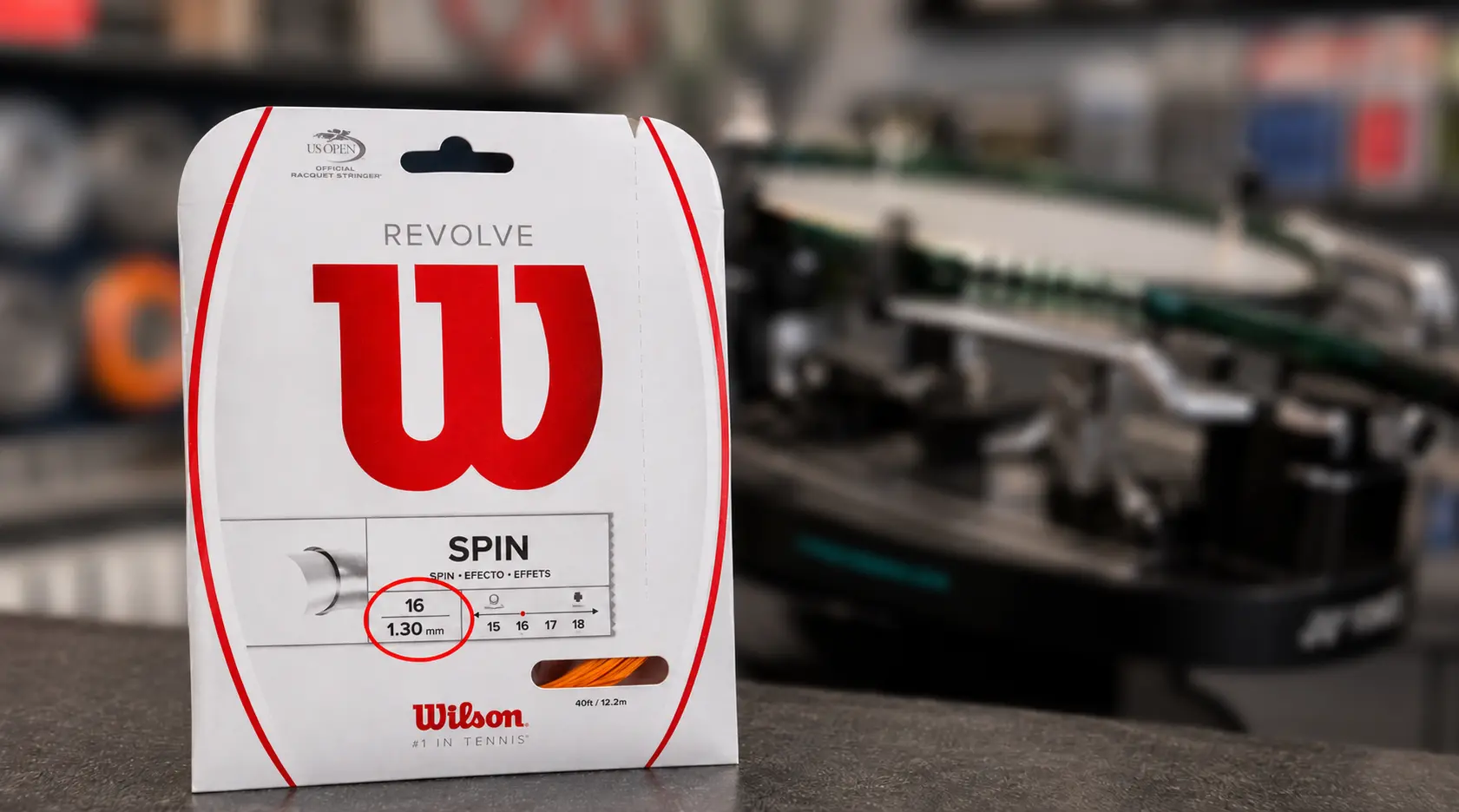
Tennis String Gauge: 1.20 vs 1.25 vs 1.30 mm
Tennis string gauge guide: compare 1.20, 1.25, and 1.30 mm for spin, control, comfort, durability, and the best fit for your game.
String Patterns: 16x19 vs 18x20 Explained
Complete guide to string patterns. Discover the real differences between 16x19 and 18x20 and how they affect your game.
Tennis Racket Types: Power, Control and Spin
What separates power, control and spin tennis rackets, which specs matter, and what to demo based on your swing and typical miss.