Tennis String Gauge: 1.20 vs 1.25 vs 1.30 mm
Choosing a tennis string gauge will not magically change your racket, but it does fine-tune how the string bed responds. Drop from 1.25 to 1.20 mm and the ball may come off a little livelier, the strings may bite more easily, and durability usually drops. Move up to 1.30 mm and the trade-off flips: more life, a firmer response, and less easy feel.
Quick answer: for most intermediate players, 1.25 mm is the best starting point. Choose 1.20 mm if you want more feel, a bit more launch, and you do not break strings quickly. Choose 1.30 mm if you break strings often, play with an open pattern, or need the string bed to stay usable for more hours.
Gauge does not work in isolation. A 1.20 mm polyester can feel firmer than a 1.30 mm multifilament because the type of tennis string matters more than diameter. Still, within the same string family and model, comparing 1.20, 1.25, and 1.30 mm is useful.
What does tennis string gauge mean?
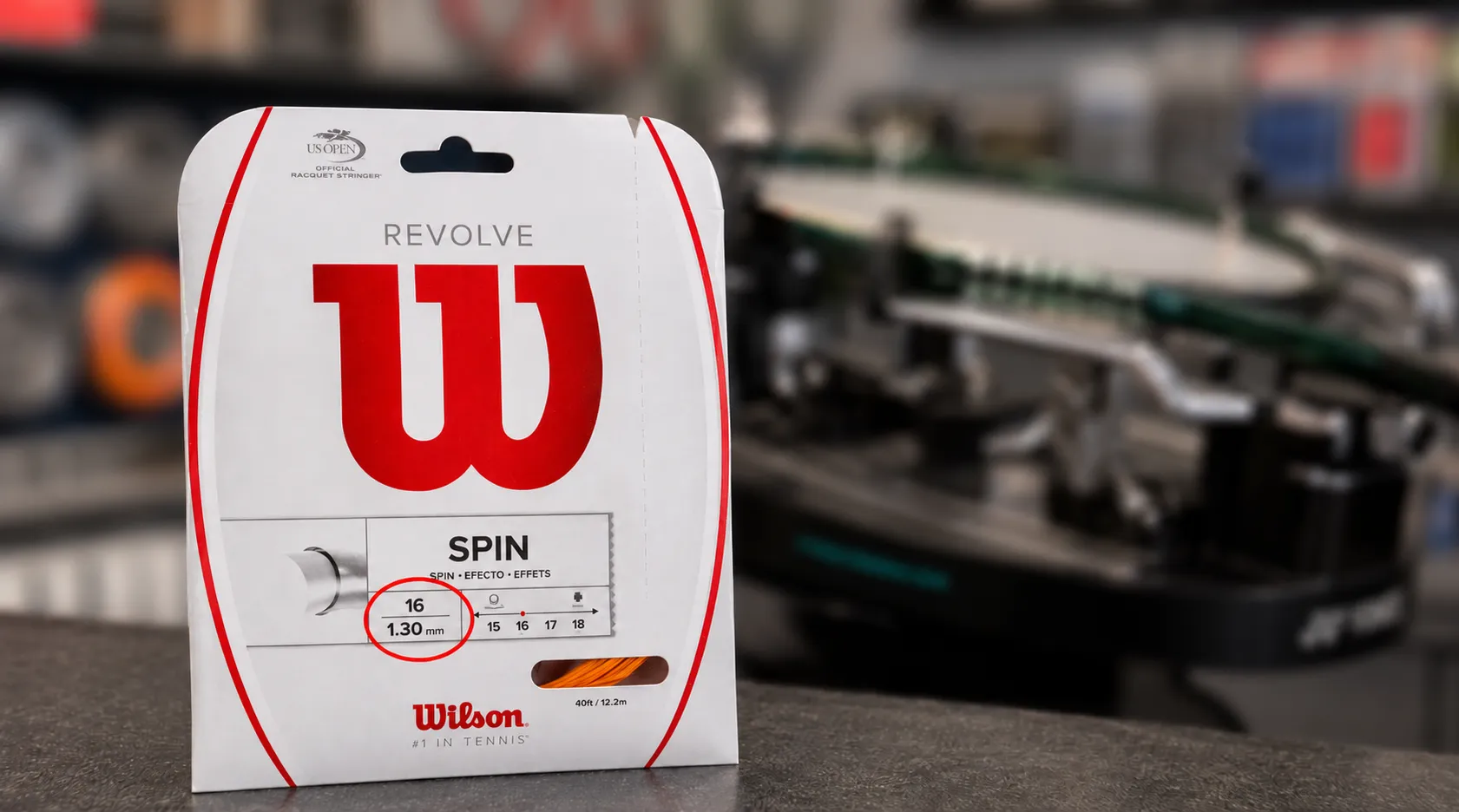
Tennis string gauge is the string’s thickness. In many markets, you will see both millimeters and gauge numbers: 1.20, 1.25, 1.30 mm, or 16, 17, 18 gauge.
The confusing part: in the gauge system, a higher number usually means a thinner string. So a 17 gauge string is usually thinner than a 16 gauge string. Millimeters are more direct: 1.20 mm is thinner than 1.25 mm, and 1.30 mm is thicker.
Most adult tennis setups sit somewhere between roughly 1.10 and 1.40 mm. The practical sweet spot for many club players is 1.20-1.30 mm, where feel, performance, and durability stay in a workable range.
Tennis string gauge chart: 1.20 vs 1.25 vs 1.30 mm
| Gauge | Common equivalent | On-court feel | Main advantage | Main trade-off | Best fit |
|---|---|---|---|---|---|
| 1.20 mm | 17L / 18, depending on brand | Livelier, more sensitive | Feel, launch, easier spin access | Lower durability | Players who do not break strings quickly |
| 1.25 mm | 16L / 17 | Balanced | Best mix of control and lifespan | Does not maximize either extreme | Most intermediate players |
| 1.30 mm | 16 | Firmer and more stable | Durability and control on heavy swings | Less touch and less easy launch | String breakers and open patterns |
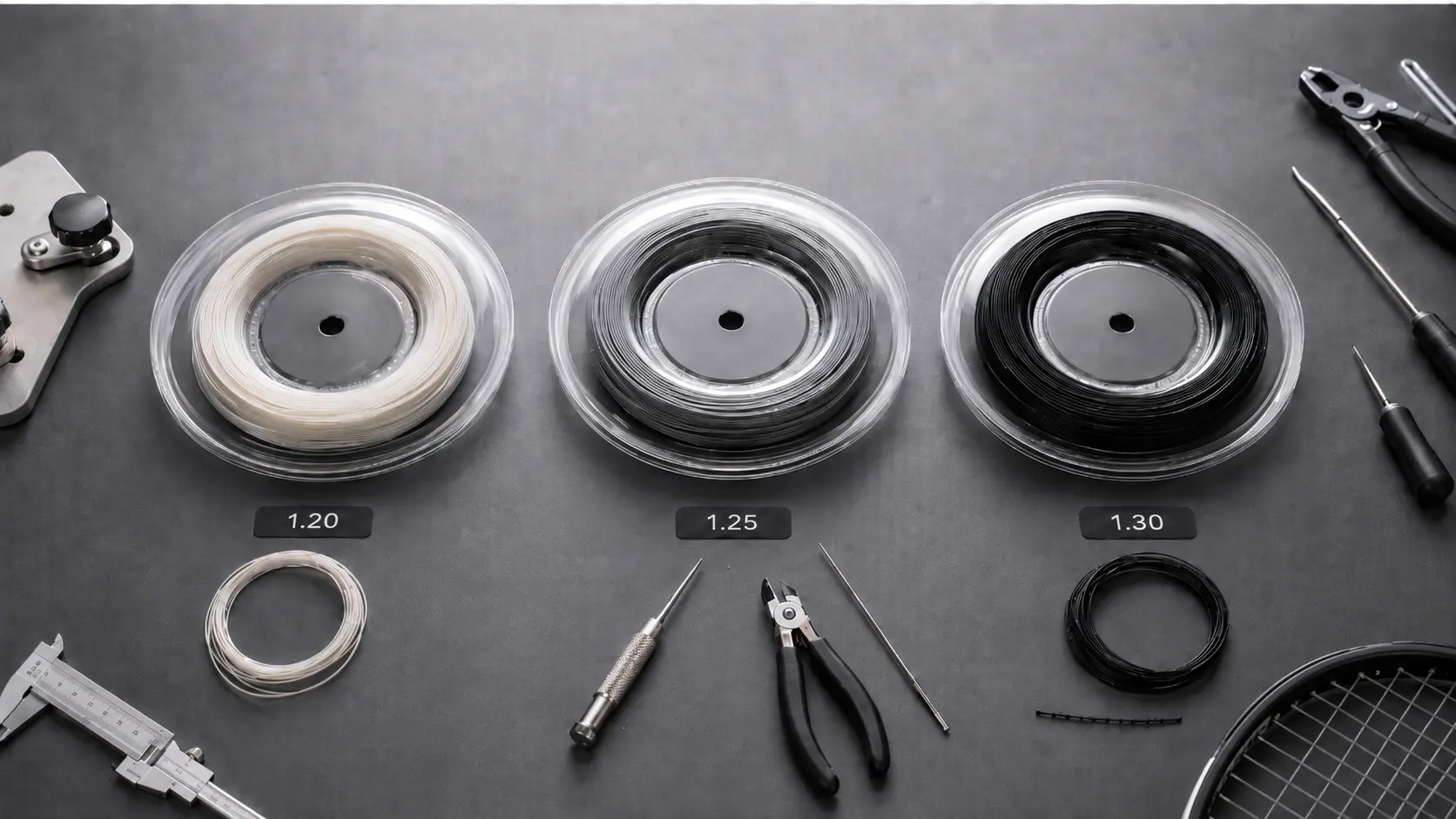
This table works best when you compare the same string model. For example, a 1.20 and 1.30 version of the same polyester. If you compare different materials, the conclusions change: a thick multi can still be more powerful and comfortable than a thin poly.
What changes when you use a thinner string?
A thinner string usually deforms more easily, weighs slightly less, and can dig into the ball a bit more. On court, that tends to show up in three ways.
First, more feel. On drop shots, defensive lobs, and touch shots where you are not swinging all-out, a 1.20 mm string can give more information from the string bed. It is not magic; there is simply less material resisting deformation.
Second, a livelier launch. At the same tension, a thinner string can feel a little more elastic or reactive. If a 1.30 mm string feels too firm or leaves the ball short, dropping to 1.25 or 1.20 may help you recover depth without lowering tension as much.
Third, more wear. Less diameter means less material before the string breaks. Thinner strings also tend to notch sooner at the intersections, especially if you hit with topspin and make the mains slide a lot. If you are trying to separate normal wear from real performance drop-off, use the Spanish guide on when to restring a tennis racket.

Spin is the tricky part. A thinner string can help the ball bite and can make string movement easier, but useful spin depends more on technique, racket-head speed, string friction, material, and string pattern. Tennis Warehouse University experiments on string movement and spin point to snapback and material as bigger variables than gauge alone.
What changes when you use a thicker string?
Moving to 1.30 mm does not make you a defensive player. For many hard hitters, it lets them swing more freely because the string bed stays more predictable.
The clearest advantage is physical durability. If a 1.25 mm string lasts three or four hours before breaking, a 1.30 mm version may be the simplest fix before changing models or raising tension. It also helps in open 16x19 patterns, where strings move more and saw into each other faster.
The second advantage is a firmer response. On heavy groundstrokes, blocked returns, or off-center contact, a thicker string can feel less nervous. It does not automatically give you more control, but it can reduce that feeling that the ball jumps away when you are late and swing too hard.
The cost is feel and easy depth. If your main problem is leaving the ball short, a firm 1.30 mm polyester can make that worse. And if you also play a stiff racket, pay attention to your arm: thick gauge, polyester, and high tension can feel harsh. That is where racket stiffness RA also matters.
How to choose tennis string gauge by material
Gauge does not mean the same thing in polyester, multifilament, natural gut, or nylon. The same measurement can play very differently depending on the material.
Polyester
For poly, 1.25 mm is the most logical starting point. It keeps control, allows good snapback, and usually does not die as quickly as many 1.20 mm polys. If you do not break strings and want more feel, try 1.20 mm. If you break often, hit heavy topspin, or use a very open pattern, 1.30 mm makes sense.
The common mistake is dropping to 1.20 mm in search of spin when the real issue is technique or tension. If your strings are not snapping back, if the poly is already dead, or if you are not accelerating the racket head, gauge will not fix it.
Multifilament
With multifilament, a thin string can feel excellent, but it will usually fray sooner. For many players with arm discomfort, a 1.30 mm multi can be smarter than a 1.25 mm: it is still comfortable, but it lasts better.
If you hit fairly flat, do not break strings, and want touch, 1.25 mm can work beautifully. If you are moving from poly to multi for comfort, do not go too thin right away; the material change is already a big shift.
Natural gut and nylon
Natural gut holds tension extremely well, but it is expensive and vulnerable to wear. Many players use it in thicker gauges to protect the investment, especially in hybrids. With nylon or synthetic gut, 1.30 mm is often the most balanced option for recreational players because it offers reasonable durability without making the feel complicated.
The basic rule stays the same: if you do not break strings and want more touch, go thinner. If you break strings or the bed moves too much, go thicker.
Does gauge change the tension you should use?
Not always, but it can call for small adjustments. If you keep the same string and only change diameter, the thinner version usually feels livelier. Some players raise tension by 0.5-1 kg (1-2 lbs) to regain control. Others leave tension alone and use the extra launch.
Going thicker can have the opposite effect: the string bed may feel firmer and less elastic. If depth or comfort drops, lowering tension by 0.5-1 kg (1-2 lbs) can put some life back into the setup.
If you are changing gauge and tension at the same time, first read the Spanish guide to tennis string tension. Gauge changes the feel, but tension can amplify or soften that change.
Keep the test simple:
- Change one variable: gauge, not gauge and tension together.
- Play at least two sessions, because first impressions can lie.
- Track three things: depth, control when you accelerate, and arm fatigue or pain.
- Adjust tension after that, not before.
The Tennis Warehouse University string database is useful here: even among similar polyester strings, stiffness and tension loss vary a lot by model. Gauge gives you direction, but it does not replace testing a specific string.
Which tennis string gauge should you choose?
| Player profile | Recommended gauge | Why |
|---|---|---|
| Intermediate player who needs a starting point | 1.25 mm | Real balance of feel, control, and durability |
| Topspin player who breaks every few hours | 1.30 mm | More material and better lifespan at worn intersections |
| Doubles player, touch player, moderate swing speed | 1.20-1.25 mm | More feedback on volleys, drop shots, and changes of pace |
| Player with arm discomfort | Depends on material | Moving to multi/gut matters more than obsessing over 0.05 mm |
| Open 16x19 pattern user | 1.25-1.30 mm | Open patterns increase string movement and wear |
| Dense 18x20 pattern user | 1.20-1.25 mm | The pattern already adds control and durability |
If I had to give one rule for club players, it would be this: start with 1.25 mm and move based on the problem. If you break too fast or lose control too quickly, go to 1.30. If the string bed feels dead, stiff, or too muted, try 1.20 or lower tension before changing rackets.
Common myths about string gauge
Does a thinner string always create more spin?
No. It can help, but useful spin comes from swing path, contact, material, friction, and snapback. TWU’s work on which strings generate the most spin shows that differences are real, but they do not reduce to “thinner equals more spin.”
Is 1.30 mm only for string breakers?
No. It is useful for string breakers, but also for players who want a more stable response in a powerful racket or very open pattern. The trade-off is that it can feel more muted.
Should I always go thicker if I want control?
Going thicker can make the string bed feel firmer, but control also depends on tension, material, pattern, racket weight, swing, and contact quality. Sometimes the better adjustment is staying at 1.25 mm and raising tension slightly.
Frequently asked questions
What tennis string gauge is best for beginners?
For beginners and recreational players, 1.30 mm synthetic gut or multifilament is usually a safe option: it lasts reasonably well, feels comfortable, and does not demand much maintenance. With polyester, many beginners are better off avoiding poly than fine-tuning between 1.20 and 1.25 mm.
Does 1.20 mm break much faster than 1.25 mm?
Usually, yes, but the difference depends on your stroke, string pattern, material, and playing frequency. A flat hitter may use 1.20 mm for weeks; a heavy topspin player may cut through it in a few sessions.
Is 16 or 17 gauge better for tennis?
For most players, 17 gauge or 16L is the livelier option, while 16 gauge is more durable and firmer. If you are unsure, start around 1.25 mm, which often sits between those two worlds depending on the brand.
Is 1.25 or 1.30 mm better?
For most players, 1.25 mm is more balanced. Move to 1.30 mm if you break strings often, use a very open 16x19 pattern, or want a firmer response. If you do not break strings and want more feel, 1.25 mm is usually enough.
Can I use 1.20 mm in a 16x19 racket?
Yes, but accept the trade-off: more feel and potentially easier spin access for less durability. If the pattern is very open and you already break 1.25 mm quickly, 1.20 mm is probably not the best direction.
What gauge do professional tennis players use?
There is no single pro gauge. Many competitive setups sit around 1.25-1.30 mm, but copying that number alone is not useful. Pros combine string, tension, pattern, racket, restringing frequency, and very specific preferences.
Does gauge affect racket weight and swing weight?
Yes, but the change is usually small. A thicker string adds a little more mass in the racket head, which can slightly raise swing weight. Most players will not find it dramatic, but sensitive players may notice.
Practical takeaway
Do not choose gauge as if it were a badge of level. Choose it as a fine-tuning tool.
If you are lost, string 1.25 mm. If you break too quickly or your 16x19 eats strings, try 1.30 mm. If you want more touch, do not break often, and want the string bed to breathe more, drop to 1.20 mm.
Before changing three things at once, run a clean test: same racket, same string, same tension, different gauge. That is when you can actually feel what came from diameter and what was coming from everything else.
Keep learning
Turn this information into a better decision for your game
Explore more guides on the same topic or visit the complete archive to compare your options with context.
Continue reading
Related articles
Tennis string tension: pounds, kilos, control and arm
Learn how to choose tennis string tension in pounds or kilos based on power, control, spin, string type and arm comfort.
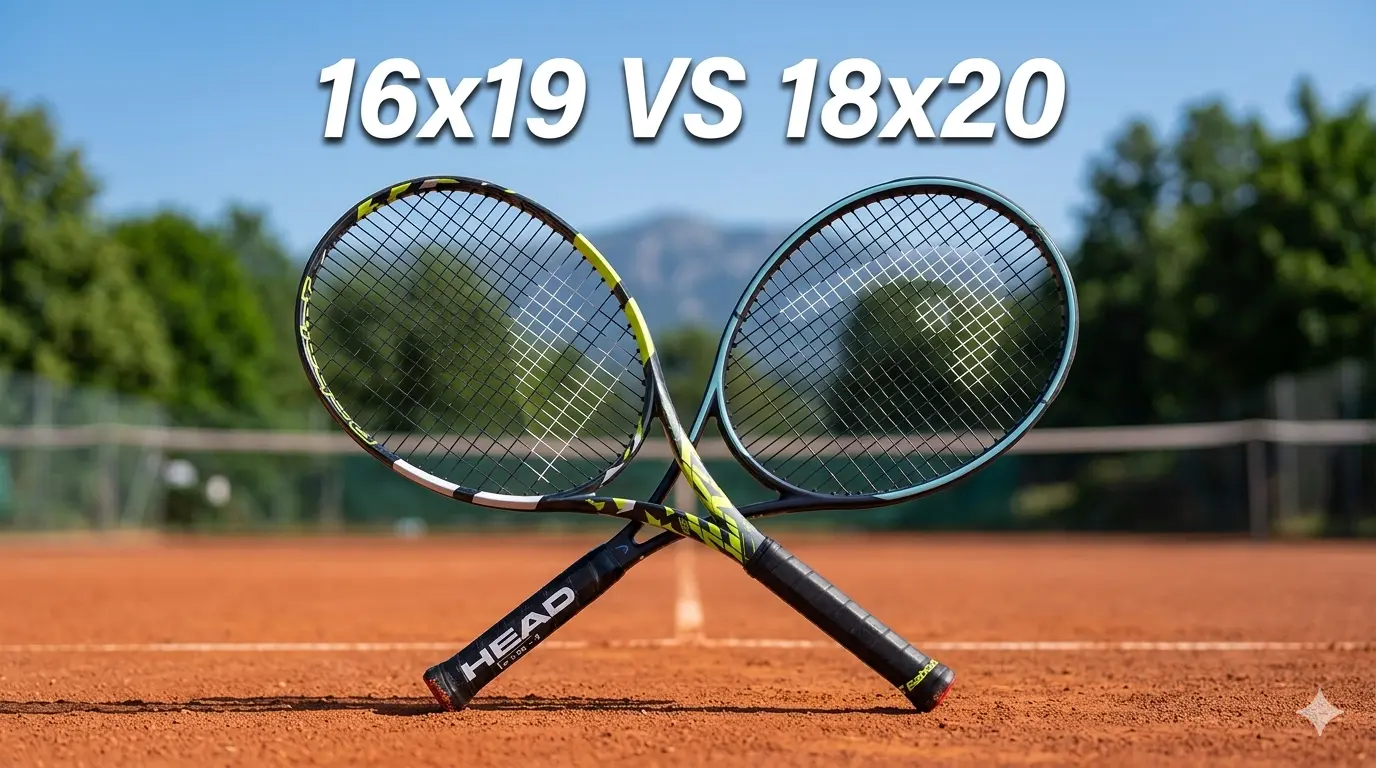
String Patterns: 16x19 vs 18x20 Explained
Complete guide to string patterns. Discover the real differences between 16x19 and 18x20 and how they affect your game.

Tennis Racket Types: Power, Control and Spin
What separates power, control and spin tennis rackets, which specs matter, and what to demo based on your swing and typical miss.