
Wilson Rackets Guide: Blade, Clash, Ultra and More
Wilson’s racket families are not a ladder with Pro Staff at the top and Clash at the bottom. They solve different problems: controlling pace that is already coming at you, finding depth with less effort, accelerating with spin or playing comfortably for two hours.
The short version: choose Ultra for easy power; Clash for comfort and forgiveness; Blade if you create your own pace and want control; Defyer for aggressive topspin; Pro Staff for classic precision if you can handle a demanding frame; and RF 01 for fast, versatile all-court tennis.
This is how Wilson’s current performance lineup breaks down:
- Defyer: explosive spin, power and baseline attack.
- Blade: modern control, feel and confidence when accelerating.
- Clash: comfort, flexibility and ease of use.
- Ultra: free power, depth and a lively response.
- Pro Staff: classic precision, stability and the highest physical demand.
- RF 01: racket-head speed, variety and all-court play.
Start with the ball you produce in a real match, not the paint on the frame. Does it land short when you are late? Fly long when you accelerate? Does the racket twist on returns? Those answers matter more than the professional pictured in the campaign.
One caveat: tour players often use customized frames or older molds under current cosmetics. A player endorsement can hint at a family’s identity, but it does not prove that the professional competes with retail specifications.
How to read Wilson racket names
Wilson combines a family name with head-size numbers and suffixes such as Pro, L, UL, Team and Future. The meaning is not identical in every line, but the labels are useful shorthand.
| Name or version | What it usually signals | Who it may suit |
|---|---|---|
| 98, 99, 100, 104, 108, 111 | Head size in square inches | Lower often means precision; higher usually adds margin and power |
| Pro | More mass, stability or a more specialized setup | Advanced players with fast swings and consistent preparation |
| L | Lighter version | Intermediates, doubles players, transitioning juniors or less load |
| UL | Ultralight version | Beginners, juniors or compact swings |
| Team | More accessible frame, sometimes with a different build or price | Recreational and developing players |
| Future | Lighter model within the RF 01 family | Intermediates and advanced juniors prioritizing maneuverability |
| 16x19, 16x20, 18x20 | String pattern | More open often adds launch/spin; denser patterns prioritize control |
The weights in this guide are unstrung. Strings, overgrip and a dampener add mass and can change balance and swing weight. Two 300 g (10.6 oz) rackets do not necessarily swing alike; where that mass sits matters.
Check the product page in your market as well. Wilson may offer slightly different models, colors or weights by region. This matters most with limited editions and previous generations.
Wilson Defyer: spin and power for taking the initiative
The Wilson Defyer is the newest family. Wilson introduced it in 2026 for players seeking aggressive spin, depth and a more connected response than a pure power racket. Its place in the lineup is clear: baseline tennis, medium-to-fast swings and a willingness to attack the ball.
SI3D combines a more flexible hoop with a firmer throat in an attempt to separate contact feel from energy transfer. Torq Shaft and an aerodynamic bumper complete the package. Those are marketing names; the useful on-court question is whether you can accelerate vertically without losing predictable launch. Wilson explains the development and models in its Defyer introduction.
Defyer is not the first recommendation for someone who pushes the ball with a short stroke. It makes more sense once you move the racket head decisively. Flat hitters wanting a straighter response may find Ultra or Blade more natural.
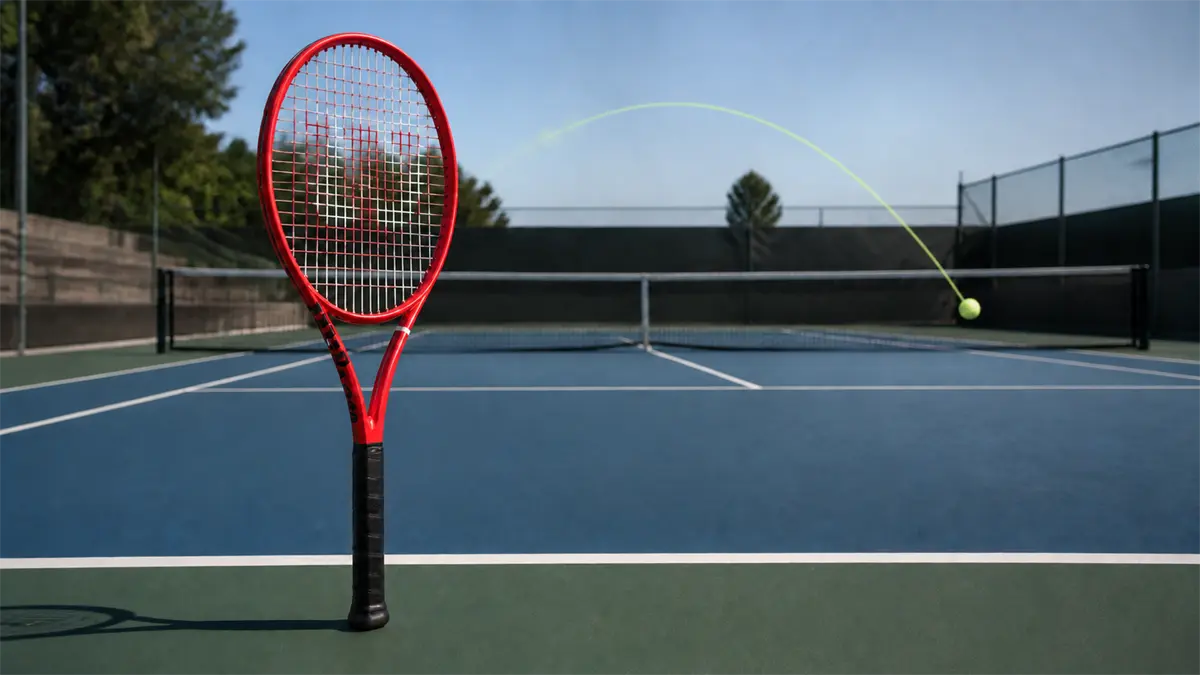
Key models: Defyer 100 and Defyer 98 Pro
Defyer 100 is the logical entry point: a 100-square-inch head, 300 g (10.6 oz) unstrung weight and 16x19 pattern. It offers more margin than the 98 Pro while retaining the family’s power-and-spin balance. It suits a club competitor who builds from the baseline, opens angles and wants the ball to stay heavy in long exchanges.
Defyer 98 Pro drops to 98 square inches, weighs 305 g (10.8 oz) and uses a 16x20 pattern. It asks for cleaner contact but organizes the response better when you accelerate. This is the Defyer option for players who want less launch and less forgiveness than the 100.
The practical distinction is simple: Defyer 100 widens the window; Defyer 98 Pro narrows the trajectory. If you are unsure, begin with the 100. The smaller head pays off only if you can use its added precision.
| Model | Head | Unstrung weight | Pattern | Most logical fit |
|---|---|---|---|---|
| Defyer 98 Pro | 98 in² | 305 g / 10.8 oz | 16x20 | Advanced, fast swing and clean contact |
| Defyer 100 | 100 in² | 300 g / 10.6 oz | 16x19 | Baseline competitors seeking spin and depth |
| Defyer 100L | 100 in² | 285 g / 10.1 oz | 16x19 | Intermediates wanting to accelerate with less load |
| Defyer 100UL | 100 in² | 265 g / 9.3 oz | 16x19 | Players prioritizing maximum maneuverability |
Wilson Blade: modern control and connected response
The Wilson Blade is Wilson’s modern-control family. Its purpose is not to deaden the ball. It provides a stable, readable response when the player accelerates. The V10 generation keeps the 98-square-inch options while offering 100 and 104 models for players who want Blade character with a friendlier contact window.
Blade makes sense if technique and swing speed already generate your depth. It tends to reward committed contact on returns, changes of direction and approach shots. If you are often late or need the frame to supply most of the pace, it can leave the ball short.
The current Blade collection is associated with elite players such as Aryna Sabalenka. Treat that as a clue to the family profile—confidence to accelerate under pressure—not a reason to copy a professional setup.
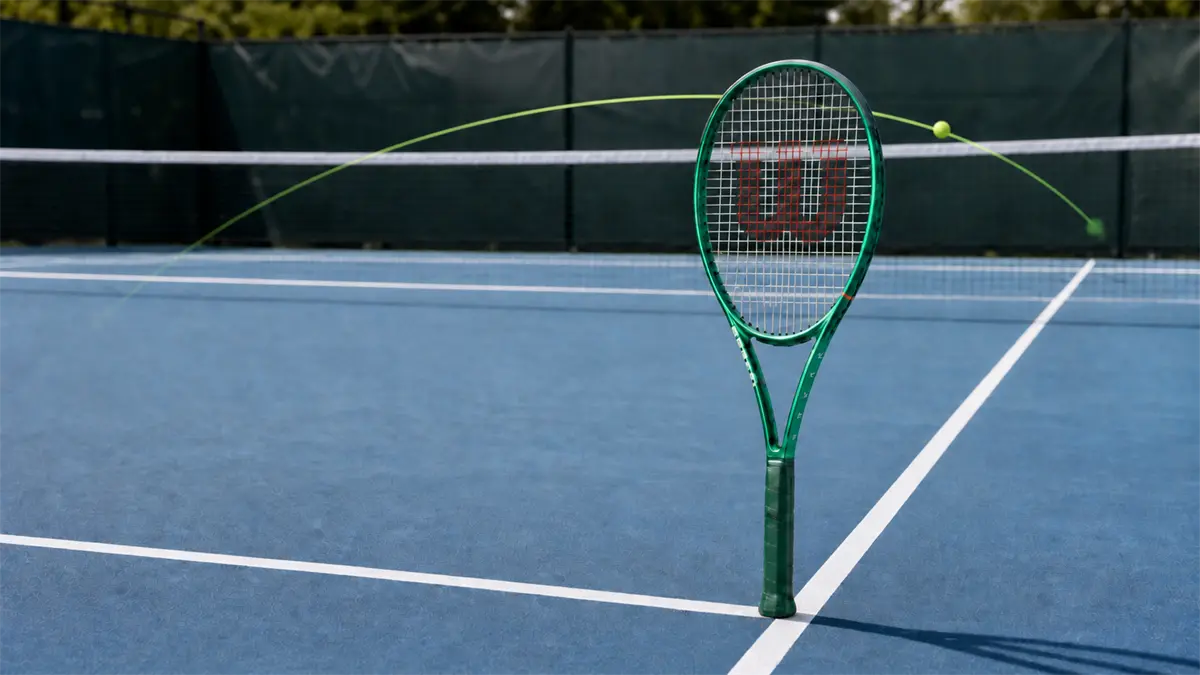
Key models: Blade 100 and Blade 98 V10
Blade 100 V10 is the sensible starting point for many upper-intermediate players. It combines a 100-square-inch head, 300 g (10.6 oz) weight and 16x19 pattern. It remains control-oriented but forgives more than the 98s, especially when contact drifts away from center.
Blade 98 16x19 V10 weighs 305 g (10.8 oz) unstrung. It is the most versatile competitive Blade: the open pattern adds spin and some launch without turning it into a power racket. The Blade 98 18x20 keeps the same head size and weight but tightens the string bed. Expect a lower, more direct trajectory—and a greater need to accelerate for depth.
This choice is decided in the second set, not during five minutes of cooperative hitting. The 18x20 can be seductive when your feet are perfect. The 16x19 is often more resilient once your legs stop placing you cleanly behind every ball.
| Model | Defining trait | Best suited to | Watch for |
|---|---|---|---|
| Blade 100 V10 | Control with a more forgiving head | Upper intermediates and all-court players | Less free power than Ultra |
| Blade 98 16x19 V10 | Control with spin and moderate launch | Competitors with full swings | Demands consistent contact |
| Blade 98 18x20 V10 | Low trajectory and precision | Advanced players producing their own pace | Can leave the ball short |
| Blade 100L V10 | Blade response at 285 g / 10.1 oz | Advanced juniors, doubles and lower load | Less stable against heavy pace |
Wilson Clash: comfort without leaving the performance category
The Wilson Clash stands out for flexibility. The design asks the frame to flex in a controlled way without surrendering too much stability—a difficult combination. For the player, that usually means a less abrupt impact and more confidence to keep the swing loose.
Clash 100 V3 is especially relevant to intermediates, doubles players and anyone who values comfort during long sessions. Wilson positions it for club players and says V3 added off-center stability through Hit Stabilizer; the details are in the official Clash V3 introduction.
That does not make Clash a treatment for injury. Perceived comfort also depends on strings, tension, technique and arm history. If discomfort is part of the decision, read the guide to racket stiffness (RA), and do not install a stiff polyester at high tension simply because the frame is flexible.
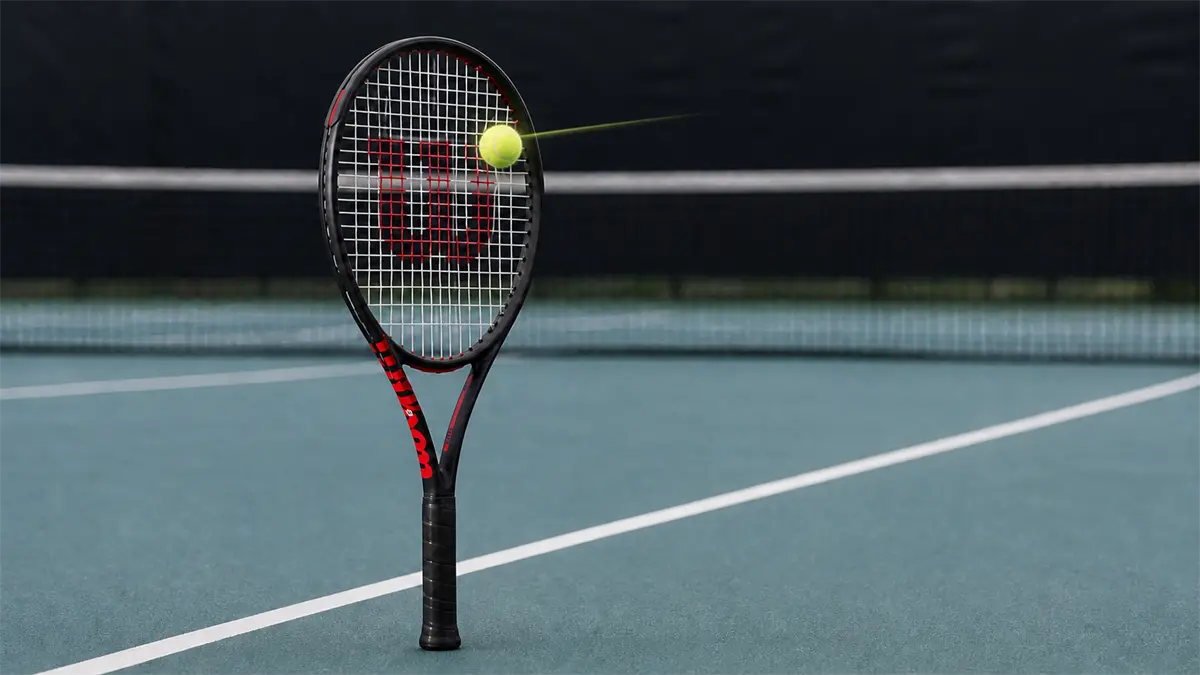
Key models: Clash 100 and Clash 100 Pro V3
Clash 100 V3 has a 100-square-inch head, 16x19 pattern and a published unstrung weight around 295 g (10.4 oz), depending on the market. It is easy to move, helps in defense and is less punishing on imperfect contact. It is a sound option if you are still consolidating a full swing or want enough arm left to accelerate late in a match.
Clash 100 Pro V3 rises to roughly 305 g (10.8 oz) and uses a 16x20 pattern. It gains stability and controls launch more closely, but it no longer moves as quickly. It suits a solid player who likes Clash comfort but finds the standard model too easily pushed around by a heavy ball.
The common trap is choosing Pro for “more control” when the real problem is late preparation. If the extra mass slows the racket before contact, the promised precision disappears.
| Model | Defining trait | Best suited to | Watch for |
|---|---|---|---|
| Clash 100 V3 | Comfort, forgiveness and maneuverability | Intermediates and all-court players | Less crisp than Blade or Pro Staff |
| Clash 100 Pro V3 | More mass, stability and a 16x20 pattern | Competitors wanting comfort with control | Higher physical load |
| Clash 100L V3 | Easy acceleration | Doubles, juniors and speed-first players | Less solid on returns |
| Clash 108 V3 | Wide sweet spot and extended length | Compact swings, returners or maximum assistance | Less agile close to the body |
Wilson Ultra: easy power and depth
The Wilson Ultra is the power family. A wider beam and lively response help the ball leave quickly and travel deep without the effort demanded by a Blade or Pro Staff. The difference becomes useful when you defend outside the court, block a first serve or hit without perfect support from the ground.
Easy power does not mean “beginner racket.” It means a player who already accelerates must manage launch, strings and racket-face angle more carefully. If relaxed swings already miss long, adjust the string bed or consider a more controlled family.
V5 uses SI3D and keeps Ultra 100 at the center of the range. Wilson lists it with a 100-square-inch head, 300 g (10.6 oz) unstrung weight and 16x19 pattern in its official Ultra V5 guide.
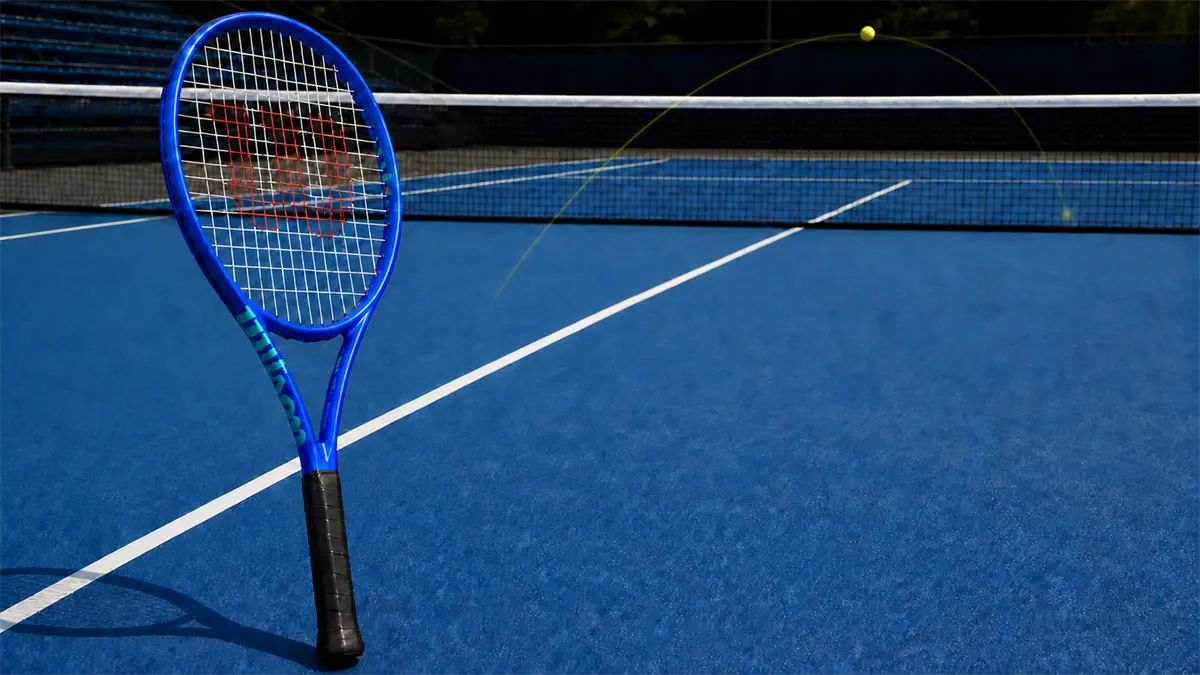
Key models: Ultra 100 and Ultra 99 Pro V5
Ultra 100 V5 is the first demo for most players: 100 square inches, 300 g (10.6 oz) and 16x19. It helps produce depth, offers a reasonable contact window and remains quick enough for returns and doubles. It fits medium swings and players who drive through the ball more than they lift it aggressively.
Ultra 99 Pro V5 is not simply a heavier Ultra 100. It has a 99-square-inch head, 305 g (10.8 oz) weight, thinner beam and 16x18 pattern. It retains power but delivers it through a more specialized setup with greater shot-shaping potential. It is for advanced players who want an Ultra that feels less automatic and accept a more particular response.
If you are unsure, demo the Ultra 100. The 99 Pro is only better when you can explain what you want from its open pattern, balance and geometry. The Pro label is not enough.
| Model | Defining trait | Best suited to | Watch for |
|---|---|---|---|
| Ultra 100 V5 | Easy power and depth | Intermediate to advanced, medium swings | Can launch too much on flat strokes |
| Ultra 99 Pro V5 | More precise power and 16x18 pattern | Advanced attackers | Less neutral, more demanding setup |
| Ultra 100L V5 | Power in a lighter frame | Intermediates, doubles and transitioning juniors | Less stable against high pace |
| Ultra 111 V5 | Large head and maximum assistance | Short swings or maximum forgiveness | Less directional precision |
Wilson Pro Staff: classic precision with a high entry cost
The Wilson Pro Staff is the historic precision line. A small head, substantial mass and stable response allow confident direction when contact is clean. The cost is equally clear: it offers little help when you are late, stretched on defense or losing swing speed.
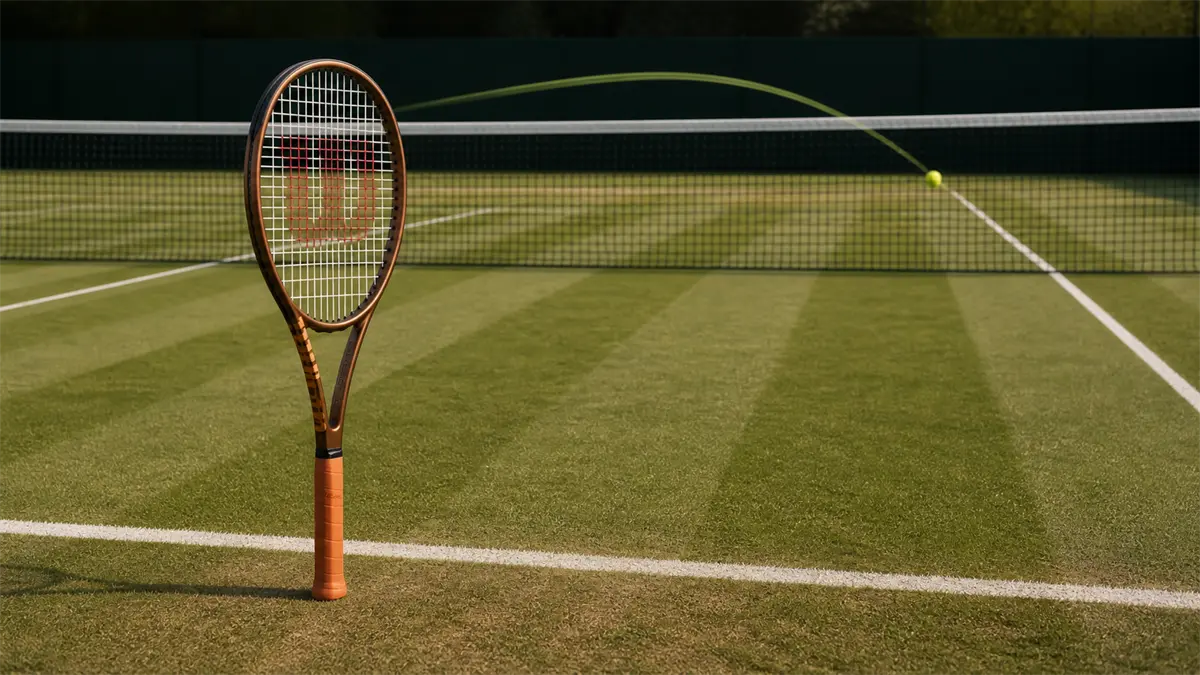
The 2026 Pro Staff 97 Classic has a 97-square-inch head, 315 g (11.1 oz) unstrung weight and 16x19 pattern. Wilson carries over V14 technologies such as Paradigm Bending and Braid 45 beneath cosmetics inspired by older generations. Its official Pro Staff history follows the line back to 1983.
This is a racket for someone who already creates pace, prepares early and wants direct response on slice, volleys and changes of direction. It is not a reward unlocked at a certain level. A strong player may compete better with Blade 100 or Ultra 100 if those frames preserve ball quality through an entire match.
Key models: Pro Staff 97 Classic and 97L Classic
Pro Staff 97 Classic is the heart of the family. Its 315 g (11.1 oz) unstrung weight becomes roughly 330 g (11.6 oz) with strings, before an overgrip or frame protection. That mass adds solidity, but it demands legs, preparation and a swing that holds up under pressure.
Pro Staff 97L Classic keeps the precision concept in a lighter package. It moves faster but cannot reproduce the stability of the 97. It may suit an advanced intermediate who wants the family’s direct response without taking on all the weight—provided they do not expect a free Pro Staff 97.
| Model | Defining trait | Best suited to | Watch for |
|---|---|---|---|
| Pro Staff 97 Classic | Precision, mass and classic response | Advanced players with their own power | Highly demanding in defense and late contact |
| Pro Staff 97L Classic | Precision with less load | Upper intermediates and advanced juniors | Less stable than the 97 |
| Pro Staff Team Classic | Accessible entry to Pro Staff identity | Developing players | Does not reproduce the heavier frames |
Wilson RF 01: speed and all-court variety
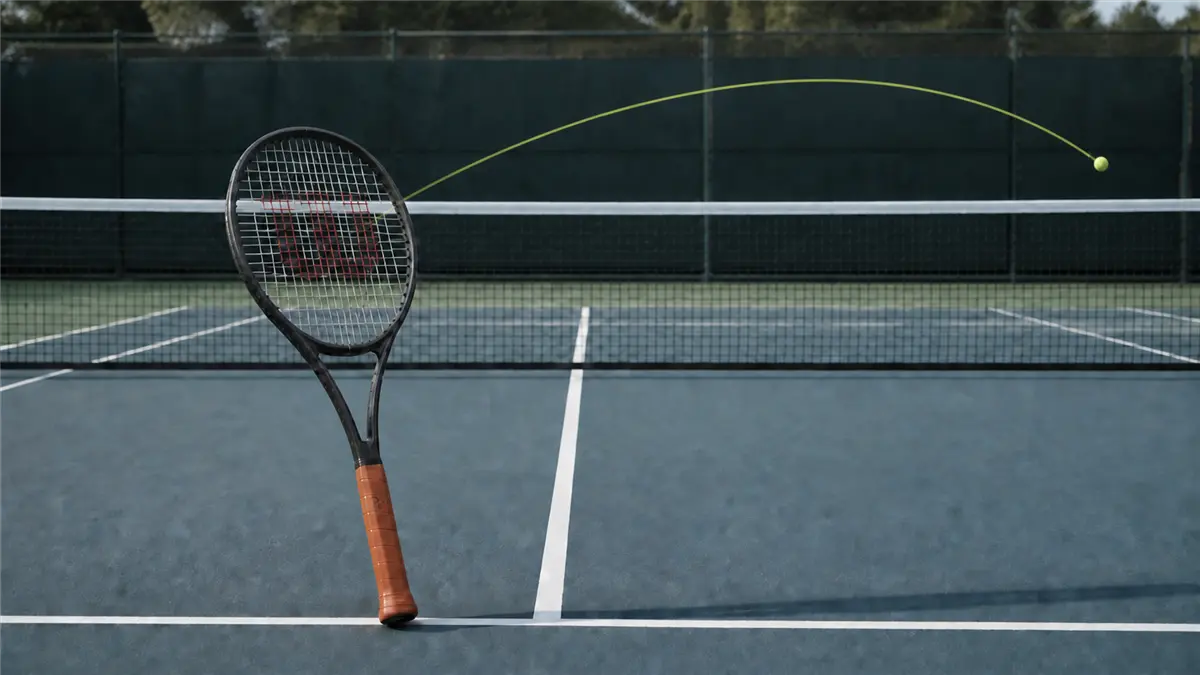
The Wilson RF 01 is not a renamed Pro Staff. Roger Federer helped develop it around a different idea: a 98-square-inch frame that moves quickly through the air and makes it easier to change pace, direction and spin. The family combines a more modern beam with Braid 45, internal foam and a bumper designed to reduce drag.
RF 01 makes sense for a player who does not live on one trajectory. Attacking a short ball, using slice, closing the net and changing height are all part of its territory. If most of your match happens three meters behind the baseline with heavy topspin, Defyer may support that pattern better.
Wilson presents the RF 01 collection as a versatility platform. The standard version translates that idea most realistically for a competitive club player.
Key models: RF 01, RF 01 Pro and RF 01 Future
RF 01 combines a 98-square-inch head, 300 g (10.6 oz) unstrung weight and 16x19 pattern. It is fast, reasonably manageable and more realistic for an upper intermediate than the Pro. It does not give away Ultra 100 depth, but it lets you accelerate and redirect without placing as much load in the hand.
RF 01 Pro rises to 320 g (11.3 oz) unstrung. That number should interrupt any nostalgia-driven purchase: once strung and fitted with an overgrip, it becomes a heavy tool even for many advanced players. It works if you already know you perform well with that mass, not because Federer appears in the name.
RF 01 Future drops to 280 g (9.9 oz). It is very easy to move and can suit advanced juniors or adults seeking a fast 98, though it gives away stability against a heavy ball.
| Model | Head | Unstrung weight | Pattern | Most logical fit |
|---|---|---|---|---|
| RF 01 Pro | 98 in² | 320 g / 11.3 oz | 16x19 | Strong advanced players with early preparation |
| RF 01 | 98 in² | 300 g / 10.6 oz | 16x19 | Upper intermediates and advanced all-court players |
| RF 01 Future | 98 in² | 280 g / 9.9 oz | 16x19 | Advanced juniors or players prioritizing racket-head speed |
What happened to Wilson Shift and Burn?
Shift and Burn can still appear in shops, regional catalogs and clearance stock; Shift also remains in Wilson’s custom program. At the time of this guide, however, neither appears among the six primary families in Wilson’s US racket selector. That matters when comparing the current catalog, but it does not make a racket that works for you obsolete.
Shift was introduced around spin and vertical bending, while Burn targeted power and spin in earlier generations. Defyer now occupies the most visible offensive-spin position, though Wilson does not call it a literal Shift replacement. If you buy either older line, compare the exact specifications and bumper availability rather than assuming equivalence with a current model.
Quick Wilson racket comparison
| If you need… | Most logical family | First model to demo | Alternative |
|---|---|---|---|
| Easy power and depth | Ultra | Ultra 100 V5 | Clash 100 V3 if comfort comes first |
| Comfort and forgiveness | Clash | Clash 100 V3 | Blade 100 V10 for a crisper response |
| Modern control | Blade | Blade 100 V10 | Blade 98 16x19 if contact is clean |
| Offensive spin and a heavy ball | Defyer | Defyer 100 | Defyer 98 Pro for more precision |
| Classic precision and maximum stability | Pro Staff | Pro Staff 97L | Pro Staff 97 only if you can manage the mass |
| Speed and all-court variety | RF 01 | RF 01 | RF 01 Future if you need less weight |
Which Wilson racket should you demo?
To reduce the lineup to three demos, begin with your most common miss:
- The ball lands short under pressure: try Ultra 100 and Clash 100.
- The ball flies long when you accelerate: try Blade 100, then Blade 98 16x19.
- You create topspin but lack penetration: try Defyer 100.
- You vary your game and want a fast 98: try RF 01.
- You already use heavy frames and want classic precision: add Pro Staff 97 Classic.
Test with similar strings and a familiar tension. Changing the frame and string bed at the same time makes it difficult to identify what caused the difference.
Do not judge only the comfortable forehand from the warm-up. Hit returns, high backhands, stretched defense and serves, then play a set with points. The best Wilson is not the one that produces your most spectacular shot. It is the one that preserves depth, direction and preparation speed when the match gets difficult.
Frequently asked questions about Wilson rackets
Which Wilson racket is easiest to use?
For most intermediates, Clash 100 V3 and Ultra 100 V5 are the easiest starting points. Clash prioritizes comfort and forgiveness; Ultra gives more free power. For a compact swing or still less weight, examine the L and UL versions.
Wilson Blade or Pro Staff: which is better?
Choose Blade for control in a frame that adapts to more modern strokes and a broader range of players. Choose Pro Staff if you already generate pace, tolerate more mass and want classic precision. For most upper intermediates, Blade 100 or Blade 98 is a more sensible demo than Pro Staff 97.
Wilson Clash or Ultra: which has more power?
Ultra delivers more direct, powerful launch. Clash combines moderate power with a more flexible, comfortable response. If the ball lands short, start with Ultra. If keeping the arm loose and avoiding a harsh response matters more, start with Clash.
Does Defyer replace Shift?
Wilson does not present it as a one-for-one replacement. Defyer is the current family focused on explosive spin and baseline attack, while Shift may still be available by market. They occupy related territory, but do not assume that they feel the same or that one model maps directly to another.
Are RF 01 and Pro Staff the same family?
No. Pro Staff prioritizes classic precision, mass and stability; RF 01 seeks more racket-head speed and all-court versatility through its own geometry. The standard 300 g (10.6 oz) RF 01 is considerably more accessible than the 315 g (11.1 oz) Pro Staff 97 Classic, though both still suit players who create good acceleration.
Keep learning
Turn this information into a better decision for your game
Explore more guides on the same topic or visit the complete archive to compare your options with context.
Continue reading
Related articles

Prince Rackets Guide: Tour, Phantom, Ripstick and More
Compare Prince Tour, Phantom, Ripstick, Ripcord and Beast rackets, understand O3, and choose the right family to demo for your game.
Dunlop Rackets Guide: CX, SX, FX or LX?
Compare Dunlop CX, SX, FX and LX rackets, understand Tour and LS versions, and decide which models to demo for your swing and game.
Tecnifibre Rackets: T-Fight, TF-40, Fire or Tempo?
Compare Tecnifibre rackets by power, control, weight and head size to find which T-Fight, TF-40, Fire or Tempo you should demo first.