
Dunlop Rackets Guide: CX, SX, FX or LX?
The names in the Dunlop racket lineup give you clues, but they can also send you in the wrong direction. The SX 300 does weigh 300 grams; the FX 500 clearly does not weigh 500. “Tour” is not a reliable shortcut for a small head and a highly demanding frame either: the CX 400 Tour has a 100 sq in head and weighs 300 g, while the CX 200 Tour 18×20 drops to 95 sq in and rises to 315 g.
The family tells you more than the number:
- CX: control and precision, with meaningful differences among its 95, 98 and 100 sq in options.
- SX: baseline tennis built around topspin and net clearance.
- FX: power and help producing depth.
- LX: oversize frames for players who want more hitting area with a shorter swing.
You can narrow the list without memorizing the catalog. If clean contact still leaves your ball short, start with the FX 500. If you shape points with height and topspin, demo the SX 300. If you already create pace and want a more predictable trajectory, look at CX. For many club players, the useful CX comparison is CX 400 Tour versus CX 200; the 95 sq in Tour solves a much more specific problem.
This buying guide uses official specifications checked in September 2026 and an editorial selection framework. It is not based on our own court test. The recommendations therefore give you a demo order and observable checks, rather than claiming how each frame will feel with your string setup.
How to read Dunlop racket names
Dunlop separates its four families into control, spin, power and ease in its racket session with LTA coaches. The numbers 200, 300, 400 and 500 identify models within that system. They are neither a skill ladder nor a consistent weight code.
| Name | What it tells you | What to verify |
|---|---|---|
| Tour | A different specification within that particular line | Head size, weight and pattern; Tour varies across CX models |
| LS | A lighter version of the reference model | Exact weight and balance, rather than the letters alone |
| Lite / Super Lite | Further lower-weight options within the family | Whether blocked returns remain stable against a faster ball |
| OS | An oversize head | Head area and racket length |
| 16×19 / 18×20 | Number of mains and crosses | Whether the name says CX 200 or CX 200 Tour |
| Limited | A special edition | Whether more than the cosmetic design has changed |
All weights below are unstrung. Strings and accessories change the final weight and balance. Two 300 g rackets can also take different effort to accelerate because they do not necessarily share the same swingweight, the racket’s resistance to being accelerated and moved through the stroke.
Check the generation as well. Dunlop’s European racket catalog lists 2026 FX references alongside earlier FX models. A shared name does not guarantee the same construction, and an active product page does not confirm availability in your country.
Dunlop CX: control with several entry points
Look at CX if you already accelerate confidently but want a more predictable ball flight. Read the complete model name: this one family contains very different frames. The gap between a 100 sq in CX 400 Tour and a 95 sq in CX 200 Tour is more than a suffix.
Key models: CX 400 Tour and CX 200
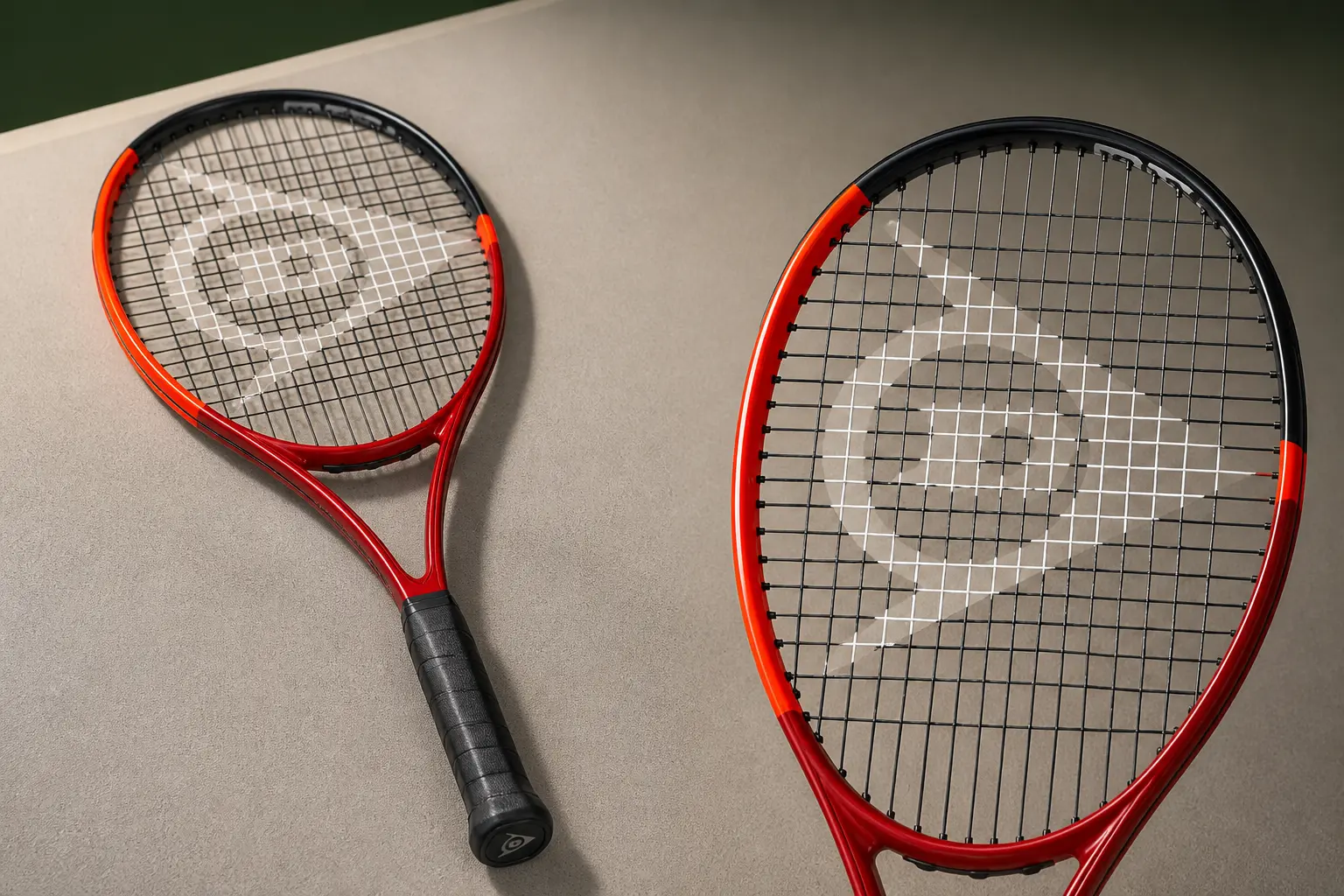
The CX 400 Tour combines a 100 sq in head, 300 g weight and 16×19 string pattern. Dunlop presents it as a blend of power, control and spin within CX. Its format makes it the sensible first demo if you want more order without immediately giving up the margin of a 100 sq in head.
The CX 200 moves to 98 sq in, 305 g and 16×19, with a 21.5 mm beam instead of the CX 400 Tour’s 23 mm beam. Prioritize it when your swing already supplies depth and the 98 sq in head does not penalize you in defense.
Do not decide after ten forehands from the middle of the court. Give the defensive backhand and return just as much weight. If the CX 200 lets you aim well when set but leaves every stretched ball short, the CX 400 Tour remains the stronger candidate. Racket head size helps explain part of that difference, although head area alone cannot predict the full response.
CX 200 Tour and the 18×20 Limited exception
The 2024 CX 200 Tour 18×20 has a 95 sq in head and weighs 315 g. The smaller head, extra mass and dense pattern leave less room for late contact. Keep it in the demo only if you can center the ball and complete your preparation when an opponent takes time away.
There is one naming trap: the CX 200 18×20 Limited is not the same racket. Its official product page specifies 98 sq in and 305 g. The edition adds an 18×20 pattern to the CX 200 format, but does not adopt the Tour’s 95 sq in head. Buying from the color or string pattern without reading the full name can land you on a different frame.
Quick table: verified CX models
| Model | Head | Unstrung weight | Pattern | Reason to demo it |
|---|---|---|---|---|
| CX 400 Tour | 100 sq in | 300 g | 16×19 | Explore CX in a more forgiving format |
| CX 200 | 98 sq in | 305 g | 16×19 | Compare precision without dropping to 95 sq in |
| CX 200 18×20 Limited | 98 sq in | 305 g | 18×20 | Try a denser pattern while keeping the 98 sq in head |
| CX 200 Tour 18×20 | 95 sq in | 315 g | 18×20 | A specific setup for consistently clean contact |
The catalog also includes the CX 200 Tour 16×19, CX 200 LS, CX 200 OS and CX 400. You do not need to demo all of them. Start with the head size and physical load you can sustain, then refine the string pattern.
Dunlop SX: topspin from the baseline
SX makes sense if you already swing from low to high and build points with height, shape and depth. The frame can support that path. It will not turn a flat forehand into a heavy topspin ball on its own.
Key models: SX 300 and SX 300 Tour
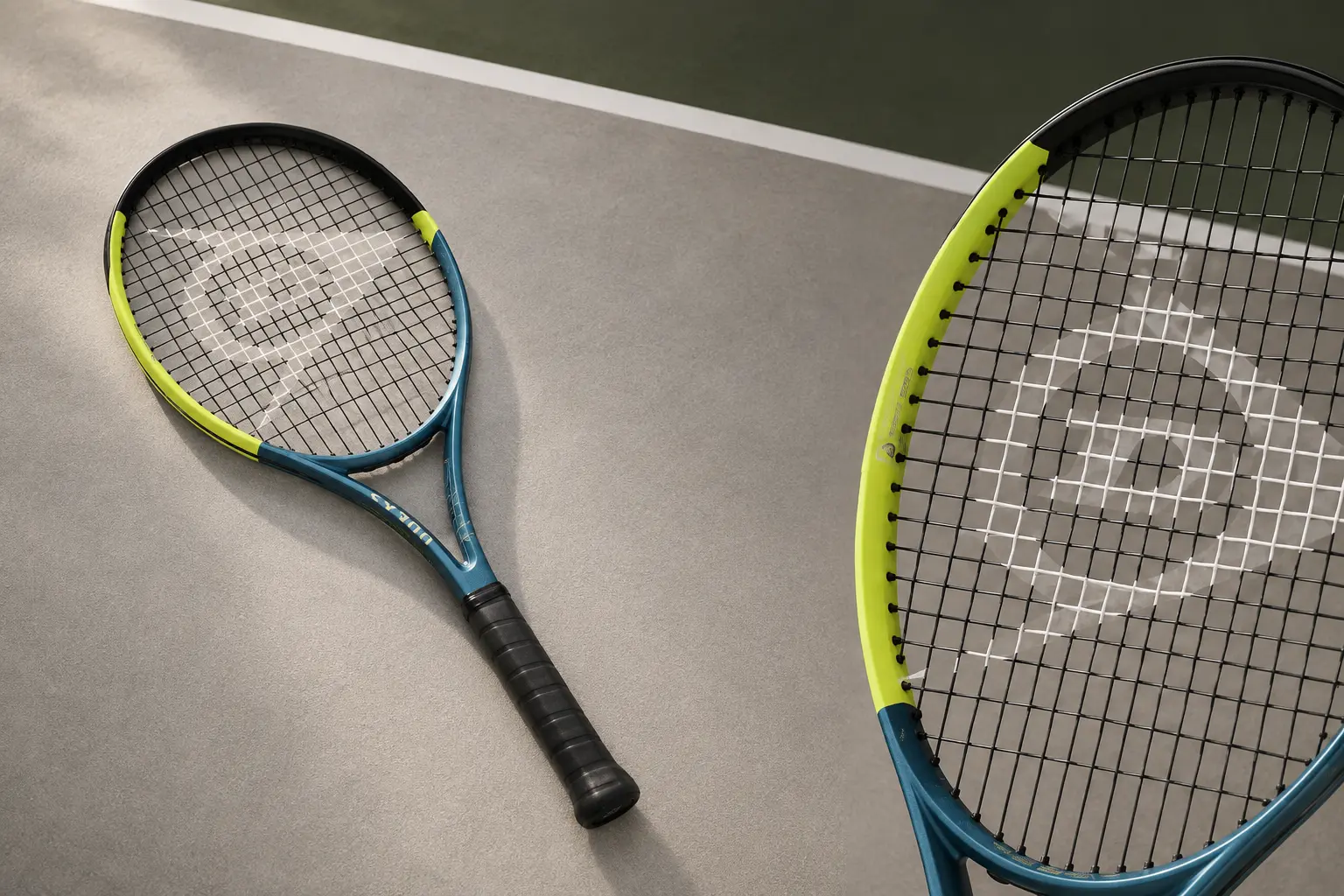
The 2025 SX 300 is listed at 100 sq in, 300 g and 16×19. For an intermediate or advanced player, it is the natural reference point for the family: you can assess the spin concept in a familiar format before reducing head size.
The SX 300 Tour moves to 98 sq in and 305 g, retaining the 16×19 pattern. Dunlop aims it at players who create their own speed and attack with spin. It belongs in the comparison when the SX 300 gives you enough margin but you want a more precise format without abandoning the family’s basic idea.
During the demo, watch the height and the landing point. Clearing the net comfortably means little if every shot lands near the service line and gives your opponent time. The right SX should let you hold a deep crosscourt rally and change direction without slowing the swing for fear of hitting long.
If 300 g makes you late over a full match, the family also offers the SX 300 LS and SX 300 Lite. Less weight may help you prepare earlier, but test against real pace: arriving on time is not much use if the racket becomes unstable on returns. LS and Lite describe lighter versions, not a ranking by playing level.
Quick table: SX versions
| Model | Main difference | What to watch on court |
|---|---|---|
| SX 300 | 100 sq in and 300 g; line reference | Depth and margin without slowing your swing |
| SX 300 Tour | 98 sq in and 305 g | Contact quality when defending or arriving late |
| SX 300 LS | Lighter than the SX 300 | Earlier preparation without losing return stability |
| SX 300 Lite | Lightest option in this group | Maneuverability through an entire match |
Dunlop FX: help producing depth
The FX family is Dunlop’s power line. Demo it if clean contact still takes too much effort to reach depth, or if your blocked return barely clears the service line.
Key models: FX 500 and FX 500 Tour
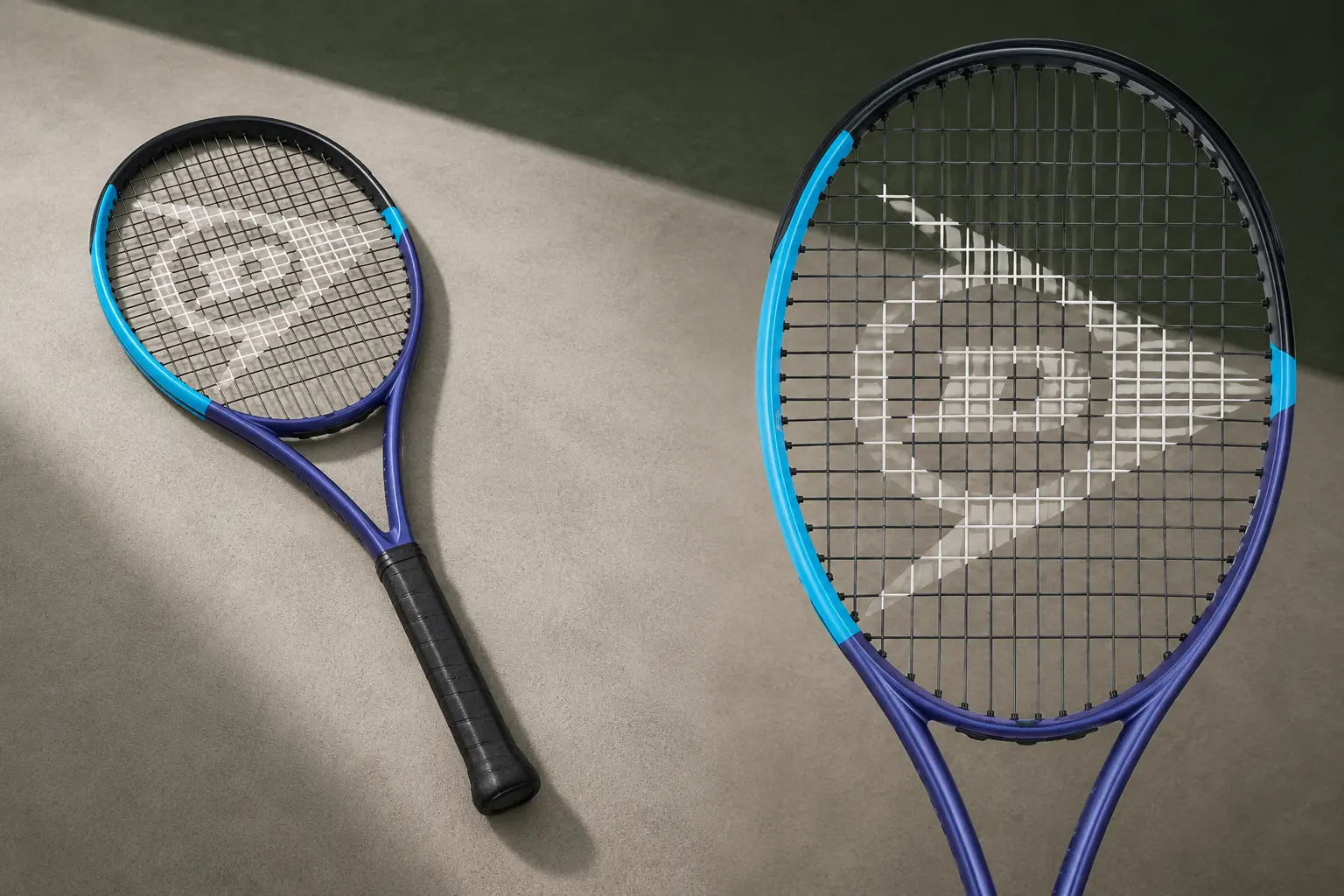
The 2026 FX 500 combines 100 sq in, 300 g and 16×19. Those are the same three basic figures as the SX 300, even though Dunlop gives the lines different priorities. That overlap makes a comparison with similar strings especially useful: weight, head size and pattern cannot tell you which one suits your swing.
The 2026 FX 500 Tour uses a 98 sq in head and 16×19 pattern. Dunlop positions it as a more controlled version of its power concept. Compare it if FX appeals to you but you prefer a 98 sq in format. The Tour label alone will not fix a forehand that flies long.
If your ball is already deep and escapes when you accelerate, check the contact point first. Changing families does not correct late preparation. If you meet the ball in front and still have to hold back a well-prepared swing, comparing FX with CX and reviewing the string setup becomes worthwhile.
The FX 500 LS, Lite and Super Lite reduce weight within the line. They make sense if the standard frame prevents you from preparing on time, provided the lower mass does not weaken the blocked return. Play that shot before celebrating how fast the racket moves through the air.
Quick table: FX versions
| Model | Main difference | What to watch on court |
|---|---|---|
| FX 500 | 100 sq in, 300 g and a power focus | More depth without shortening a comfortable stroke |
| FX 500 Tour | 98 sq in with more emphasis on control | Defensive margin and direction when accelerating |
| FX 500 LS | Lighter than the FX 500 | Stability on blocked returns |
| FX 500 Lite / Super Lite | Additional weight reductions | Whether speed costs too much stability at impact |
Dunlop LX: an oversize head for a compact swing
LX sits outside the usual control, spin and power comparison. Its LX 800 and LX 1000 target players who want more hitting area and depth from a shorter stroke.
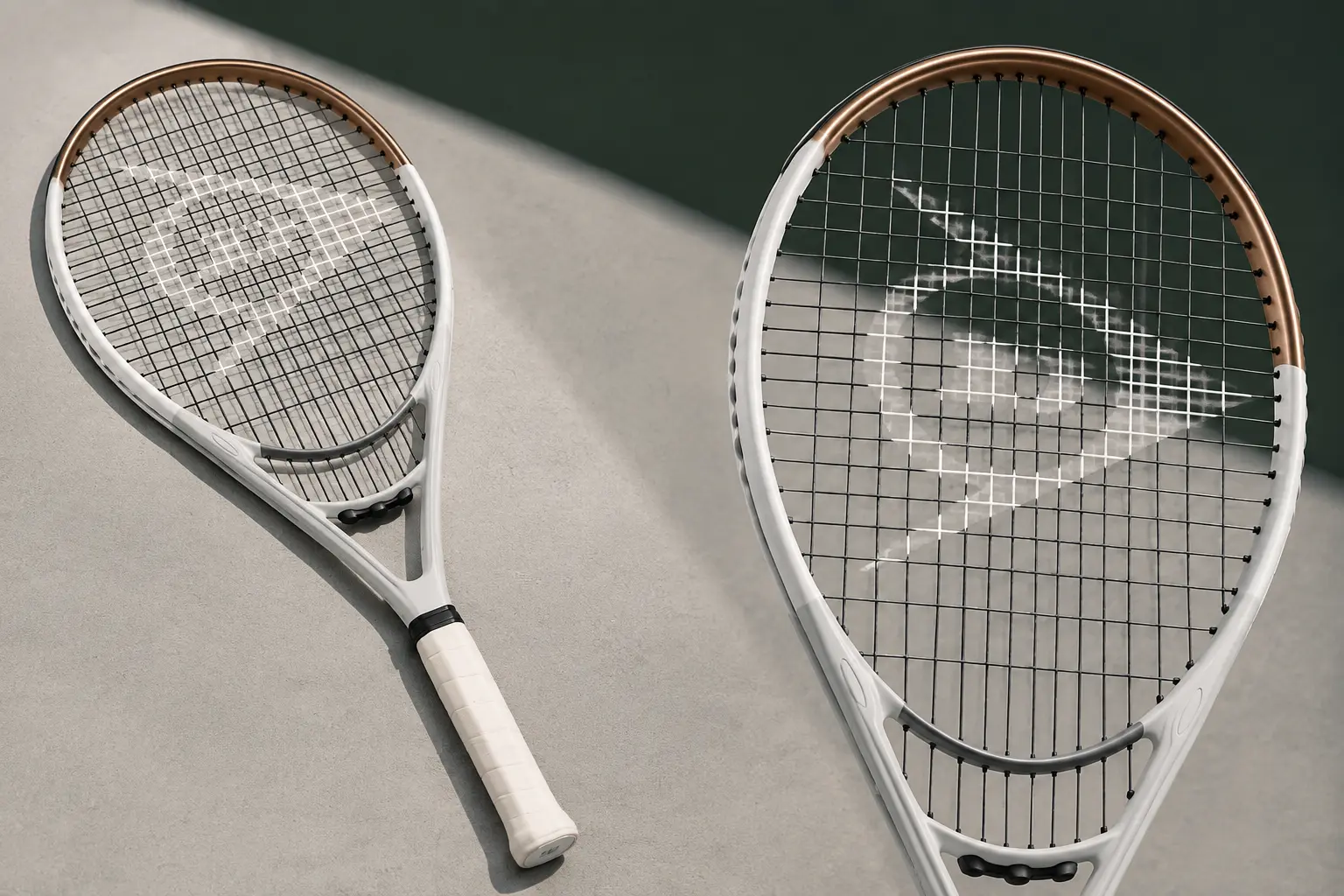
The LX 800 product page lists a 110 sq in head, 255 g weight and 27.5-inch length. Treat those figures as a reference for that model and generation, not as universal LX specifications.
The LX 800 shows why “lighter” is an incomplete description: head size and length change too. If you want lower weight while retaining a full swing, begin with an LS version of SX or FX. If you want more hitting area for a compact stroke, LX addresses that need more directly. Our guide to 27 versus 27.5-inch racket length explains what the extra half inch changes.
Quick table: LX versions
| Model | Main difference | Who should consider it |
|---|---|---|
| LX 800 | 110 sq in, 255 g and 27.5 inches on the cited page | Compact swing that needs hitting area and depth |
| LX 800 Tour | Keeps an oversize head with more stability | A player who wants LX assistance with a more solid response |
| LX 1000 | 115 sq in head and 255 g | Maximum hitting area for a compact stroke |
Quick comparison: CX vs SX vs FX vs LX
The spec sheet narrows the list. The final order should come from the errors that appear on court: a short ball, late contact, poor direction or the need to hold back your swing. This table is an editorial comparison, not the result of our own playtest.
| Problem to solve | First comparison | Sign that you are moving in the right direction |
|---|---|---|
| You create pace and want better direction | CX 400 Tour vs CX 200 | You can redirect the ball while maintaining depth |
| You build with topspin and net clearance | SX 300 | You gain margin without giving away a short ball |
| Clean contact still produces a short ball | FX 500 | A blocked return travels deeper without losing direction |
| You prefer a 98 sq in format | CX 200, SX 300 Tour or FX 500 Tour | You can sustain your normal stroke under pressure |
| You want less weight | The LS version of the suitable family | You arrive on time and retain return quality |
| You need an oversize head and compact swing | LX | You contact confidently and control the length of the shot |
The same questions about power, margin and control in our HEAD racket guide apply here, but model names do not translate from one brand to another. “Tour” is not automatically equivalent to “Pro” or “MP.”
Frequently asked questions about Dunlop rackets
Can I compare two demos with different strings?
You can tell whether the weight or grip size is suitable, but not how much of the ball speed comes from the frame. Try to match the string type, gauge, tension and age of the string job. If that is impossible, note the differences and repeat the comparison before attributing an impression of power or control to the racket.
Is an older-generation Dunlop worth buying?
It can be, if you have demoed it and the particular racket is in good condition. Check the exact reference, grip size and availability of replacement grommets or bumper guards. Do not assume a review of the 2026 FX describes an earlier FX, or that a Limited edition keeps every specification of the model you know.
How to choose after the demo
Reduce the list to two models and take them into the situations that normally cost you points: a blocked return, a backhand on the run and a second serve. Then play points with a score. One winning forehand during the warm-up says little about the racket you will need in a tight set.
Record which one makes you late, leaves more balls short or forces you to hold back a well-prepared swing. Choose the racket that preserves depth and direction in your normal strokes when the point becomes difficult. A more demanding model is worth the switch only if the improvement repeats under match pressure, not because it produced your best shot of the day.
Keep learning
Turn this information into a better decision for your game
Explore more guides on the same topic or visit the complete archive to compare your options with context.
Continue reading
Related articles

Prince Rackets Guide: Tour, Phantom, Ripstick and More
Compare Prince Tour, Phantom, Ripstick, Ripcord and Beast rackets, understand O3, and choose the right family to demo for your game.

Tecnifibre Rackets: T-Fight, TF-40, Fire or Tempo?
Compare Tecnifibre rackets by power, control, weight and head size to find which T-Fight, TF-40, Fire or Tempo you should demo first.

Wilson Rackets Guide: Blade, Clash, Ultra and More
A practical guide to Wilson tennis rackets: compare Blade, Clash, Ultra, Defyer, Pro Staff and RF 01, then choose by swing, level and match-day needs.