Yonex Rackets: EZONE, VCORE or PERCEPT—Which to Choose?
On a spec sheet, a Yonex EZONE 100 and VCORE 100 can look almost interchangeable: a 100-square-inch head, 300 g (10.6 oz) unstrung weight and 16x19 string pattern. Those numbers do not settle the choice on court. EZONE is meant to restore depth when defense comes up short; VCORE makes more sense when you already accelerate upward and want more room over the net.
Read the current Yonex lineup through your normal miss. Start with EZONE if you need depth. Look at PERCEPT if you already create speed but need to contain launch. VCORE belongs in the test when topspin is already part of your stroke; MUSE when comfortable, repeatable rallying matters most; ASTREL when you use a compact motion and need less weight.
Those labels are not levels on a ladder. A more demanding model does not add control if it makes you late, and no racket marketed as comfortable can, by itself, undo a stiff string, excessive tension or poorly managed playing load.
This is a decision guide based on published specifications and official documentation, not an on-court playtest or a ranking from best to worst. Ben Shelton is associated with EZONE, Elena Rybakina with VCORE and Stan Wawrinka with PERCEPT, but tour frames may be customized. Those endorsements explain each line’s commercial identity; they are not professional spec sheets to copy.
Which Yonex racket should you choose?
| If you need… | Most logical family | First model to demo | Alternative |
|---|---|---|---|
| Accessible power and depth | EZONE | EZONE 100 | EZONE 98 if the 100 launches too much |
| Spin and net clearance | VCORE | VCORE 100 | VCORE 100D for more contained launch |
| Control with a forgiving head | PERCEPT | PERCEPT 100 | PERCEPT 100D with a full swing |
| Comfort and continuity in rallies | MUSE | MUSE 100 | MUSE 98 if you want a smaller head |
| Low weight and power from a short swing | ASTREL | ASTREL 100 | ASTREL 105 if you need more assistance |
Use the table to narrow the demo list, not to predict a universal feel. A firm polyester at high tension can make a flexible frame feel unfriendly; a multifilament can increase launch from a PERCEPT. Compare string type and tension before blaming every result on the frame.
How to read Yonex racket names
Yonex combines the family name with a head-size number and suffixes such as Tour, D, H, L, SL, +, Game or Play. The heavier model is not automatically the better one.
| Name or version | What it signals in the current range | Who it may suit |
|---|---|---|
| 95, 97, 98, 100, 105, 107 | Head size in square inches | Smaller usually narrows the margin; larger often helps power/contact |
| D | Denser pattern, such as 18x19 or 18x20 | Players who want to contain launch and direct a full swing |
| Tour / H | More mass and a more specialized response | Advanced players already effective with heavy rackets |
| L / SL | Light or super-light version | Intermediates, transitioning juniors, doubles or lower physical load |
| + | Extended length | Extra reach and serve leverage, with slower handling |
| Game / Play / α | More accessible entry into the family’s identity | Beginners, recreational players and compact swings |
| 16x18, 16x19, 16x20, 18x19, 18x20 | String pattern | More open often raises launch; denser usually organizes the trajectory |
All weights in this guide are unstrung. Strings, an overgrip and a dampener add mass and alter balance and swing weight. An EZONE 100 and VCORE 100 both weigh 300 g (10.6 oz) on paper, but geometry, beam width, mass distribution and string setup can make them move and respond differently.
What the ISOMETRIC hoop actually changes
The ISOMETRIC head is the common feature across the Yonex range. Based on its own testing, Yonex says the square-shaped design creates a sweet spot 7% larger than a conventional round frame. The claim appears on the technical pages for EZONE, VCORE and PERCEPT.
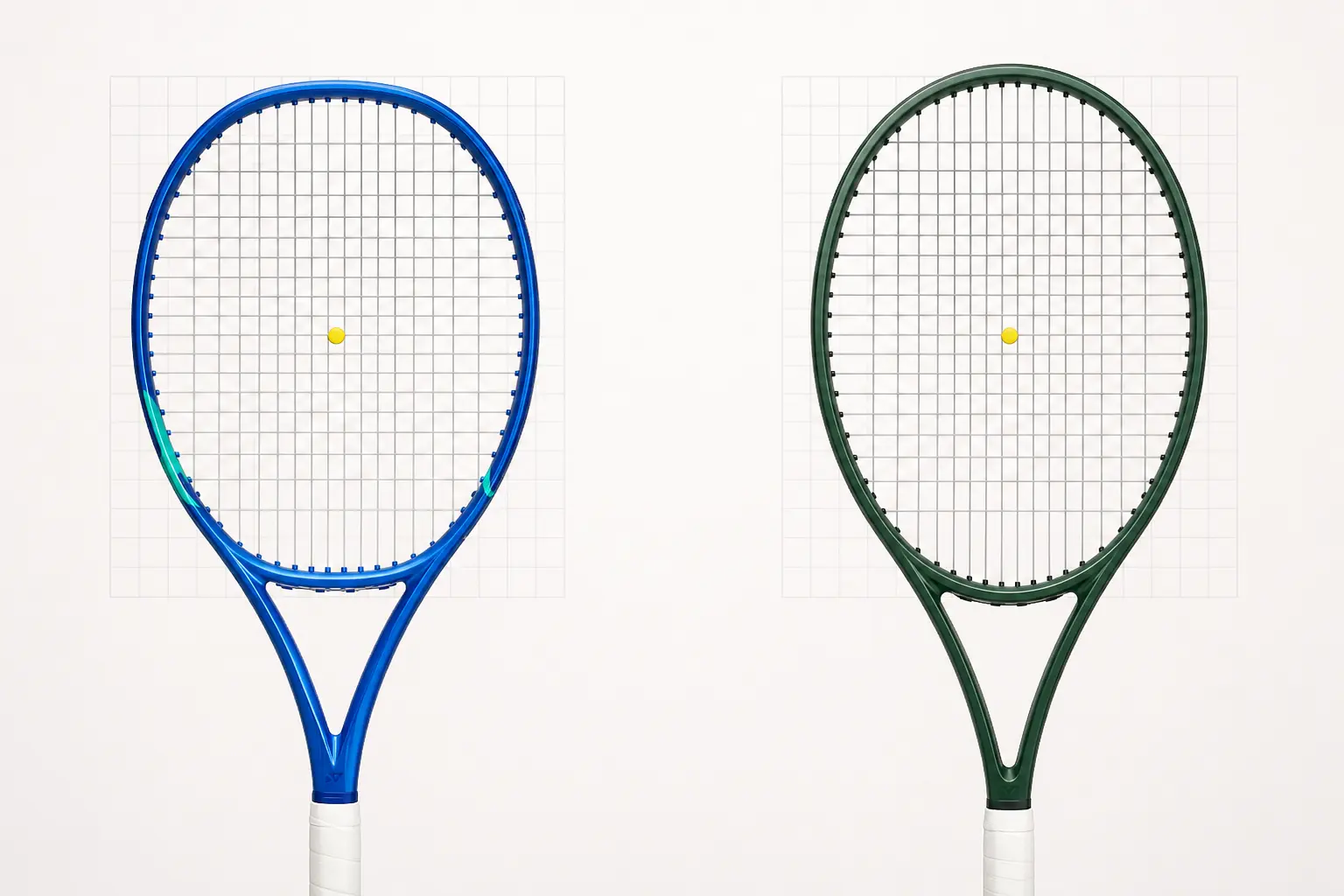
That 7% needs context. It is a Yonex measurement against a reference defined by the brand, not independent proof that every Yonex is more forgiving than every competitor. Nor does the shape make very different frames equivalent: a 320 g (11.3 oz) PERCEPT 97D with an 18x20 pattern is far more demanding than a 285 g (10.1 oz) EZONE 100L.
The practical reason to notice the design is that a 97- or 98-square-inch Yonex should not be assumed to behave exactly like every oval racket with the same number. It is not a reason to buy a smaller head and expect geometry to rescue inconsistent contact for two hours.
Yonex EZONE: accessible power and depth
EZONE is Yonex’s power family. Its eighth generation pairs relatively wide beams with materials and dampening zones that the brand uses to pursue power without an excessively harsh response. Put it near the top of your demo list if you lose depth while defending, blocking returns or hitting without a perfect base.
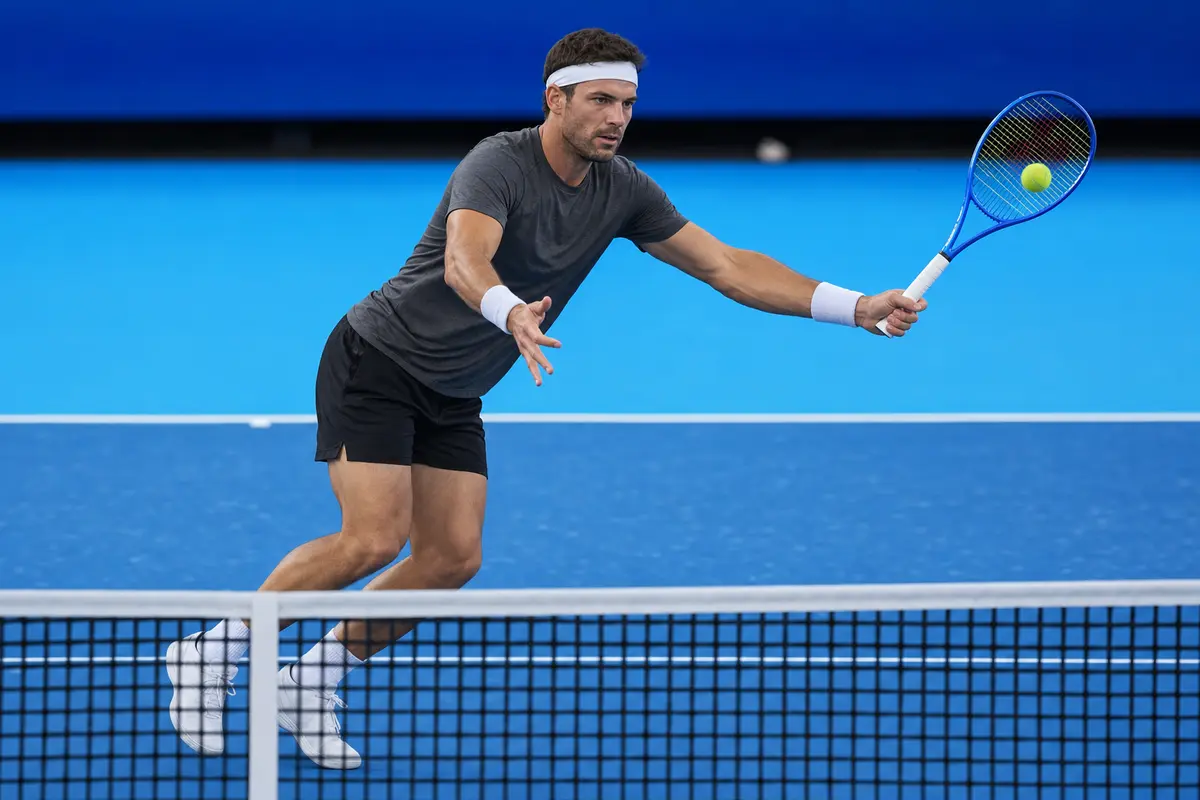
That does not make EZONE an intermediate-only racket. An advanced player can use the help to take the ball early or attack from a poor position. The trade-off appears when a fast, flat stroke already supplies plenty of pace: the added depth can demand tighter control of racket-face angle, string choice and tension.
Key models: EZONE 100 and EZONE 98
If you demo only one, the EZONE 100 is the logical reference point. Yonex lists a 100-square-inch head, 300 g (10.6 oz) unstrung weight and 16x19 pattern. It provides a broad contact window and a neutral starting point for baseline play, returns and doubles. If your ball lands short under pressure, begin here before reaching for a Tour version.
The EZONE 98 drops to 98 square inches and rises to 305 g (10.8 oz), while keeping the 16x19 pattern. It makes sense when the 100 launches more than you can organize and your contact is reliable enough to use a more concentrated response. Do not choose it merely because 98 sounds more competitive.
The useful distinction is simple: EZONE 100 protects your average contact; EZONE 98 rewards prepared contact. The 100 usually survives a late return better. The 98 becomes valuable once you already have depth and want to attack smaller targets.
| Model | Head | Unstrung weight | Pattern | Most logical fit | Watch for |
|---|---|---|---|---|---|
| EZONE 100 | 100 in² | 300 g / 10.6 oz | 16x19 | Intermediate to advanced players wanting accessible power | Excess depth with a fast, flat swing |
| EZONE 98 | 98 in² | 305 g / 10.8 oz | 16x19 | Competitors creating pace and seeking more precision | Less margin when contact drifts |
| EZONE 100L | 100 in² | 285 g / 10.1 oz | 16x19 | Doubles, advanced juniors or lower physical load | Less stability against a heavy ball |
| EZONE 98 Tour | 98 in² | 315 g / 11.1 oz | 16x19 | Advanced players already comfortable with high mass | Fatigue and late preparation |
Specifications come from the current EZONE family. Yonex also offers 105-, 110- and 115-square-inch heads, but those answer a different question: maximum assistance for compact swings, returning to tennis or recreational play.
Yonex VCORE: spin, net clearance and baseline attack
VCORE is the spin line. Its eighth generation arrived in 2026 and, according to Yonex, changed the aerodynamics, grommets and stability to encourage string movement and racket-head speed. The brand details that development in its VCORE 2026 introduction.
The frame does not create spin on its own. Rotation comes from an upward path, useful acceleration and a controlled racket face. VCORE can support that motion with a launch that makes lifting the ball easier; with a pushed stroke, the spin promise stays on the spec sheet.
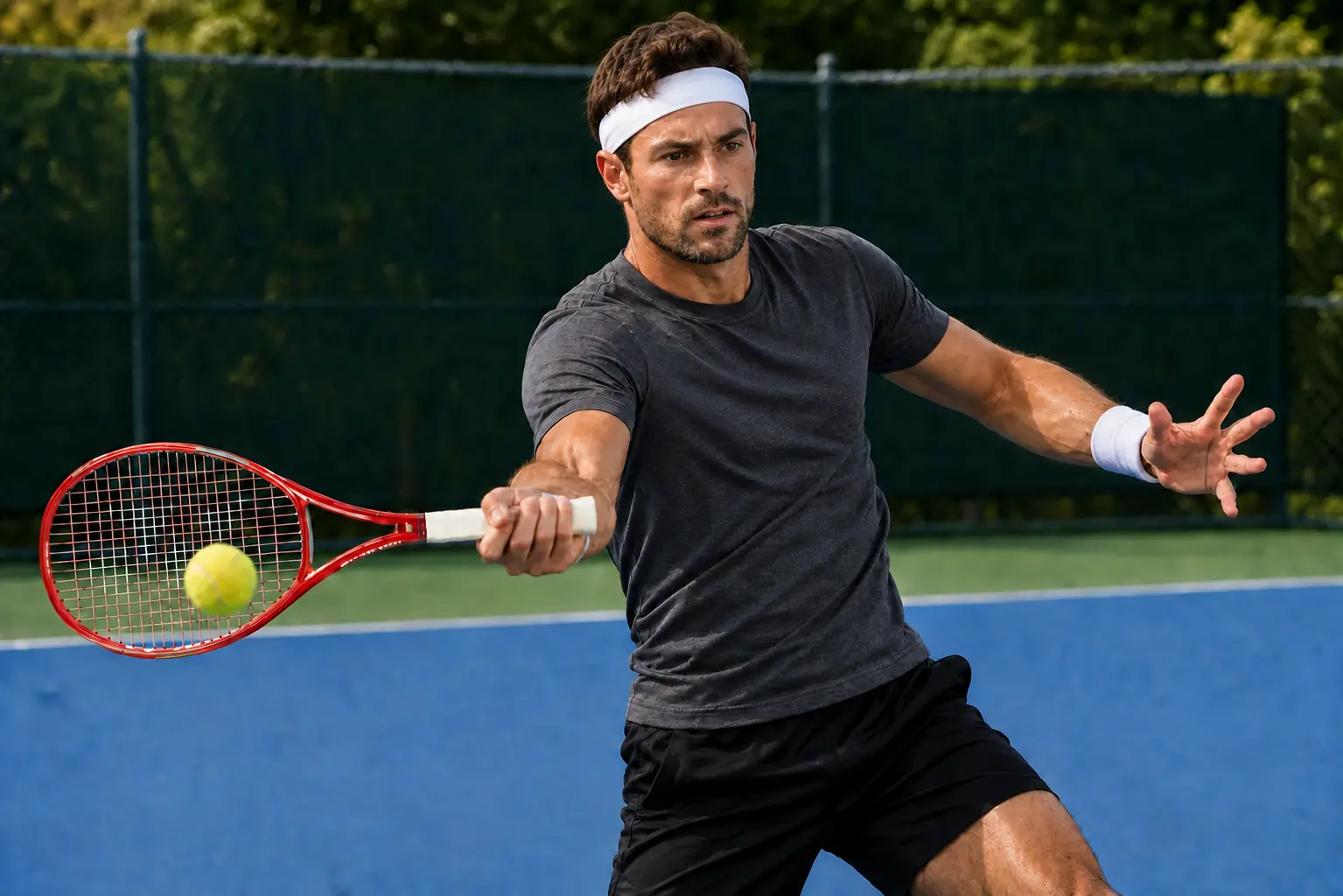
The family suits players who build from the baseline, open angles and want clearance over the net without giving away depth. If you hit very flat and already miss long, EZONE may add more launch than you need and VCORE may shape a trajectory you would rather keep direct. PERCEPT belongs in that demo.
Key models: VCORE 100, VCORE 98 and VCORE 100D
The VCORE 100 combines a 100-square-inch head, 300 g (10.6 oz) weight and 16x19 pattern. It is the reference model for an upper-intermediate player who accelerates with topspin but still needs margin in defense and on off-center contact.
The VCORE 98 uses a 98-square-inch head, weighs 305 g (10.8 oz) and keeps the 16x19 pattern. Its smaller contact window and thinner profile suit someone who already produces height and spin but wants to organize direction more closely when accelerating.
The VCORE 100D helps explain the range. It retains a 100-square-inch head, rises to 305 g (10.8 oz) and tightens the pattern to 16x20. It is not simply a “better” VCORE 100. It combines the margin of a 100 head with a more contained response for players who find the 16x19 too lively.
| Model | Head | Unstrung weight | Pattern | Most logical fit | Watch for |
|---|---|---|---|---|---|
| VCORE 100 | 100 in² | 300 g / 10.6 oz | 16x19 | Topspin baseline play with a need for margin | High launch if the swing drives too flat |
| VCORE 98 | 98 in² | 305 g / 10.8 oz | 16x19 | Competitors wanting spin with more precision | Requires more repeatable contact |
| VCORE 100D | 100 in² | 305 g / 10.8 oz | 16x20 | Full swings seeking a more contained trajectory | Less help lifting a late ball |
| VCORE 95 | 95 in² | 310 g / 10.9 oz | 16x20 | Advanced players with clean acceleration and contact | Small margin in defense and on returns |
| VCORE 100L | 100 in² | 280 g / 9.9 oz | 16x19 | Spin with lower load and quick handling | Less solidity against high pace |
Yonex publishes these measurements in the current VCORE range. If you are deciding between EZONE 100 and VCORE 100, ignore the 300 g and 16x19 they share for a moment. Test which one preserves your depth in defense and which keeps the ball inside the court when you accelerate.
Yonex PERCEPT: control, flex and precision
PERCEPT is the control family. Yonex uses a thinner beam and a flex system through the throat to extend ball pocketing and stabilize trajectory. That is Yonex’s stated design goal; this guide does not present it as a measured on-court result. The reason to demo PERCEPT is specific: you already create depth and want less launch assistance than EZONE or VCORE.
You do not need to jump straight to a 97-square-inch head. The PERCEPT 100 exists to deliver the control identity with a more reasonable contact window. For many upper-intermediate players, it is a more productive test than a heavy, dense 97D.
Key models: PERCEPT 100, 100D and 97
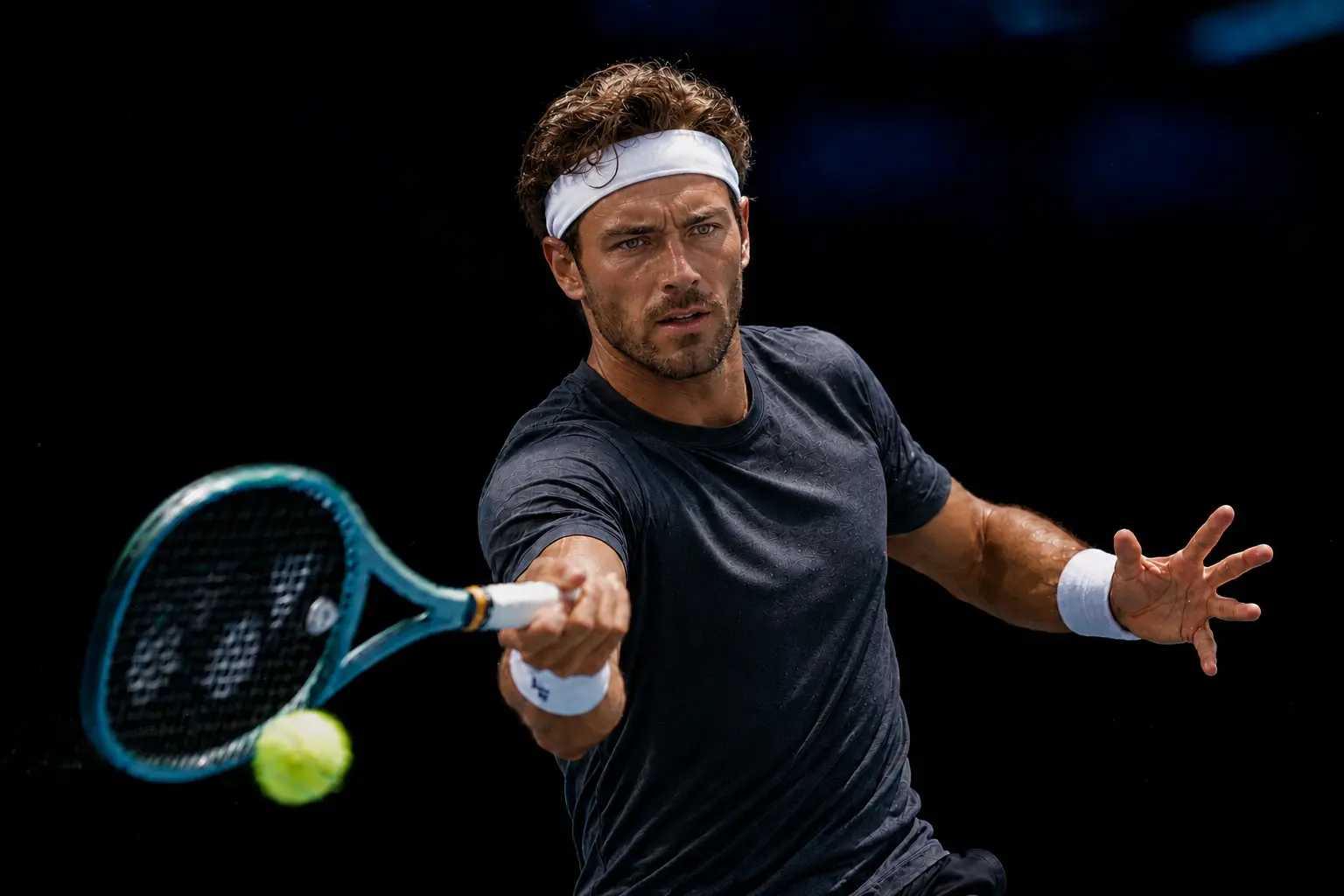
The PERCEPT 100 has a 100-square-inch head, weighs 300 g (10.6 oz) and uses a 16x19 pattern. It is the entry point: open enough to generate depth, but built around a more controlled response than the EZONE family.
The PERCEPT 100D keeps the 100-square-inch head, weighs 305 g (10.8 oz) and uses an 18x19 pattern. That denser string bed can contain launch angle and make direction more predictable under acceleration. The cost is a greater need for early preparation if you do not want the ball to land short.
The PERCEPT 97 rises to 310 g (10.9 oz) with a 16x19 pattern. It is intended for players who create their own speed, contact cleanly and want a more concentrated response. The 320 g (11.3 oz) 97D and 330 g (11.6 oz) 97H are highly specific options, not required steps up from the 97.
| Model | Head | Unstrung weight | Pattern | Most logical fit | Watch for |
|---|---|---|---|---|---|
| PERCEPT 100 | 100 in² | 300 g / 10.6 oz | 16x19 | Upper intermediates wanting control with some margin | Less free depth than EZONE |
| PERCEPT 100D | 100 in² | 305 g / 10.8 oz | 18x19 | Full swings seeking a contained trajectory | Can leave the ball short when you are late |
| PERCEPT 97 | 97 in² | 310 g / 10.9 oz | 16x19 | Advanced players with their own power | Physical demand and lower tolerance |
| PERCEPT 97D | 97 in² | 320 g / 11.3 oz | 18x20 | Advanced players used to mass and a dense pattern | Highly demanding in defense |
| PERCEPT 100L | 100 in² | 280 g / 9.9 oz | 16x19 | Control and maneuverability with a lower load | Less stability against a heavy ball |
The PERCEPT technical page documents weights, patterns and technologies. It also gives percentage claims for vibration reduction and flex from Yonex’s internal tests. Those numbers explain the design goal; they do not establish how the racket will feel with your string, tension and impact speed.
Yonex MUSE: comfort and a more tolerant response
MUSE is the new family for 2026, and it does not fit neatly into the power-spin-control triangle. Yonex developed it around fluid rallying, easy handling and a more uniform response across the string bed. The range launched globally in late April 2026 with five models: 98, 100, 100L, 100SL and 107.
The official language talks about reducing physical and mental stress during rallies. Turn that claim into a test: does the racket let you prepare on time, release the arm and hold depth without squeezing the grip? That is observable on court. Marketing does not prove that MUSE prevents or treats injury. If your arm is part of the decision, also review racket stiffness (RA), strings, tension and playing load.
Key models: MUSE 100 and MUSE 98
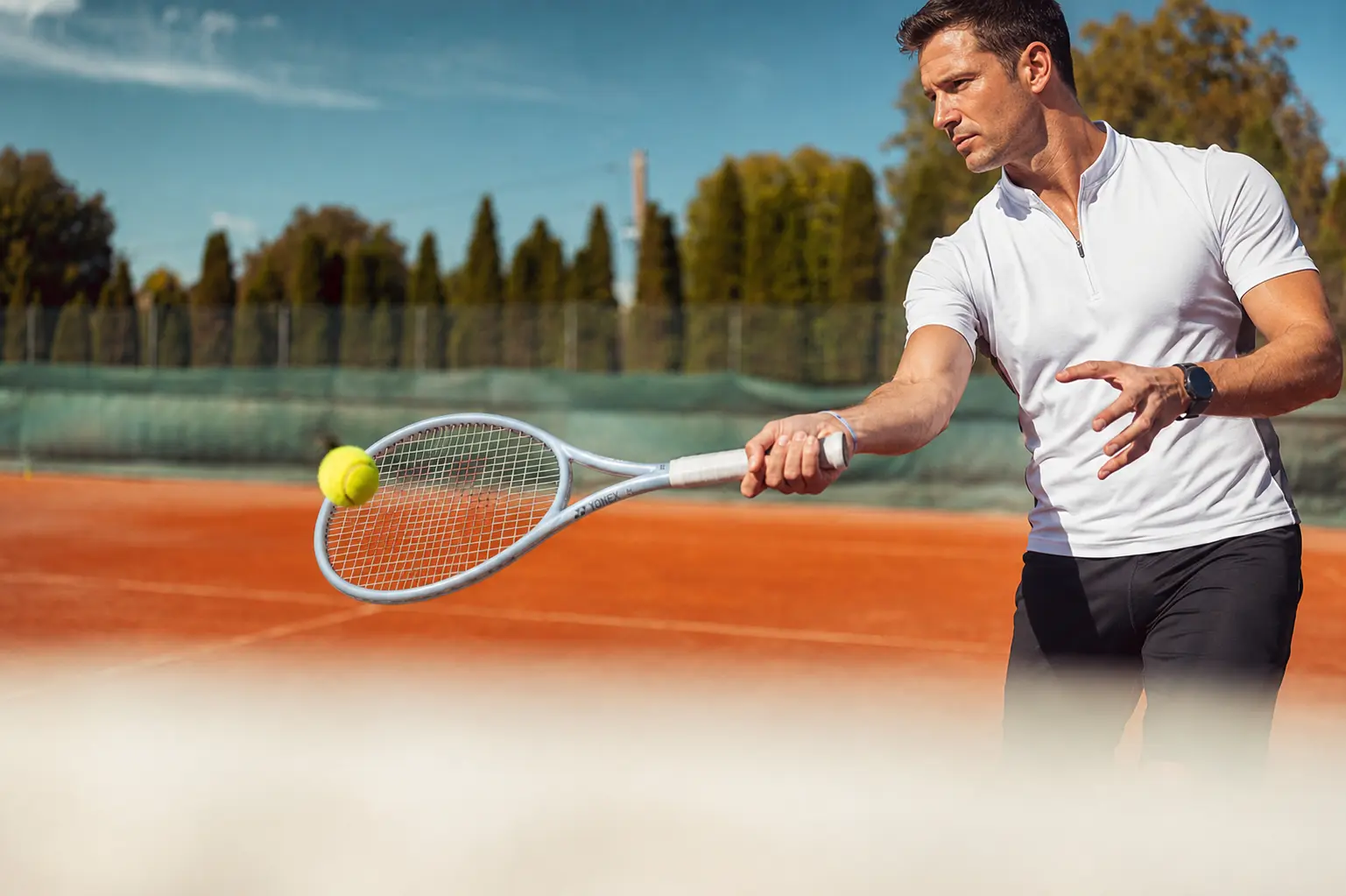
The MUSE 100 uses a 100-square-inch head, weighs 295 g (10.4 oz) and has an open 16x18 pattern. Yonex positions it for casual and social players, although the weight also makes it a reasonable reference for an intermediate who prioritizes comfort and handling without dropping to an ultralight frame.
The MUSE 98 changes the profile: a 98-square-inch head, 305 g (10.8 oz) weight and the same 16x18 pattern. Yonex describes it for intermediate and advanced players seeking control and connection. An unusually open pattern in a smaller head makes it distinctive on paper. Do not assume it is a more comfortable PERCEPT or a milder VCORE; it needs its own demo.
| Model | Head | Unstrung weight | Pattern | Most logical fit | Watch for |
|---|---|---|---|---|---|
| MUSE 100 | 100 in² | 295 g / 10.4 oz | 16x18 | Intermediates and recreational players prioritizing comfort | Open pattern: monitor launch and string wear |
| MUSE 98 | 98 in² | 305 g / 10.8 oz | 16x18 | Upper intermediates wanting a smaller, non-dense head | Less independent history because the line is new |
| MUSE 100L | 100 in² | 280 g / 9.9 oz | 16x18 | Fast handling and lower physical load | Less stability against heavy pace |
The official MUSE introduction explains the concept and range, while the MUSE 100 product page confirms its specifications. Because this guide is not based on a first-hand MUSE test, it can position the model and prepare your demo, but not replace a side-by-side session on court.
Yonex ASTREL: easy power at a lower weight
ASTREL remains Yonex’s comfort and easy-power family for recreational tennis and doubles. It differs from MUSE by offering even more assistance: light frames, wide beams and 105- and 120-square-inch options for compact swings.
The ASTREL 100 weighs 280 g (9.9 oz), uses a 16x18 pattern and keeps a 100-square-inch head. The ASTREL 105 drops to 260 g (9.2 oz), and the ASTREL 120 to 255 g (9.0 oz), pairing larger heads with 16x17 patterns. They are sensible options if you need depth from a short motion or very fast handling near the net.
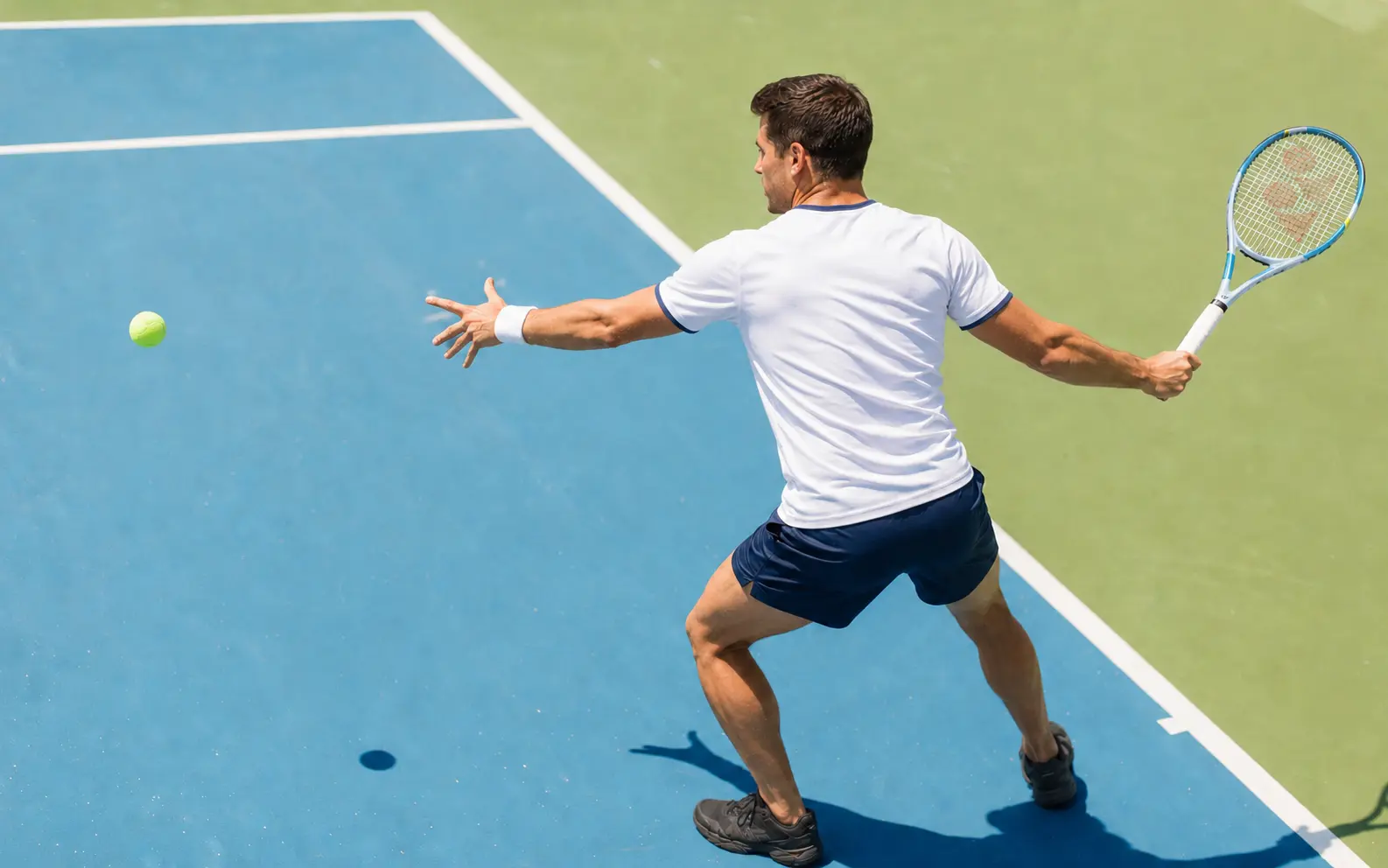
The important test comes against a heavy first serve. Less mass is not always more comfortable: if the racket twists and makes you squeeze the handle, the advantage disappears. A competitive intermediate should compare ASTREL not only in gentle rallying but also on returns and open defense. Yonex lists the design purpose and measurements on the ASTREL 100 product page.
Choose a Yonex racket by your most common miss
Cut the catalogue down by watching what happens once the point becomes uncomfortable:
- The ball lands short when you are pressured: start with EZONE 100. Check whether its assistance preserves depth without increasing long misses.
- You accelerate well, but the trajectory becomes unpredictable: try PERCEPT 100, then PERCEPT 100D. Do not jump to the 97D until you know you can manage more mass and less margin.
- Your swing already produces topspin, but you want more height and angle: add VCORE 100. Compare it with EZONE using the same string type and a similar tension.
- You squeeze the grip or shorten the swing as you tire: try MUSE 100 and review the string bed, weight and playing load as well. The racket is one variable, not a diagnosis.
- You have a compact swing and want less weight for doubles or a return to tennis: compare ASTREL 100 with EZONE 100L or MUSE 100L. The return of serve will reveal which one retains enough stability.
Decide between 98 and 100 square inches afterward. Choose 98 if the 100 already supplies depth, you arrive cleanly at contact and want a more concentrated response. Stay with 100 if the smaller head weakens your returns, high backhands or open defense. The guide to 98 vs 100 square inches explains that trade-off in detail.
Use comparable strings and play points, not just comfortable warm-up forehands. Serve to targets, return real pace and watch what happens in the second set. The best Yonex is not the one behind your cleanest winner; it is the one that preserves timing, depth and control once contact stops being perfect.
Start with three comparable demos
If you do not know where to begin, demo EZONE 100, VCORE 100 and PERCEPT 100 with comparable string setups. Replace PERCEPT with MUSE 100 if comfort and fluid rallying come first; look at ASTREL if you need a shorter swing or substantially less weight.
Then eliminate the racket that makes you late, the one that turns your normal miss into a long ball and the one that loses stability on returns. The frame left may not be Yonex’s most specialized model. It will be the one that solves your real problem without creating a new one.
Keep learning
Turn this information into a better decision for your game
Explore more guides on the same topic or visit the complete archive to compare your options with context.
Continue reading
Related articles
Prince Rackets Guide: Tour, Phantom, Ripstick and More
Compare Prince Tour, Phantom, Ripstick, Ripcord and Beast rackets, understand O3, and choose the right family to demo for your game.
Dunlop Rackets Guide: CX, SX, FX or LX?
Compare Dunlop CX, SX, FX and LX rackets, understand Tour and LS versions, and decide which models to demo for your swing and game.
Tecnifibre Rackets: T-Fight, TF-40, Fire or Tempo?
Compare Tecnifibre rackets by power, control, weight and head size to find which T-Fight, TF-40, Fire or Tempo you should demo first.