Best Tennis Rackets for Doubles: What to Look For
The serve jams you. You get the racket face in front of the ball, but the return sits up for the opposing net player. Next point, you reach the volley in time and the frame twists on an off-center hit. A lighter racket might solve the first problem while making the second worse.
The best tennis racket for your doubles game is one you can position in time and keep steady when you block the ball. For a club player, a useful first demo range is a 100 sq in head, 285–305 g (10.1–10.8 oz) unstrung, a standard 27 in (68.6 cm) length, and a swingweight you can handle in quick exchanges. If you already return well with a heavier frame, doubles alone is no reason to go lighter. If that frame makes you late, its stability is little consolation.
This is a buying guide built from official specifications and equipment principles, not our own on-court playtest. The six models below are candidates to compare, not a performance ranking. Your return, the next volley, and a set played with comparable string setups should decide.
What makes a good doubles racket?
There is no single frame designed for every doubles player. Start with the miss you want to fix: a late racket face, a short blocked return, a frame that turns in your hand, or a volley that floats when the pace rises.

Maneuverability that lasts beyond the warm-up
Two 300 g rackets can require different preparation times. Swingweight describes their resistance to being swung; it helps explain why one gets across to a backhand volley promptly while another lags behind. In an experiment using implements with different moments of inertia, Cross and Bower found that greater inertia reduced maximum swing speed. Their paper also examines the power trade-off at impact; it does not establish an ideal doubles swingweight (Journal of Sports Sciences).
When comparing two frames, ask a partner for two successive volleys and change sides for the second. A racket that feels solid on the first ball may take too long to reset, especially when you are tired.
Stability when contact misses the center
On a reflex volley, contact often lands toward one side of the string bed. The ball then tries to turn the racket face. Twistweight measures a frame’s resistance to that rotation. Low swingweight can help you arrive on time, but it does not guarantee a firm volley.
The International Tennis Federation explains that, other things being equal, a larger head resists twisting better on off-center contact. It also notes that less overall weight or more mass near the handle makes a racket easier to move, though the latter distribution can cost ball speed.
If you have to squeeze the grip to stop the face opening on a return, compare lateral stability before simply moving to a heavier racket. Extra mass may help at impact and still make you late to the next ball.
A forgiving head without unnecessary compromise
Start with 100 sq in if your returns often miss the middle of the strings. A 98 sq in head may give you the more concentrated response you prefer if you regularly meet the ball in front. Test that preference against awkward first serves: if your returns lose depth, the smaller hitting area is not buying you much. Our 98 vs 100 sq in head-size guide explores the trade-off.
Usable power from a short stroke
When you block a fast ball, much of its speed comes from the opponent; you need a steady face and direction. On a low volley or a stretched return, a frame with more available power can keep the ball from sitting up for the player at the net.
If your stroke is compact and those balls repeatedly land short, include a moderately powerful 16x19 racket in the demos. If your volleys keep sailing long despite contact in front, compare it with a more contained response. Watch where the ball lands, not the marketing category on the frame.
Head-light balance is only part of the story
A head-light balance can help you reset between volleys, but the label alone does not tell you how hard the racket is to swing. Check swingweight too: a heavy frame can be head-light and still demand more preparation than you have at the net.
I would begin with a standard 27 in (68.6 cm) length. An extended racket adds reach and leverage on serve, along with more inertia. That may suit a player who builds points from the baseline. If you intercept lots of balls close to the body, test its reaction speed before buying.
Where to start your demos
Use these ranges to ask a shop for two or three demos, then let the balls you produce make the decision. The first row’s swingweight range refers to strung rackets and is an editorial starting point, not an industry threshold. Compare measurements taken in the same strung or unstrung state.

| Your recurring problem | First range to try | Do not give up |
|---|---|---|
| Late on returns and quick volleys | 285–300 g unstrung; roughly 305–320 strung swingweight | Stability on off-center blocks |
| Frame twists against a first serve | 295–305 g, 100 sq in, medium-to-high lateral stability | A racket face that still arrives on time |
| Returns and low volleys land short | Moderate-power profile, 100 sq in, 16x19 | Depth control when you accelerate |
| Volleys travel long despite contact in front | More controlled response or a somewhat denser pattern | Enough depth on serves and groundstrokes |
| Arm feels loaded or you squeeze the grip late in a match | Lower swingweight, more head-light balance, friendlier strings | Enough stability to block pace |
The 285 g vs 300 g weight guide helps narrow the field, but balance and inertia can change the result. A player who returns well with 300 g does not need to drop to 285 g just because they play doubles. Repeatedly arriving late to the second volley is a reason to try less inertia.
Six doubles rackets worth comparing
These models make useful comparisons; they are not ranked by matches we have played with them. Weights and balance points in the table are unstrung. Strings, an overgrip and manufacturing tolerances change the finished racket. If a number is decisive, ask for a measurement of the actual unit you will use.
| Model | Official specifications | Demo it if… | Trade-off to check |
|---|---|---|---|
| Yonex EZONE 100 | 100 sq in, 300 g, 320 mm balance, 16x19 | You want to see whether extra help with depth also works at the net | Does its launch make you slow the swing or send volleys long? |
| HEAD Speed MP 2026 | 100 sq in, 300 g, 320 mm balance, 16x19, 23 mm beam | You build points from the baseline and move in to finish | Can you move its 300 g quickly through exchanges and fatigue? |
| Babolat Pure Drive Team Gen11 | 100 sq in, 285 g, 320 mm balance, 280 unstrung swingweight, 16x19 | Your compact stroke needs quicker handling and easier depth | Does it remain stable against a heavy serve? |
| Wilson Clash 100 V3 | 100 sq in, about 295 g, 310 mm balance, 16x19 | You want a flexible frame with a head-light balance | Is it firm enough when you block? |
| Wilson Blade 100 V10 | 100 sq in, 300 g, 320 mm balance, 16x19, 22 mm beam | You already generate depth and want a thinner-beam contrast | Do stretched returns and low balls land short? |
| Dunlop FX 500 | 100 sq in, 300 g, 320 mm balance, 16x19, 23–26–23 mm beam | You want accessible power in a standard-length frame | Can you control the added depth when you accelerate? |
Yonex EZONE 100: a useful baseline for the comparison
If you alternate singles and doubles, begin by comparing the EZONE 100 with your current racket. Its 100 sq in head, 300 g weight and 16x19 pattern let you test whether help with return depth is worth the response you get at the net. If blocked balls run long or you start holding back to keep volleys in, compare the Speed MP or Blade 100 with a similar string setup. Our Yonex racket guide places EZONE alongside VCORE and PERCEPT for other priorities.
HEAD Speed MP 2026: for points built from the baseline
The Speed MP 2026 shares the EZONE’s 100 sq in head, 300 g weight, 320 mm balance and 16x19 pattern; HEAD also lists a 23 mm beam. That makes it a useful comparison if you return, rally, then move forward. The matching numbers do not tell you which racket gets into position first for your volley.
If lighter frames shift in your hand on a return, demo the Speed MP against a first serve. If you are late to the second volley or lose fluidity on serve, compare a 285–295 g option. Our HEAD racket guide puts Speed in context with Gravity, Radical and Boom.
Babolat Pure Drive Team Gen11: when 300 g makes you late
The Pure Drive Team Gen11 keeps a 100 sq in head and standard 27 in length but drops to 285 g. Babolat publishes an unstrung swingweight of 280; do not compare that directly with the strung range in the demo table. It belongs on your list if you shorten your preparation to make the return and still need depth from a compact stroke.
Lower mass can cost firmness against a fast first serve. Seek out an off-center backhand volley and notice whether the face turns or you tighten your grip. Our Babolat comparison helps with the decision to move up to the Pure Drive 100.
Wilson Clash 100 V3: flex and head-light balance
The Clash 100 V3 is about 295 g, with a 100 sq in head, 16x19 pattern and 310 mm unstrung balance. Wilson says its Hit Stabilizer design increases lateral inertia for better response off-center; we do not have an independent measurement of that particular unit.
If you prefer a flexible frame, test whether it also gives you enough firmness on the return. A comfortable feel does not prove protection against tennis elbow: strings, tension and playing load matter too. An English equipment guide for elbow pain is not available yet, so avoid treating the frame alone as the answer.
Wilson Blade 100 V10: control with room for imperfect contact
The Blade 100 V10 has a 100 sq in head, 300 g weight, 320 mm balance, 16x19 pattern and 22 mm beam. If you already produce depth and want to compare a less power-oriented response, test it before moving down to a 98 sq in head.
Only the court will show whether that profile helps you direct the volley or leaves you short on a stretched return. Our Wilson racket guide separates Blade from Clash and Ultra.
Dunlop FX 500: when your block lands short
Dunlop positions the FX 500 as a power racket. Its 100 sq in head, 300 g weight, 320 mm balance and 16x19 pattern make it a useful counterpart to the Speed MP: their headline specs are alike, while the FX is intended to make depth easier.
Compare where ten blocked returns land, then whether you can control the following volley. Our Dunlop racket guide explains how FX differs from SX and CX.
How to demo a racket for doubles
Ten warm-up forehands will not expose the trade-off. Ask a partner to reproduce the balls that cost you points in doubles and alternate rackets within the same drill.
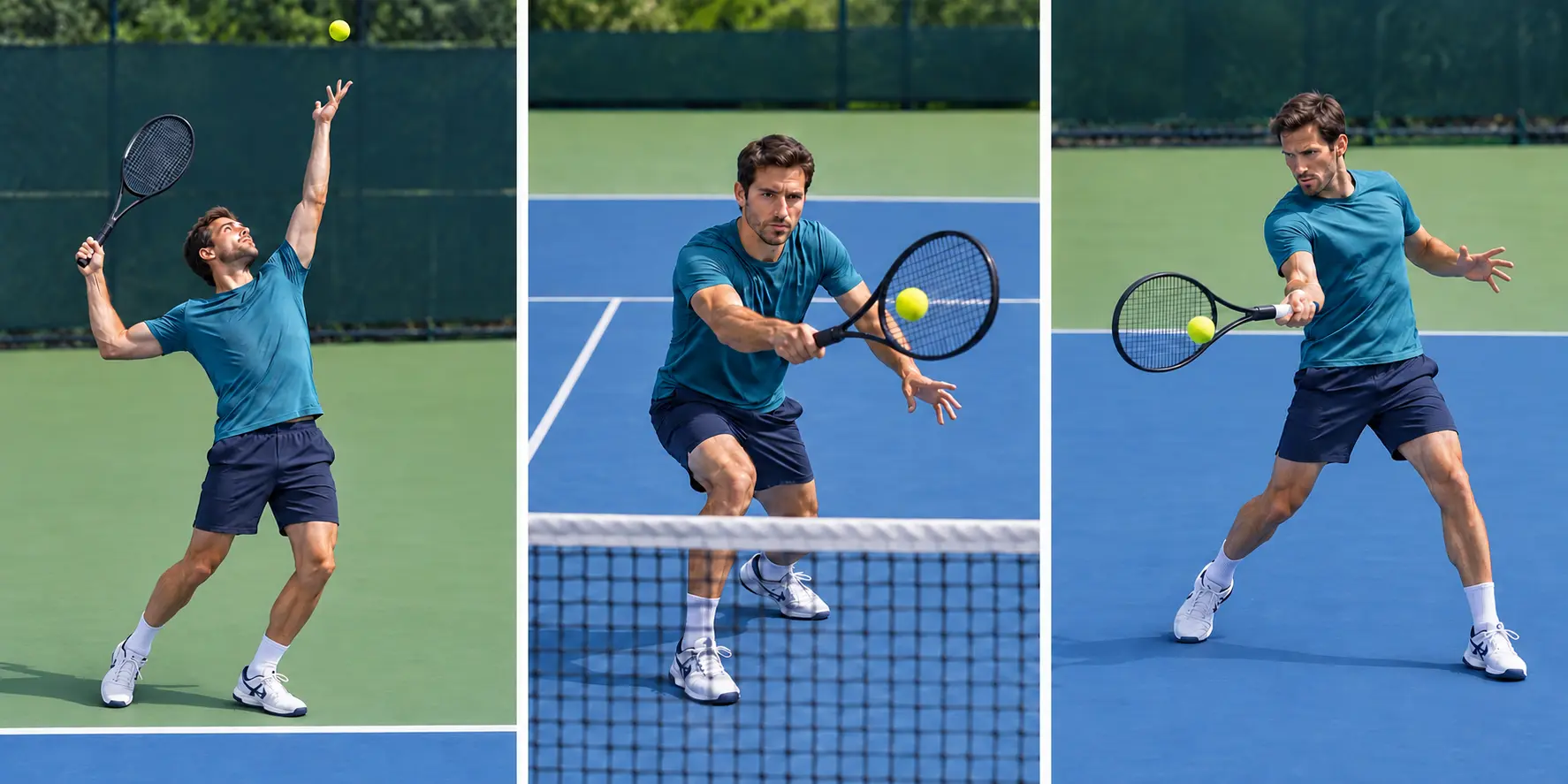
- Return ten body serves and ten wide serves. Watch the bounce location and whether the frame twists. A return that clears the net but offers an easy opposing volley has not solved your problem.
- Alternate forehand and backhand volleys. Take two balls in succession and speed up the second. If the racket face is late when you switch sides, that inertia may cost you at the net.
- Include low volleys and half-volleys. Can you keep depth with a short stroke without floating the ball to the net player?
- Serve and hit overheads after some fatigue. Fifteen serves and several overheads reveal whether the frame still moves naturally later in play.
- Finish with a set or a long tie-break. Note timing, stability, depth and how hard you need to grip. Keep the racket that improves your habitual miss without creating a new one.
Match string type and tension as closely as possible. A freshly strung demo against your worn polyester can make a string-bed difference look like a frame difference.
Do you need separate rackets for singles and doubles?
If you switch between formats during the week and your current racket handles returns, serves and net play, staying with it saves you from readjusting your timing every match.
A second setup deserves a test if you play almost exclusively doubles for a stretch and can point to a repeatable problem: your usual frame is late at the net, or the lighter version lacks firmness on the return. Start with nearby variants in one family, such as the standard frame and its Team or L version.
Nor does a model associated with a doubles professional settle the choice. Tour frames may be customized, and those players have different preparation demands.
The decision rule
If your current frame arrives late, try less inertia. If it arrives on time but twists and sends the return short, look for more stability without losing that speed. Then decide how much ball launch you want.
Choose the racket that lets you block the serve and prepare the next volley. If it improves one shot and undermines the other, keep testing.
Keep learning
Turn this information into a better decision for your game
Explore more guides on the same topic or visit the complete archive to compare your options with context.
Continue reading
Related articles
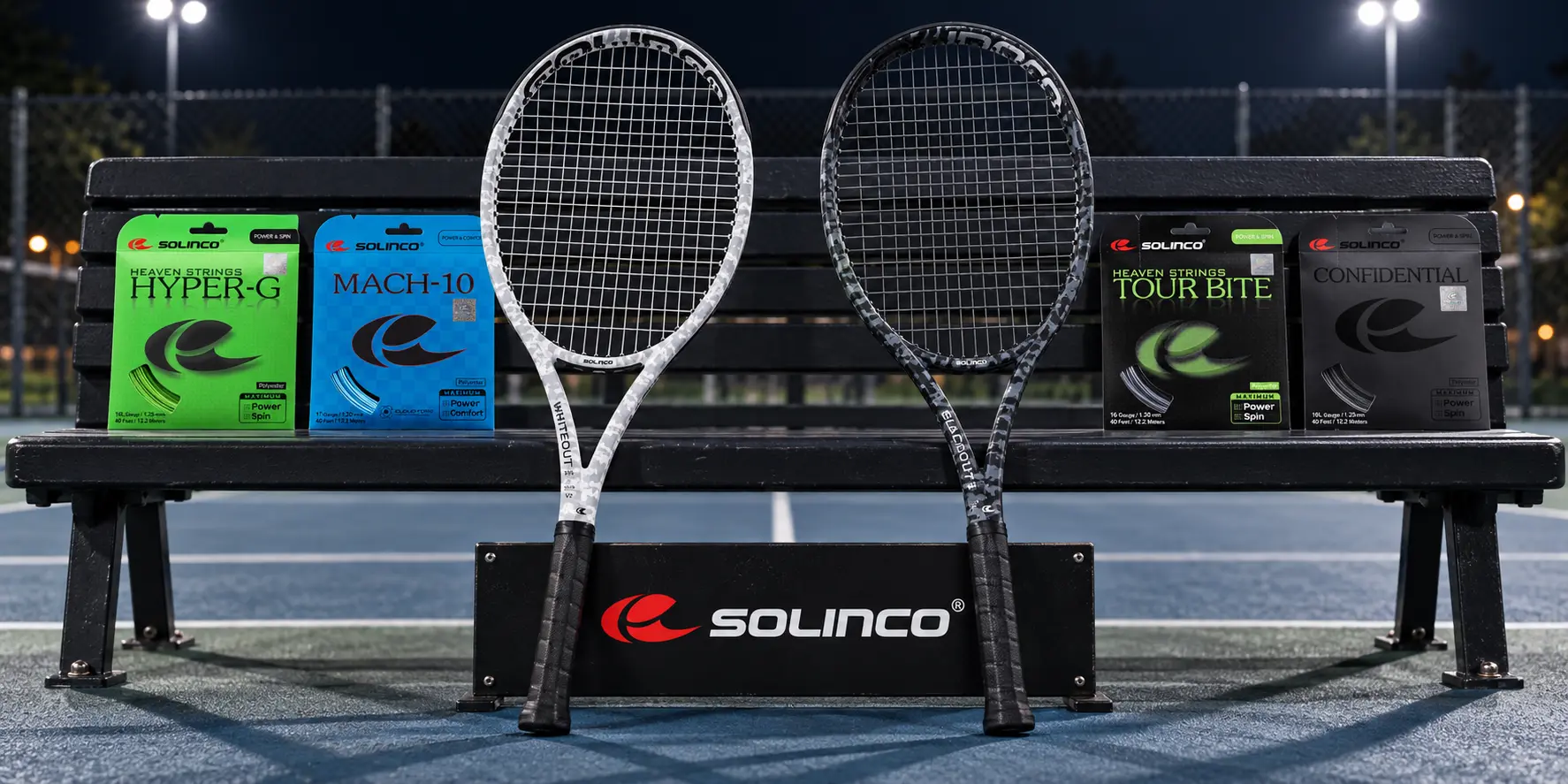
Solinco Rackets: Blackout, Whiteout or Prizm?
Compare Solinco Blackout V2, Whiteout V2 and Prizm rackets, including lighter, 18×20 and XTD models, to decide what to demo for your game.

Prince Rackets Guide: Tour, Phantom, Ripstick and More
Compare Prince Tour, Phantom, Ripstick, Ripcord and Beast rackets, understand O3, and choose the right family to demo for your game.

Dunlop Rackets Guide: CX, SX, FX or LX?
Compare Dunlop CX, SX, FX and LX rackets, understand Tour and LS versions, and decide which models to demo for your swing and game.